




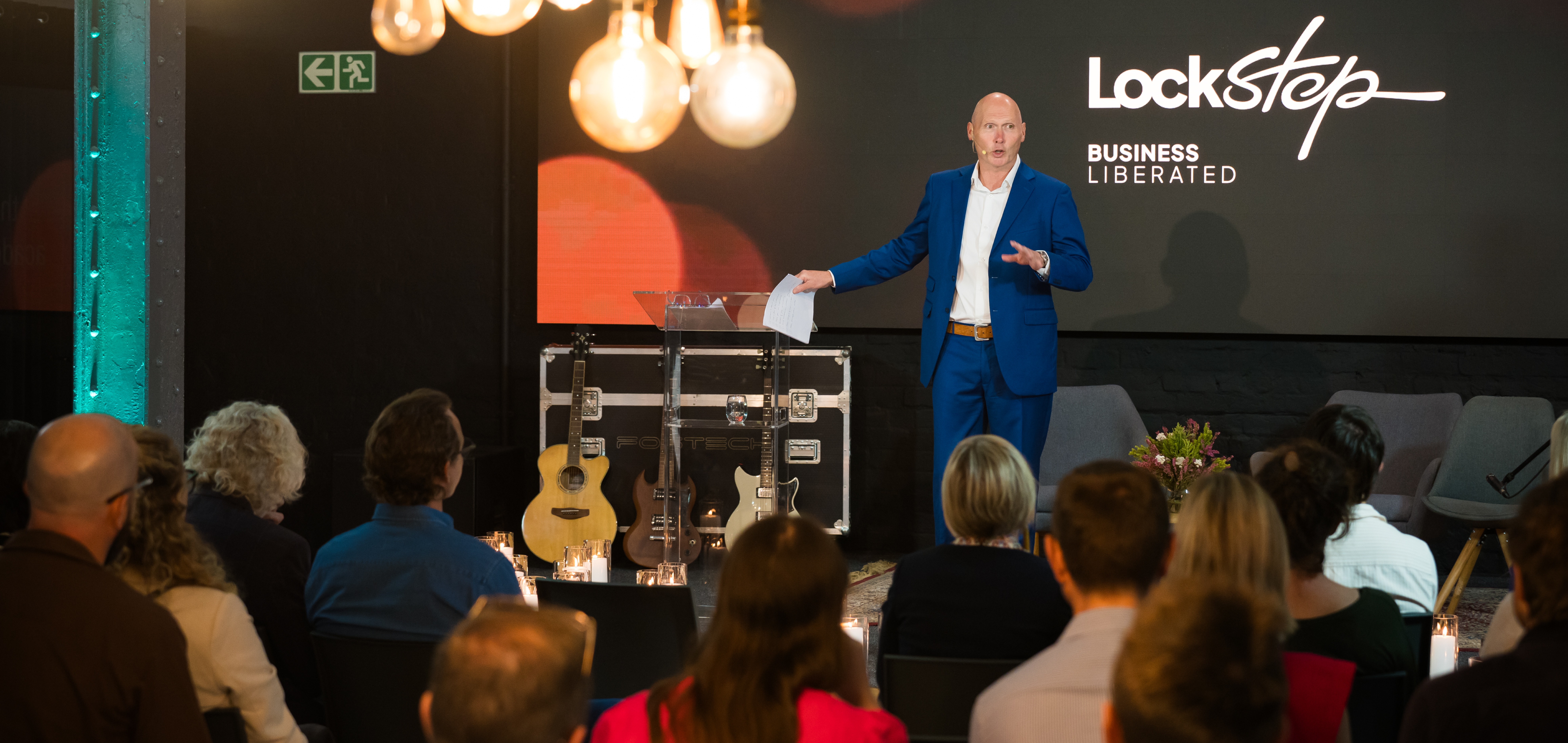
 Rowan Belchers is a business leadership pioneer, CEO advisor and the founder of Lockstep.
Over the past few decades, we as a country have been forced to confront difficult realities. We have had to engage across differences, wrestle with uncomfortable truths, and navigate complexity. Doing business in Mzansi and being part of its storyline builds the kind of organisational and human muscle that is easy to overlook because it feels normal to us.
It isn’t.
In my two decades of working with CEOs, both locally and internationally, a pattern is clear. South African business leaders are:
- More comfortable having hard, honest conversations
- More capable of operating in volatile and unpredictable environments
- More inclined to build businesses that integrate purpose with performance
These are not soft traits. They are strategic capabilities that point to something deeper.
The real source of performance
Most businesses think they have a performance problem. In reality, they have a design problem.
The external environment has become profoundly complex – geopolitics, climate pressure, supply chain instability, and shifting workforce expectations. In this context, performance is no longer just a function of strategy and execution. It is a function of how a business is constructed.
The most important drivers of performance are often the least visible: how clearly people think, how well they relate to one another, and the level of human energy in the business.
At Lockstep, we refer to this as the Upstream – the human and organisational conditions that shape everything a business does.
When the Upstream is strong, it flows into Midstream (the quality of execution, decision-making, and follow-through), which in turn drives Downstream outcomes (revenue, profit, growth, return on equity).
Most businesses obsess over the Downstream because it is measurable. Few pay deliberate attention to the Upstream - even though it is where performance is actually generated.
/file/attachments/2992/DM_728x200-Inarticlebannerupstream-midstream-downstream_595039.jpg "Up, mid & downstream illustration.")
Where South African businesses have an edge
This is where the South African context becomes interesting: Many of the capabilities required to build strong Upstream conditions – openness, resilience, the ability to hold complexity, and the willingness to engage honestly – are already relatively well developed in our South African business environment. We tend to underestimate this because we are geographically distant from major global markets and more accustomed to overcoming adversity than to recognising our own strengths.
But the implication is significant. If the future of business performance is increasingly determined by these less visible, more human dimensions, then South African businesses are not behind - we are, in some respects, ahead.
The evidence that supports this perspective
There is also credible long-term evidence that supports this way of thinking. Research captured in Firms of Endearment* tracked companies that consciously integrate purpose, people and performance. Over 15 years, these “stakeholder–centric” businesses achieved a cumulative return of 1,681%, compared to 118% for the S&P 500.
The conclusion is straightforward: Better–designed businesses are not just more inspiring places to work. They are structurally superior performers.
The opportunity before us
South African businesses do not need to imitate global best practice as much as we might think. We need to understand better what we already do well and deliberately build on it. Linking to the above, because the invisible, upstream conditions determine performance, South African businesses need to become conscious of what Mzansi’s unique business environment has infused into their business. This requires a shift in focus: from managing outcomes to understanding and shaping the conditions that produce those outcomes, from performance or humanity to performance through humanity. This is not a soft or abstract turn. It is demanding work. But it is also where the real leverage sits.
A different kind of advantage
South Africa, with all of its challenges, may also be home to a form of business capability that is increasingly valuable in a complex world. The question is whether we recognise it and whether we choose to build on it. As with any competitive advantage, its value lies not just in having it but in using it. And in this case, the upside is not only more resilient, meaningful businesses. It is better performance.
If you’re leading a business in South Africa, it is worth asking a different set of questions. Not just how your business is performing - but how it is architected. Not just what results you are producing, but what conditions and ingredients are producing those results. The real opportunity does not lie in doing more. It lies in building differently and building with intent and vision, conscious of the upstream conditions that produce your downstream results. And while you are building with intent, ensure that the secret ingredients that Mzansi has infused in your business stay in the recipe.
Start by examining the qualities of your business infused with Mzansi’s secret sauce and design the dynamic, living system of your business to utilise, amplify and protect them.
3 Ways that you can achieve this:
- Go hard at purpose: To build a competitive advantage based on your social impact, your purpose needs to be clear, understood and lived throughout your organisation. Build this into your narrative (upstream) and weave it into your business' architecture to integrate purpose and performance.
- Double down on leadership: Invest in developing leaders to harness the natural leadership abilities which the South African context produces. Businesses that do so will have wise leaders to consistently drive their growth, an essential factor for securing return on equity.
- Ensure your strategy utilises the best South African traits: Selecting a strategy that makes you quick-footed, nimble and agile will play to the qualities that the South African context has built into your people and your leadership.
I have used just three examples, but there are many more. Lockstep can help your business take a deeper look at the unique conditions and systems that produce your results. We specialise in helping leaders build the strategy to architect a high-performing, Transcendent Business. DM
Rowan Belchers is a business leadership pioneer, CEO advisor and the founder of Lockstep. Lockstep guides CEOs and executive leaders in building better, Transcendent Businesses. A 20-year-old consultancy with a global client base, Lockstep focuses on building the business architecture that delivers consistent growth and return on equity. Your business can engage with Lockstep through leadership advisory, keynotes, masterclasses, and executive development. Lockstep Global to learn more.