




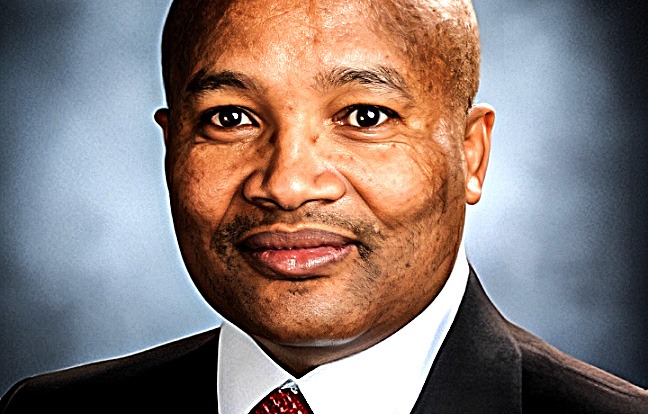
 Free State Department of Education Head of Department, Tsoarelo Malakoane. (Photo: Department of Sports, Arts, Culture and Recreation / Wikipedia)
Public schools across the Free State have been thrown into chaos following a last-minute directive from the provincial education department. In accordance with the National Norms and Standards of School Funding, all provincial education departments are legally required to transfer their first major funding payouts to public schools on or before 15 May 2026.
However, just three days before this statutory deadline, the Free State Department of Education halted the distribution of the Learning and Teaching Support Material component of the funding and announced it would take over procurement itself.
Dr Juané van der Merwe, Deputy CEO and Head of Legal Services at the Federation of Governing Bodies of South African Schools (Fedsas), explained that the department was legally required to communicate the upcoming year’s Norms and Standards funding allocations to schools before 30 September every year so that schools can budget and know their expected income.
/file/attachments/orphans/Dr-Juane-van-der-Merwe-Mocke-FEDSAS-683x1024_323698.jpg "Fedsas Deputy CEO Dr Juané van der Merwe. (Photo: NovaNews / Wikipedia)")
When Fedsas engaged with Tsoarelo Malakoane, the Head of Department, on 18 May, he cited the urgency of the situation to justify the abrupt freeze.
“We firmly believe that this urgency was entirely self-created,” Van der Merwe countered. “The department has known for a long time which schools report and which schools do not report. To claim this is a sudden matter of urgency now is a major frustration for us.”
Van der Merwe stressed how important this funding is, describing Learning and Teaching Support Material as the operational backbone of the classroom. It encompasses a vast array of materials used directly by teachers and learners, including core textbooks, teacher guides, workbooks, stationery, science laboratory apparatus, computer software licensing, and library materials.
“No school in the province currently has the authority to purchase these materials themselves; the head of department has unilaterally decided to withdraw this specific function from all schools in the Free State, and the department will handle the procurement centrally,” said Van der Merwe.
Department defends decision
In an official media statement released on 21 May, the Free State Department of Education said the decision to withhold Learning and Teaching Support Material funding was an urgent and necessary learner-protection intervention forced by chronic and widespread governance failures at the school level. The department revealed that over a sustained period, numerous schools entrusted with textbook budgets have repeatedly failed to secure materials within prescribed timelines, routinely forcing learners to start the academic year without essential resources.
There is also widespread administrative non-compliance regarding data management. All learner, inventory and Learning and Teaching Support Material information needs to be captured on the South African School Administration and Management System and deployed through the provincial Education Management Information System.
The department stated that some schools had deliberately operated parallel textbook management systems outside the approved administration and management system.
“Where schools elect to utilise private or unapproved systems without integrating information into the SA School Administration and Management System, the department is deprived of reliable and standardised data required to make informed decisions regarding learner enrolment, textbook demand, shortages and financial allocations,” said the department.
It added that certain schools had actively compromised educational standards by utilising unapproved material catalogues, submitting inaccurate learner projections, demonstrating weak inventory management and intentionally purchasing only a few textbook samples and illegally duplicating them via mass photocopying.
“A learner without access to textbooks is a learner whose educational opportunities are fundamentally compromised. The department therefore carries not merely an administrative duty, but a constitutional obligation to ensure that textbooks and learning materials are delivered timeously, equitably and effectively,” read the statement.
Punishing the whole class
Van der Merwe said while they recognised and accepted the department's oversight role, when the department acted, it must do so lawfully and fairly. She explained that the South African Schools Act does not allow or impose a blanket measure against all schools because of the alleged non-compliance by a few.
“Our greatest concern currently is that the department is taking a collective punitive approach against all schools, whereas the law provides them with the specific remedy to act against non-compliant schools individually,” she said.
Mokholoane Bricks Moloi, the South African Democratic Teachers Union (Sadtu) Free State Provincial Secretary, echoed these concerns about a blanket approach.
/file/attachments/orphans/679059407_1904917146961291_5423346578497104490_n_173910.jpg "Sadtu Free State Provincial Secretary, Mokholoane Bricks Moloi. (Photo: Sadtu / Facebook)")
“Withholding allocations from every single school, irrespective of whether a particular school complied or not, is entirely unfair. They should rather deal directly with individual non-compliant schools, investigate the issues, and implement targeted remedial actions,” he said.
Moloi said the department’s plan to move to centralised procurement is entirely insufficient. Historically, the state had failed when attempting centralised procurement for schools, which was why these funds were mandated to be transferred directly to school bank accounts.
The department said this decision was not punitive and was not aimed at undermining the role of schools. It was a measured, necessary intervention in the best interests of learners and was informed by constitutional and financial governance obligations.
“Experience across education systems has repeatedly demonstrated that centralised or coordinated procurement models can significantly improve efficiency, strengthen accountability, reduce delays and ensure equitable distribution of learning materials,” said the department.
The legal standoff
Van der Merwe stated that although provincial education departments may centrally appoint suppliers for learning material and stationery, this had to take place in deep consultation with school governing bodies.
“It is a statutory function of the school governing body. The law does not provide for provincial education departments to make unilateral internal decisions in this regard. There must first be proper, formal consultation with School Governing Bodies (SGBs), and if you want to limit a school’s functions, you must give each school a reasonable opportunity to make legal presentations,” she said.
Van der Merwe added that the department had failed to follow proper legal processes, missed the legislative payment deadline, and failed to consult schools on centralised procurement.
“If this is not addressed immediately, Fedsas will, without a doubt, approach the courts. Litigation is always our last resort, but where the best interests of our children are concerned, we will not hesitate to approach the court,” she said.
The department rejected any suggestion that its decision amounted to an arbitrary or unlawful withdrawal of SGB rights, stating that while certain schools were allocated procurement functions under Section 21 of the South African Schools Act, “such authority is neither unconditional nor immune from oversight”.
“The law empowers the head of department to determine whether schools possess the necessary financial and administrative capacity to undertake such responsibilities effectively and in compliance with applicable prescripts,” read the statement.
Additionally, the department stated that where the interests of learners, efficiency or accountability required intervention, the head of department was legally empowered to make decisions necessary to safeguard the proper utilisation of public resources and the delivery of education.
Schools running on empty
Highlighting the immediate stakes for learners, Van der Merwe pointed out that the administrative freeze translated directly into immediate classroom deprivation while exposing the deep systemic inequalities of the education system.
/file/attachments/orphans/pic_152202.jpg "Only a few schools have received their full allocations on time, raising alarms about educational equity and resource distribution. (Photo: Unsplash)")
While wealthier, fee-charging public schools could attempt to buffer the shortfall by leaning on parental contributions, Quintile 1 to 3 no-fee schools had no alternative financial safety net.
“If they do not get this state funding, they are stuck without any income to address classroom needs. Unfortunately, the most disadvantaged children will once again be the ones who are hit hardest,” she said.
Van der Merwe explained that the operational consequences would differ from school to school, but they remained uniformly severe. Some schools currently did not have textbooks and, because they now lacked the funding to buy them, were forced to wait on the department’s centralised procurement system to see what happened.
She added that some schools used their own specialised curriculum materials developed over many years and relied on their Learning and Teaching Support Material funding specifically to buy paper and ink for photocopying. Without this money, they could not make photocopies and would have to look elsewhere in their budgets to see if any alternative funds were available.
Moloi explained that what normally happened on the ground was that when these allocations were received, the school used them immediately to settle already-incurred operational debts with local creditors.
“Because schools had the reasonable expectation that this money was coming, they have already committed these funds to service providers. Withholding the money now leaves them in a severe deficit. This has a direct, damaging potential to affect actual teaching,” he said.
The department confirmed that funds allocated for Learning and Teaching Support Material remained ring-fenced for their intended purpose and had not been diverted elsewhere. They would continue engaging with relevant stakeholders to strengthen compliance, improve systems and ensure smooth implementation remained ongoing.
“Most importantly, parents and learners must be assured that no learner will be abandoned, and no learner will be denied access to quality learning material. Every intervention undertaken by the department is guided by one overriding principle: protecting the constitutional right of learners to quality education and ensuring that educational resources reach classrooms efficiently, transparently and accountably.”
The national picture
According to data compiled by Fedsas, seven of SA’s nine provincial education departments failed to meet the statutory 15 May deadline. As it stands, only public schools in the Western Cape and Northern Cape received 100% of their allocated resource funding on time and in full.
- Gauteng: The province cited severe cash-flow challenges and intends to stagger its transfers in various instalments throughout the year.
- Limpopo, Mpumalanga, and North West: These departments only transferred a partial portion of the due amounts. North West and the Free State withheld 50% of the funding, while Limpopo withheld 30%. All three provinces intend to centralise the procurement of Learning and Teaching Support Material.
- The Eastern Cape and KwaZulu-Natal: No indication to Fedsas regarding the delay.
Daily Maverick sent detailed questions to the other affected provincial education departments regarding this. At the time of publication, no responses had been received. DM
Comments
Scroll down to load comments...