




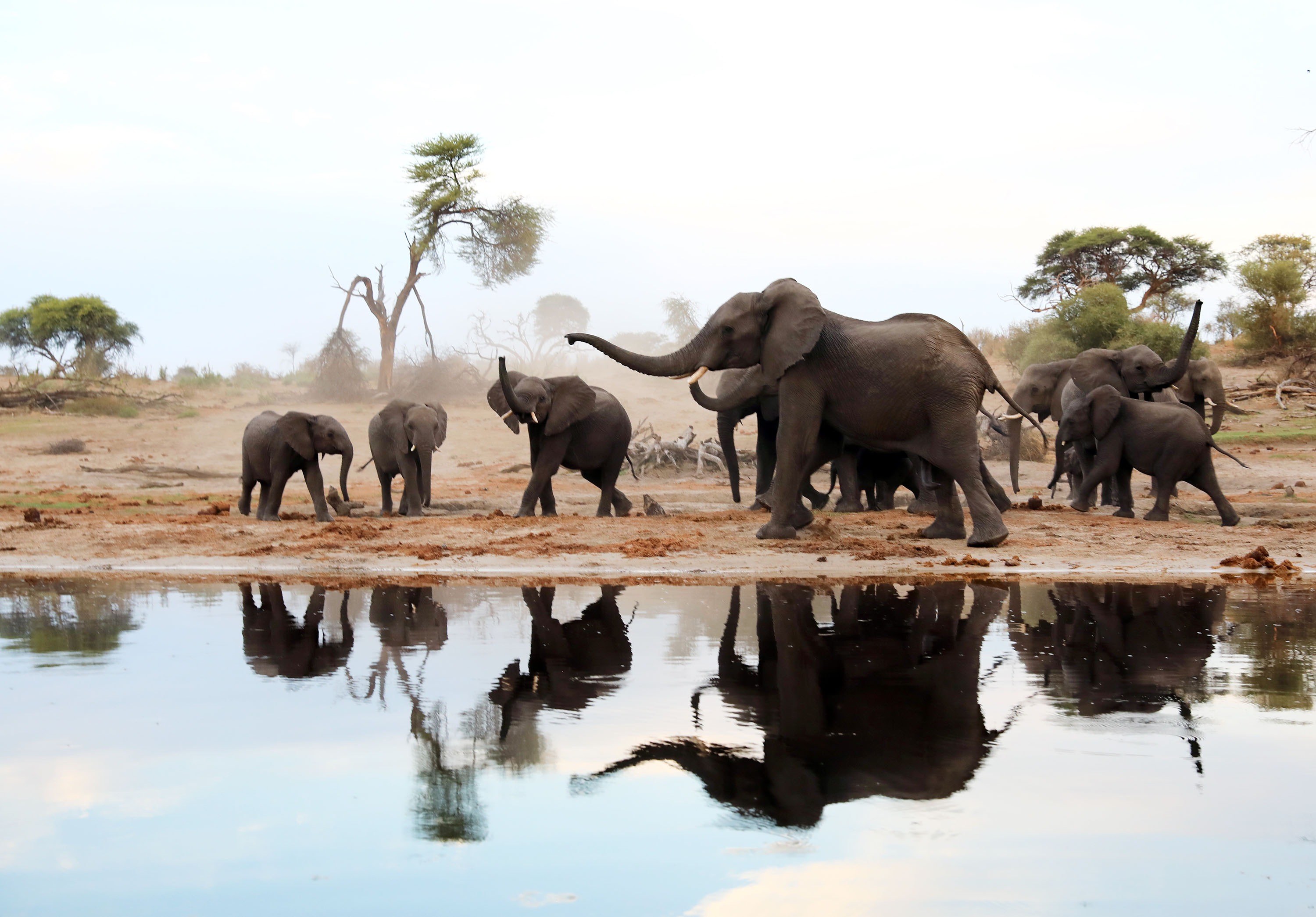
 MPs have voiced concern that provincial government failures could lead to the culling of elephants. (Photo: Colin Bell)
Deputy Environment Minister Narend Singh told Parliament this week that culling elephants is a last resort and cannot proceed without ministerial approval.
However, two provinces — North West and KwaZulu-Natal — appear to be manoeuvring to a position that makes such approval inevitable. Inexplicably, they had not been called to appear in a meeting of the Portfolio Committee on Forestry, Fisheries and the Environment to answer questions about elephant management. They will be called to appear shortly.
This provoked MPs to voice concern about who is answerable when provincial government failures turn a manageable problem into a crisis that results in culling.
DA MP Andrew de Blocq expressed concern that the provincial bodies were not present to account for the crises in Madikwe, Pilanesberg and EKZN wildlife parks.
Following continued failures at Madikwe Game Reserve and North West Parks and Tourism Board, he asked:
- Why were specific previous parliamentary directives ignored?
- Why did the Provincial Elephant Task Team not produce the minutes requested by Parliament?
- Why was the task team’s final report, due on 24 November 2025, not produced?
- Why had the task team not met this year?
- Why was the only statutory animal welfare body, the NSPCA, still being excluded from key provincial processes despite a direct instruction by Parliament?
/file/dailymaverick/wp-content/uploads/2025/04/2.jpeg "Democratic Alliance MP Andrew de Blocq. (Photo: Supplied)")
De Blocq’s frustration cut to the heart of the matter. His questioning exposed a more alarming possibility: that official inaction, provincial opacity and procedural failure may be creating the very conditions under which culling can later be portrayed as unavoidable.
He was not arguing that culling is never necessary. In fact, he conceded that it might be in some cases, including possibly at Madikwe, where elephant numbers are increasing rapidly and where management options have narrowed due to official delays.
But, he insisted, existing laws require that non-lethal management options be exhausted first. Elephants, he reminded the committee, are highly sentient and socially complex animals. Management decisions cannot, ethically or legally, treat them simply as excess stock.
/file/attachments/2992/elliegraph1_122770.jpg)
Faulty Elephant Indaba process
De Blocq also challenged Deputy Minister Singh’s request to the parliamentary committee to accept the “resolutions” of last year’s Elephant Indaba, as these were only outcomes, not resolutions.
The indaba could not be relied on as proof of consultation, he said. This is because MPs, NGOs and academic institutions had been invited at very short notice, in some cases only days before the event. The venue was difficult and expensive to reach at short notice.
No members of the parliamentary portfolio committee were able to attend to exercise appropriate oversight.
Consumptive-use interests, such as hunters and game farmers, by contrast, appeared to have been involved earlier and more fully. The indaba’s resolutions, said De Blocq, had not been voted on or formally adopted by participants, and thus could not be binding. He argued that Parliament should be cautious about treating that process as a legitimate public participation.
“The process has serious concerns and flaws in the way that it was set up,” he said. “I don’t think it constitutes a proper public participation process in the true, intended sense, nor as laid out in the Promotion of Administrative Justice, which governs how this crucial process should be executed.”
De Blocq’s concerns remain highly relevant because the department’s presentation places the Elephant Indaba at the centre of the emerging National Elephant Heritage Strategy.
The Department of Forestry, Fisheries and the Environment (DFFE) described it as a national framework for planning and decision-making in “living landscapes with elephants”, intended to embrace evidence-based elephant management, guide implementation and promote adaptive learning.
It also recorded that the strategy is meant to “align Indaba resolutions with future elephant management.”
This is why alarm bells are ringing. One of the indaba outcomes is to “implement culling when flexible ecological limits are exceeded based on sound data”. Another lists “nature-based tourism, hunting, culling” as possible income streams from reserves.

Revision of norms and standards hijacked
MPs also raised concerns regarding the revised Elephant Norms and Standards. Although published in 2023 following an extensive public consultation process, they were subsequently withdrawn due to a technicality. The department now intends to have an internal committee further revise the document, claiming the current framework has become “too inflexible and restrictive”. Previously, it was understood that members of the original drafting task team would be selected from the Elephant Indaba working groups.
No formal Comments and Response document was ever made available for the draft Norms and Standards in 2023, showing how submissions were incorporated or the reasons for their rejection. De Blocq requested that this be produced and that the names of members of the new committee and its chair be provided. The DFFE director-general agreed to do so.
Delays exacerbate the problem
In “hotspot “action plans, the destruction of damage-causing animals and approval of culling plans appear as official interventions.
However, it would be a step too far to consider that the department has adopted culling as its default policy. It was, insisted Singh, a last resort.
/file/dailymaverick/wp-content/uploads/2023/11/Merten-Parliament-5-1.jpg "Deputy Environment Minister Narend Singh. (Photo: Ziyanda Duba)")
Yet the language of the strategy and its alignment documents raises the question De Blocq was pressing from the start: if culling is truly the end of the road, why are the roads leading to non-lethal management being blocked, delayed or left unsigned?
Dr Audrey Delsink of Humane World for Animals gave the committee the clearest example. Since 2020, her organisation has been formally engaging with North West Parks regarding immunocontraception in the Madikwe and Pilanesberg reserves. Although a memorandum of understanding was signed in 2020 to provide contraception at no cost to Madikwe — and was subsequently extended in 2024 — the initiative was never implemented.
This has resulted in the avoidable births of at least 400 elephants, with a further 50% of adult females expected to be currently pregnant.
A revised tripartite agreement was requested after the October 2025 oversight visit, but approval remains stalled, and implementation is now unlikely before 2027. Every day’s delay results in more avoidable births.
The effect of delay is stark. Delsink’s modelling showed that earlier contraception could have stabilised Madikwe’s elephant population far sooner. Her presentation projected Madikwe’s population rising dramatically if left unmanaged, while contraception would have placed it on a far lower growth trajectory.
However, the agreement remains valid. She said Humane World is ready, from a budgetary and logistical point of view, to begin operations.
What was clear is that humane intervention is not being rejected on scientific grounds. It is inexplicably being avoided by the responsible authorities.
/file/dailymaverick/wp-content/uploads/2025/11/new-Audrey-Delsink-pic-tony-carnie.jpg "Dr Audrey Delsink, the director of Humane World for Animals. (Photo: Tony Carnie)")
The NSPCA’s Douglas Wolhuter sharpened that point. In 2025, immunocontraception was offered once again at no cost, with the capacity to treat the entire Madikwe herd within a single week. Yet six months later, absolutely no action had been taken.
Meanwhile, the NSPCA has still not been formally included in the Provincial Elephant Task Team and has still not received the minutes Parliament had instructed to be disclosed.
A governance issue
For Wolhuter, this is no longer only an elephant population issue — it is a governance, transparency and animal welfare issue.
Madikwe and Pilanesberg are fenced systems. The animals are under human control, he pointed out. If officials can foresee that hunger, herd stress, drought pressure, habitat disruption and eventual culling may cause suffering, then delay itself becomes part of the welfare problem.
/file/dailymaverick/wp-content/uploads/2023/06/Madikwe-elephants-Declan-Hofmeyr.jpg "Elephants in the Madikwe Game Reserve. (Photo: Declan Hofmeyr)")
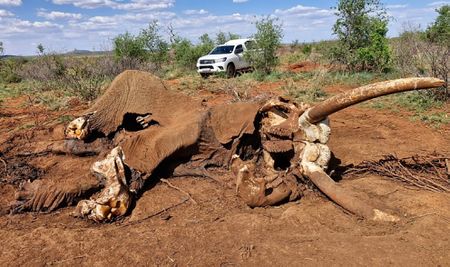
That was the central thread running through the parliamentary hearing. Culling was being discussed as if it arose naturally from elephant numbers. However, the testimony suggested something else: lethal action may become necessary because provincial authorities failed to act when less harmful tools were available.
Jeanetta Selier from the SA National Biodiversity Institute added a layer of complexity to the “too many elephants” debate, telling MPs that population size doesn’t automatically dictate ecological impact. Culling or reducing numbers won’t necessarily solve the problem, because the real damage is often caused by specific elephants targeting sensitive areas.
A bull group around a waterhole, for example, may continue affecting that area even if numbers are reduced elsewhere. Management should be outcome-based: identify the actual problem, choose the appropriate intervention and monitor whether it works.
Her point is that crude carrying-capacity language can make culling sound more scientific than it is.
/file/attachments/2992/ellies2_880142.jpg)
De Blocq also warned against relying on flimsy or outdated ideas of carrying capacity and asked what database exists on human-elephant conflict, the core assertion of the costly Elephant Indaba (nearly R1-million).
The DFFE admitted that no such conflict database exists, but said a guideline for one was in development. Consequently, the Elephant Indaba was putting the cart before the horse. Without proper data, De Blocq argued, invoking human-elephant conflict creates a slippery slope that could easily be used to justify lethal management strategies.
Humane World’s Dr Tony Gerrans then placed the issue within the law. He argued that the National Elephant Heritage Strategy does not adequately reflect the least-harm and precautionary principles embedded in South African environmental law. Nor, he said, does it explicitly acknowledge that animal welfare and conservation are intertwined constitutional values, or that individual animals have intrinsic value.
He welcomed Singh’s assurance that culling is a last resort, but asked why the strategy itself does not clearly say so.
KwaZulu-Natal’s Mawana elephants were an example of proper intervention, said Delsink. The area had been identified as a human-elephant conflict hotspot, so non-lethal interventions, including mitigation, collaring and contraception, were put in place. The elephants were relocated to Loziba Wilderness through collaboration between Humane World, Global Supplies and Loziba. That outcome, she said, showed what transparency and shared commitment can achieve.
DA MP Wildri Peach added an economic question. Had the department studied the externalities of culling and hunting? Had it weighed consumptive activities against the effect on tourism, local communities and ecotourism-driven reserves such as Madikwe?
Elephants may be part of the biodiversity economy, he said, but that economy is not served only by hunting, carcasses and permits.
If immunocontraception is available, if agreements exist, if the NSPCA is excluded, if task teams do not meet, if reports are not released, if minutes are withheld and if provincial authorities do not account publicly, then the problem is not only ecological. It is an administrative failure with ethical consequences.
And if that failure ends with culling, it should not be described as nature taking its course, MPs insisted. It should be described as the state manufacturing the last resort. DM


Comments
Scroll down to load comments...