



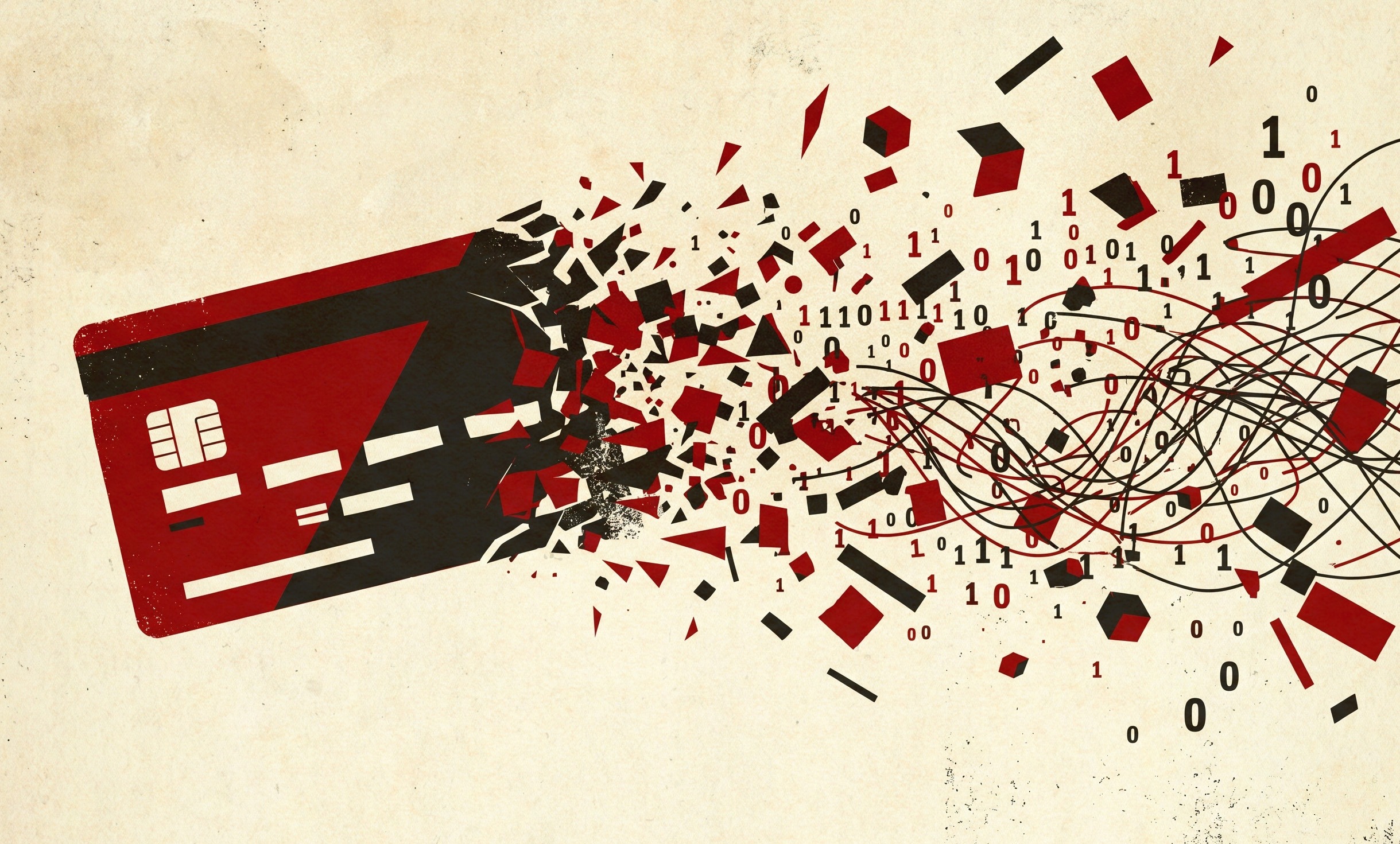
 Illustrative image: (Sources generated with Google Gemini Flash Image 2.5)
Over the years I have come to realise there is a group of people who think quite deeply about what money and value and currencies really are.
Some of them, I fear, go down awful rabbit holes that end with them wanting to go back onto the gold standard and to an age when they believed money was money and was worth, literally, the gold held underground or in Fort Knox or who knows where.
There was even a big fight at one point about the “Bimetallic Question”. If, like me, you had to look that up, you’ll know it was an argument about whether to stay with the gold standard, or to include silver in that standard.
We probably spend more time now on the bi-credit card question.
I’ve probably bored you with this before, but I find the interconnected networks and people who are momentarily attached when I tap my phone while buying an Americano fascinating. My money probably goes halfway around the world before it ends up in the bank account of the person who has prepared the only coffee worth drinking.
Just lately I’ve wondered a little about what our landscape would look like if our banks failed. I don’t mean in a 1930s kind of way, in that they run out of money. They’re too well managed and, frankly, too well regulated for that.
I mean when something much worse happens.
There’s been some worryingly considered reporting from the US about how specific AI models have been able to find vulnerabilities in software and security systems that were previously thought to be almost impregnable.
Imagine for a moment what you would do if you simply could not open your banking app one morning and then heard on the radio that your bank had lost its records.
That your money had just disappeared in a whiff of AI evil.
Excitingly, most of us might lose more debt than money.
It’s exciting in a sort of Mad Max/Waterworld/Revelations kind of way.
But while we survived a pandemic and Stage 6 load shedding and even a ban on booze, I don’t think we would survive a massive security or IT failure by our banks.
A few years ago my wife and I watched the miniseries Years and Years which tracks a family through future events that are almost possible (it starts with US President Mike Pence nuking an island held by China).
One of the characters found himself broke, presumably for life, after he could not access his life savings in a bank that had collapsed. I am sometimes haunted by the look on the face of an excellent Rory Kinnear as he hammers on the door of the bank.
I sometimes wonder if I should take a screengrab of my banking app before I go to sleep every night.
But I also know our banks are incredibly well protected. And I presume they have some kind of ongoing record that is air-gapped anyway and thus almost certainly completely secure from whatever some AI bot can throw at it (although there is an anorak or two who will remind us about the Stuxnet virus that the US used to disable Iranian centrifuges involved in its nuclear programme through a flash drive).
In the end, banking is about trust.
I was thinking about that yesterday when I saw that Absa CEO Kenny Fihla has now been appointed or elected or selected as the new chair of the Banking Association South Africa.
In our society banking can be intensely political. At least two parties like to attack banks.
For a long time there was even a Public Protector who seemed determined to damage the South African Reserve Bank. During the Zuma era (when else?) Busisiwe Mkhwebane met someone from the State Security Agency and they discussed how to weaken the Reserve Bank.
After Absa CEO Maria Ramos was told that two traders had been colluding over the value of the rand she immediately reported them to regulators.
The result was a long-running set of political claims that she was involved in fixing the rand. It was all hogwash.
But it was a reminder of what the Banking Association can be up against. And while Fihla will be the chair and not the CEO, it is entirely possible that our banks, and banking, will find themselves in the political firing line again.
I think that in some ways the real damage to trust in banking, Mad Max scenarios aside, comes from a deeply held suspicion that banks always do better out of their deal with us than we do.
No one likes being in debt to somebody and it’s human to feel that you are being taken advantage of.
This morning, News24 published a piece in which the CEO of GoTyme Bank (formerly Tyme Bank) Cheslyn Jacobs criticised his competitors for the fees they charge.
He claims they’re “abusive” because so much of banking, all of the payments, is automated. And once the instruction has been given, there is really no reason for a fee to be charged every time a payment is made.
He is obviously right.
And that does nothing to build my trust in my bank. Or to help me sleep at night. DM
Comments
Scroll down to load comments...