




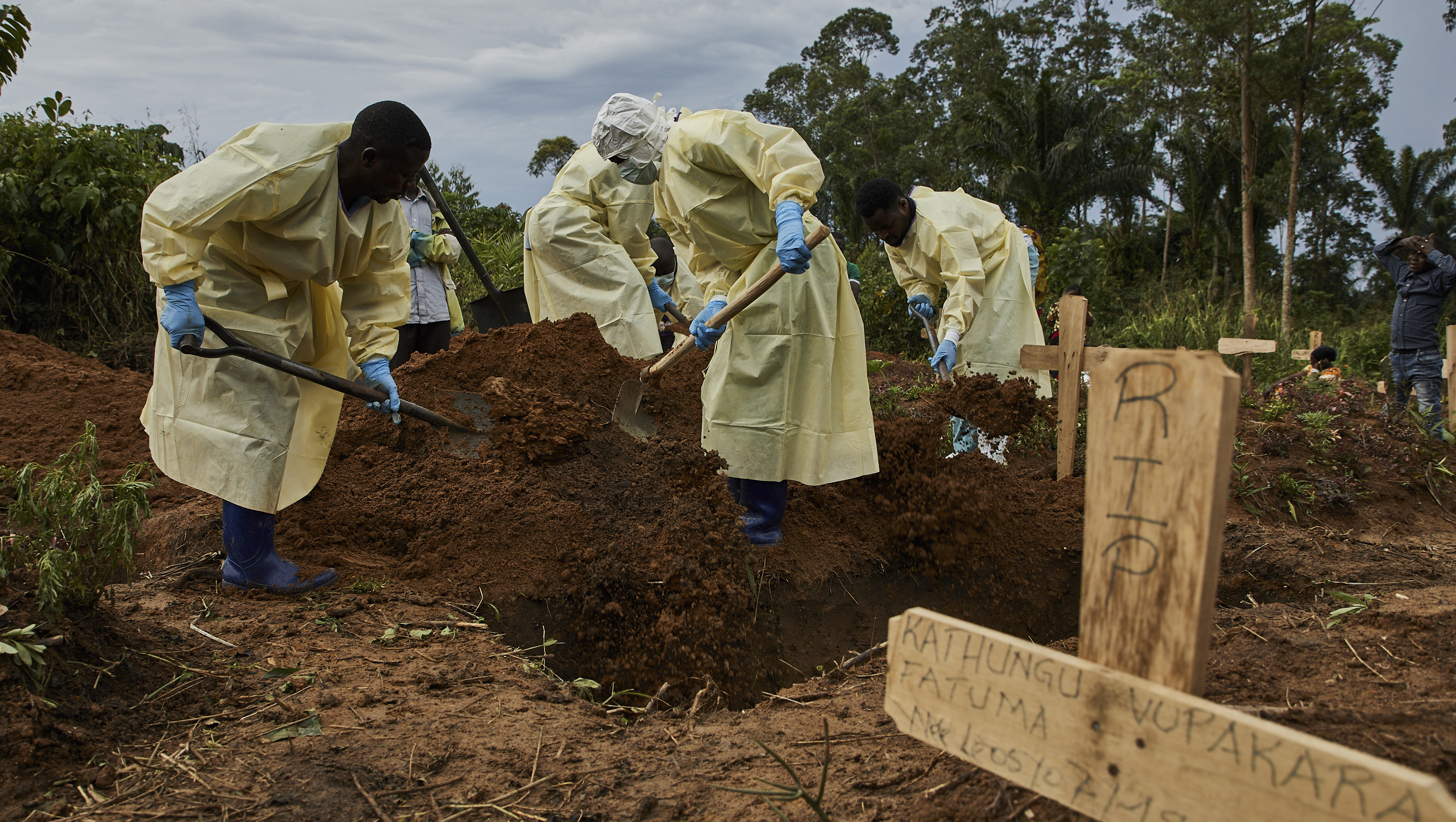
 Oped-Shisana-AfricaHealthTW
By Disha Mishra and Akanksha Khushi
The WHO said the outbreak, caused by the Bundibugyo virus, did not meet the criteria of a pandemic emergency but there was a high risk the disease could spread further to countries sharing land borders with the DRC.
On Sunday, the U.N. health agency said in a statement that 80 suspected deaths, eight laboratory-confirmed cases and 246 suspected cases had been reported as of Saturday in the DRC's Ituri province across at least three health zones, including Bunia, Rwampara and Mongbwalu.
One case was confirmed in the eastern Congolese city of Goma, a statement by M23 rebels said.
At least six Americans in the DRC have been exposed to the Ebola virus, with three exposures deemed high risk, CBS News reported, citing unnamed sources with international aid organizations. STAT News said one American may have developed symptoms. Reuters could not immediately verify the reports.
STAT News, which also cited unnamed sources, said the U.S. government was trying to transport the individuals out of the country, possibly to a military base in Germany.
Satish Pillai, Ebola response incident manager at the U.S. Centers for Disease Control and Prevention, declined at a Sunday briefing to say whether any Americans were among those who had been infected but stressed to reporters that the risk to the U.S. remains low.
CDC officials told reporters the agency has activated its emergency response center for the outbreak and plans to send more people to its offices in the DRC and Uganda.
The U.S. Embassy in the DRC issued a health alert on Sunday reminding U.S. citizens that the State Department advises Americans not to travel to the Ituri province and that the U.S. government is "extremely limited in its ability to provide emergency services to U.S. citizens" in the area.
"Do not travel to this area for any reason," the alert said.
INTERNATIONAL SPREAD DOCUMENTED, WHO SAYS
The DRC health ministry had said on Friday that 80 people had died in the new outbreak in the eastern province.
The 17th outbreak in the country, where Ebola was first identified in 1976, could in fact be much larger, given the high positivity rate of the initial samples and the increasing number of suspected cases being reported, the WHO said.
The outbreak is "extraordinary" as there are no approved Bundibugyo virus-specific therapeutics or vaccines, unlike for Ebola-Zaire strains, it said. All but one of the country's previous outbreaks were caused by the Zaire strain.
The DRC-Uganda outbreak poses a public health risk to other countries, with some cases of an international spread already documented, the agency said, advising countries to activate their national disaster and emergency-management mechanisms and undertake cross-border screening and screening at main internal roads.
In Uganda's capital, Kampala, two apparently unrelated laboratory-confirmed cases, including one death, were reported on Friday and Saturday, from people travelling from the DRC, the WHO said.
The WHO said on Sunday that a previously reported laboratory-confirmed case in Kinshasa, the DRC capital, had tested negative after secondary testing.
Those who have had contact with or cases of the Bundibugyo virus should not travel internationally, unless as part of a medical evacuation, the WHO said.
The agency advised isolating confirmed cases immediately and monitoring contacts daily, with restricted national travel and no international travel until 21 days after exposure.
At the same time, the WHO urged countries not to close their borders or restrict travel and trade out of fear, as this could lead to people and goods making informal border crossings that are not monitored.
The DRC's dense tropical forests are a natural reservoir for the Ebola virus.
Jean Kaseya, director general of the Africa Centres for Disease Control and Prevention, said in a statement that he had requested technical guidance and recommendations on the potential need to declare the outbreak a public health emergency of continental security.
The often-fatal virus, which causes fever, body aches, vomiting and diarrhoea, spreads through direct contact with the bodily fluids of infected persons, contaminated materials or persons who have died from the disease, according to the Africa Centres for Disease Control and Prevention.
(Reporting by Disha Mishra and Akanksha Khushi in Bengaluru, additional reporting by Kopano Gumbi in Johannesburg, and Yasmeen Abutaleb and Daphne Psaledakis in Washington; Editing by William Mallard, Peter Graff, Nick Zieminski and Neil Fullick)
Comments
Scroll down to load comments...