




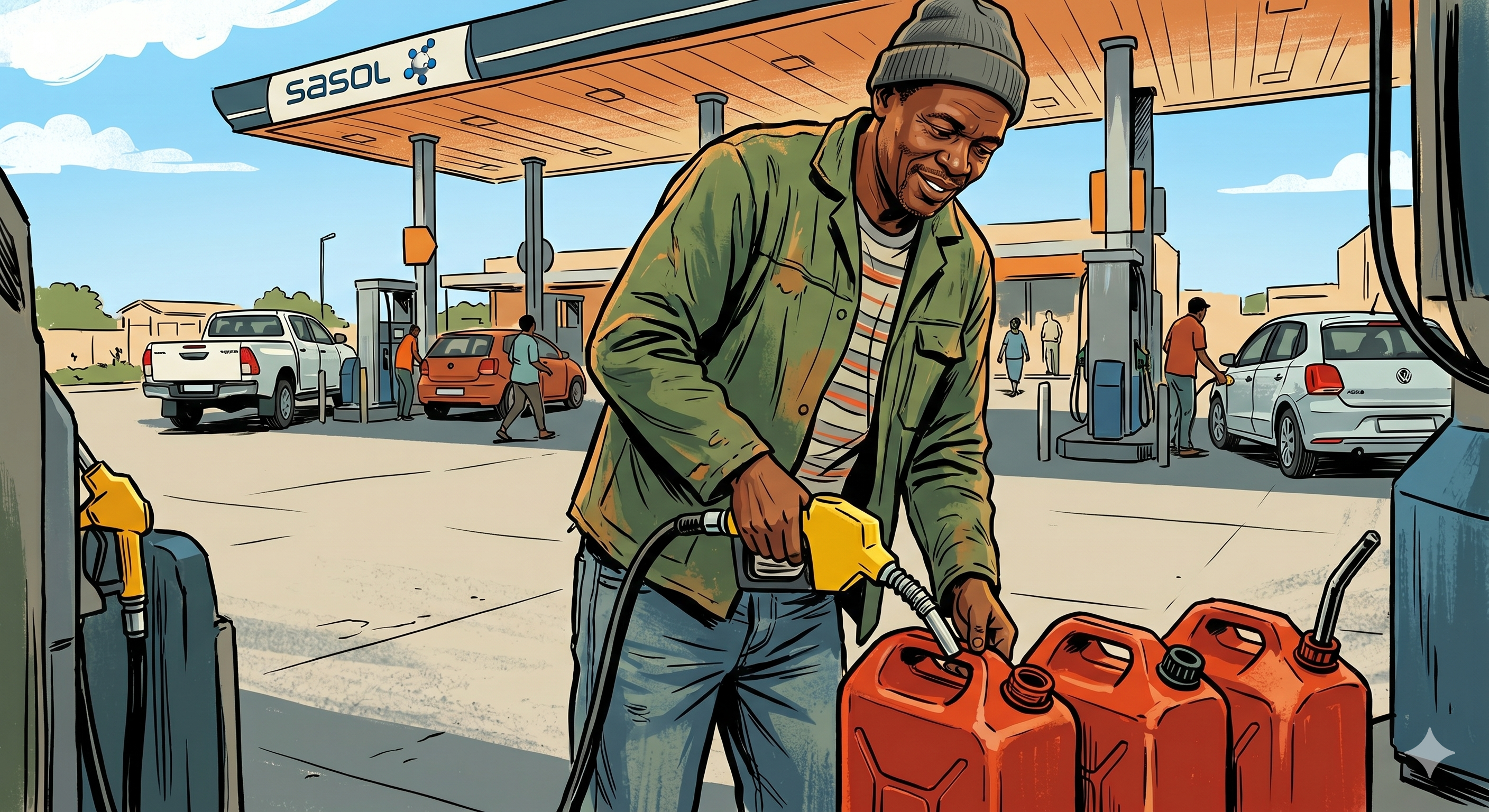
 Unsafe, unlawful or undisclosed storage of fuel could complicate or reduce an insurance claim. (Illustration: Gemini)
 After years of load shedding, many South Africans got used to keeping extra petrol or diesel at home for their generators. Now, with fuel prices and global oil supply worries in the headlines, some households may be tempted to stockpile again.
Christelle Colman, CEO and founder of Ami Underwriting Managers, says stored fuel is often treated too casually by households.
“Back-up power solutions became essential during load shedding, particularly among high-net-worth clients who tend to be early adopters,” says Colman. “However, the risks associated with generators and especially fuel storage are often underestimated. Stored fuel can materially change the risk profile of a private home.”
Stored fuel can introduce risks related to fire, explosion, injury, contamination and third-party damage, Colman says. If there is a claim, an insurer may ask how much fuel was stored, where it was kept, what containers were used and whether by-laws were followed.
The good news is that a container of fuel in your garage does not automatically invalidate your insurance cover. The bad news is that unsafe, unlawful or undisclosed storage could complicate or reduce a claim.
Here’s what to do:
1. Don’t store fuel unless you really need to
The safest option is not to store petrol or diesel at home at all. If you only use the generator occasionally, avoid keeping large quantities “just in case”. A small convenience can become an expensive problem if a fire breaks out.
2. Keep quantities as low as possible
If you must store fuel, only keep enough for short-term use. Stockpiling increases the amount of combustible material on your property and can make any fire more severe.
Colman warns that petrol vapours can change the dynamics of a fire very quickly: “What might have been a contained incident can quickly become a total loss.”
3. Use proper containers
Do not use old water bottles, colddrink bottles, food containers, paint buckets, open drums or unmarked plastic containers. Fuel should be stored only in approved, clearly labelled, SANS-compliant containers that are designed for petrol or diesel.
Improvised containers can split, leak, release vapour or be mistaken for harmless household items.
4. Store fuel away from living areas and ignition sources
Fuel should be kept in a cool, dry, secure and well-ventilated area outside the living space. It should be kept away from children, pets, sunlight, heat, open flames, braai areas, smoking areas, electrical points, distribution boards or breaker panels, inverters, generators, gas bottles, pool pumps, chemicals, drains and stormwater channels. A garage is not automatically safe. Garages often contain vehicles as well as appliances, tools and combustible items such as chemicals and fertilisers.
5. Never refuel a hot generator
Wait for the generator to cool before refuelling. Fuel vapours and hot equipment are a dangerous combination. Also make sure the generator itself has been professionally installed and is properly ventilated and safely positioned.
Colman says the generator and the fuel need to be considered together. “A compliant generator can still pose a risk if fuel is stored unsafely, and vice versa.”
6. Check your local by-laws and speak to your insurer
There is no single national rule for how much fuel may be stored at home. Municipal rules differ. Some municipalities have container limits, whereas others require specific storage facilities or certificates once certain thresholds are reached.
This level of checking the fine print is necessary because, after a fire or loss, the insurer may check whether the storage was lawful and compliant.
Colman’s advice is simple: “If you store petrol or diesel at home, even for a generator, speak to your broker.”
This does not mean every small container must trigger panic. But if you are storing multiple containers or keeping bulk fuel, or have fuel linked to a generator installation, tell your broker or insurer.
The bottom line is that preparing for uncertainty is understandable. But storing fuel badly can create a bigger risk than the outage or shortage you are trying to manage. Keep it legal and minimal, disclose it, and never let your emergency stash become the thing that burns down the house. DM
This story first appeared in our weekly DM168 newspaper, available countrywide for R35.
/file/attachments/2992/DM-150526_262380.jpg)