




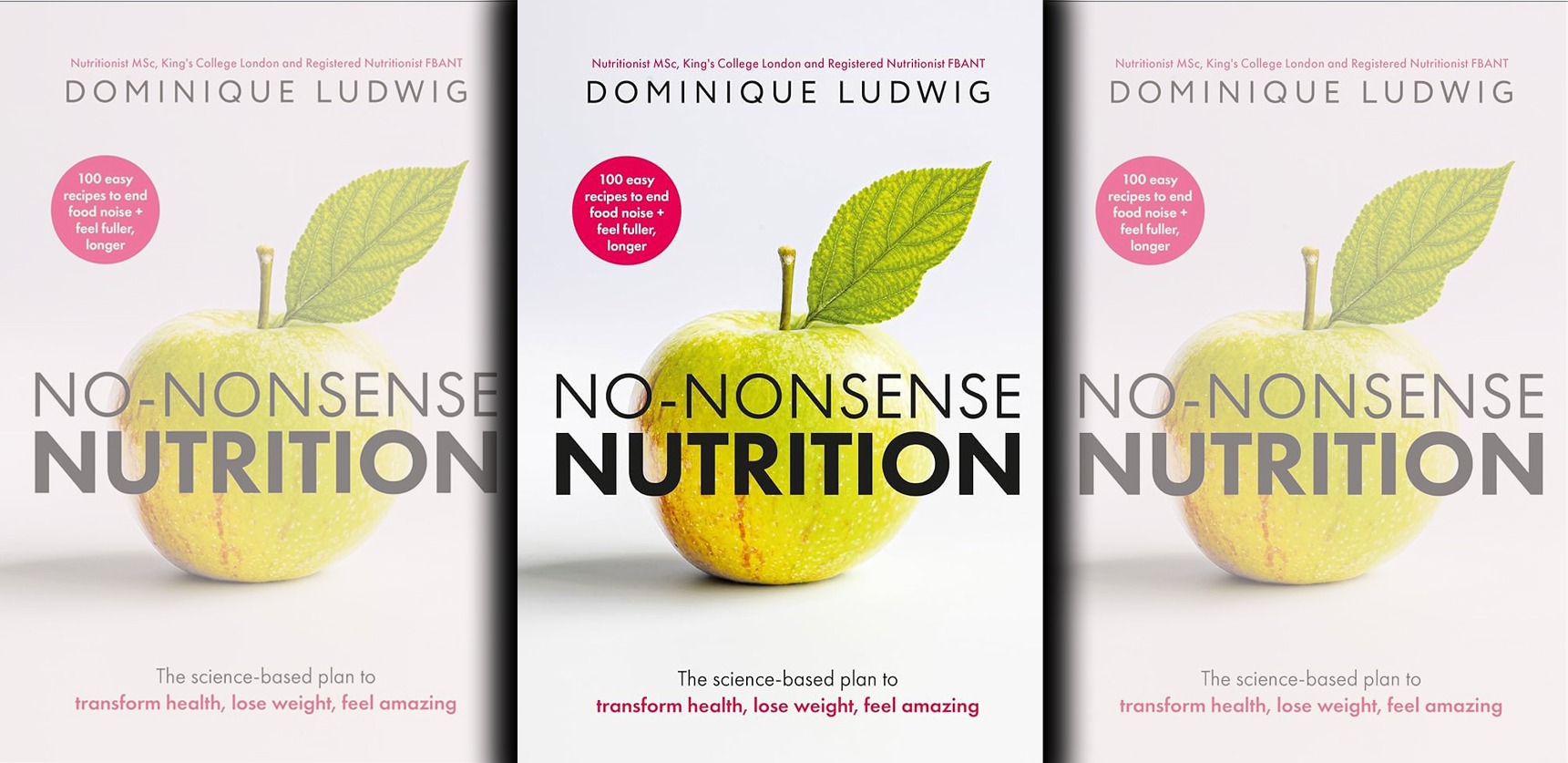
 No-Nonsense Nutrition by Dominique Ludwig. (Photo: Pan Macmillan)
 In her debut book, clinical nutritionist Dominique Ludwig offers a comprehensive and science-based approach to transforming your health by teaching you how to easily build a balanced plate, using protein, fibre and plants. Here is an excerpt and a recipe.
***
It’s all about proportion
When you’re deciding what to cook for your evening meal, I know how easy it is to think “let’s have pasta tonight” or “something with a jacket potato” or “noodles”. But when we approach meal planning like this, it’s easy to overlook all the necessary components and forget about balance. Focusing too heavily on the carbohydrate element first often leaves little room for vegetables and healthy fats, and the protein portion can end up being too small. After eating, you’re likely to feel unsatisfied and hungry again within a couple of hours. You’ll be aware of that constant “food noise” going on in the background – and you can’t override those cravings, they’re too powerful. That’s why many of us end up reaching for a chocolate biscuit or another quick high-energy snack to fill the gap, usually leaving us feeling worse, emotionally as well as physically.
But when we eat food in the right proportions, that’s when we start to see something extraordinary happen! By maintaining the right balance of proteins, fibre and fats from breakfast to dinner, we can increase our satiety and decrease hunger hormones. We feel fuller for longer, and are more energised and more in tune with our bodies. Amazingly, it can also completely switch off the “food noise”, so you no longer have to deal with those annoying food cravings – because your body isn’t craving anything, it has everything it needs. As a hidden benefit, eating a balanced plate of food means we’re also more likely to be getting all the micronutrients we need for our body to operate at its best.
Why have our meals become so unbalanced?
Modern Western diets – or the Standard American Diet (SAD) – have moved away from primarily home-cooked meals toward convenience-driven eating, leading to increased consumption of sugar, refined carbohydrates and unhealthy fats, while reducing fibre, vegetables and whole foods. The dominance of supermarkets for our grocery shopping and the rise of ultra-processed foods have further changed the way we cook and eat. There is an incredible availability of convenience foods today, of which the majority is often refined carbohydrate based. Even if we are cooking our meals from scratch, we are likely to include too much carbohydrate in proportion to the other food groups.
Modern eating habits also place a huge emphasis on snacking, and this can easily throw us off track. Done right, snacking can be a great way of getting in extra nutrients, but more likely than not we will be grazing on poor-quality energy boosters rather than well-planned, balanced options.
So, what is the right balance?
We often see recipes boast that they are “high protein” or “high fibre”, but the real power comes from combining protein with fibre. It’s this synergy that has the greatest impact, because both protein and fibre play a vital role in supporting our health, regulating our appetite and reducing cravings.
To keep things simple, I follow a system I like to call my Triple 30 approach. This method lies at the heart of how I create all my meals and recipes to help people reap the benefits of adequate protein, fibre and plant diversity, so they can feel their best every day. All my balanced plate recipes have been designed to include 1⁄4 plate protein, 1⁄2 plate plants and 1⁄4 plate healthy carbs, as well as meeting my Triple 30 guidelines.
The Triple 30 approach simply means that we are aiming for:
- 30g of protein per meal (or thereabouts)
- 30g of fibre per day (around 10g per meal)
- 30+ plant points from eating 30+ unique plants per week (often more)
***
Harissa beans on toast
Creamy beans are comfort food on a plate, but making your own is simple and takes less than twenty minutes. Beans are incredibly versatile and are also gentle on our blood sugars, due to their high fibre content. I have boosted the protein in this dish with some yoghurt and cheese, which softens the heat of the harissa and gives a rich, creamy texture. The quality of your bread really matters – a traditional sourdough bread is fermented, which makes it easier for us to digest. Using bean liquid adds creaminess, but you can replace it with water if you prefer, particularly if you are sensitive to the gassy effects of beans. (This is because bean water contains some of the carbohydrates that cause gas.) There is no need to peel the carrots – a good scrub is enough, as many of the nutrients are found just beneath the skin. I’ve served my harissa beans with a slice of seeded sourdough.
Ingredients (serves 2)
1 medium red onion, finely chopped
1 garlic clove, crushed
1 tablespoon extra virgin olive oil
1 medium carrot, scrubbed and finely diced
1 red pepper, diced
1 x 400g tin or jar of white beans (240g drained weight)
1 teaspoon harissa paste
1 tablespoon lemon juice
1 tablespoon chopped fresh herbs (e.g. parsley or chives), plus extra to serve
sea salt and freshly ground black pepper
To serve
2 tablespoons Greek yoghurt (around 50g)
2 slices of sourdough bread
30g Parmesan (or vegetarian hard cheese), grated
50g sauerkraut or kimchi
Method
1. Sauté the onion and garlic in a frying pan with the extra virgin olive oil over a medium heat for about 5 minutes, until softened and translucent. Add the diced carrot and red pepper and cook for a further 3 minutes, until just tender.
2. Add the beans with their liquid (if using), the harissa paste, lemon juice and chopped herbs and season with salt and pepper. Simmer gently for 5-8 minutes, until the mixture thickens and becomes creamy.
3. Remove from the heat and stir through the Greek yoghurt, or spoon the beans over the toasted sourdough and serve with the yoghurt on the side. Top with grated Parmesan, a little extra fresh herbs and a spoonful of sauerkraut.
Storage: Store the cooked bean mixture in an airtight container in the fridge for up to 3 days. DM
No-Nonsense Nutrition by Dominique Ludwig is published by Bluebird, Pan Macmillan. It is available at a retail price of R675.