



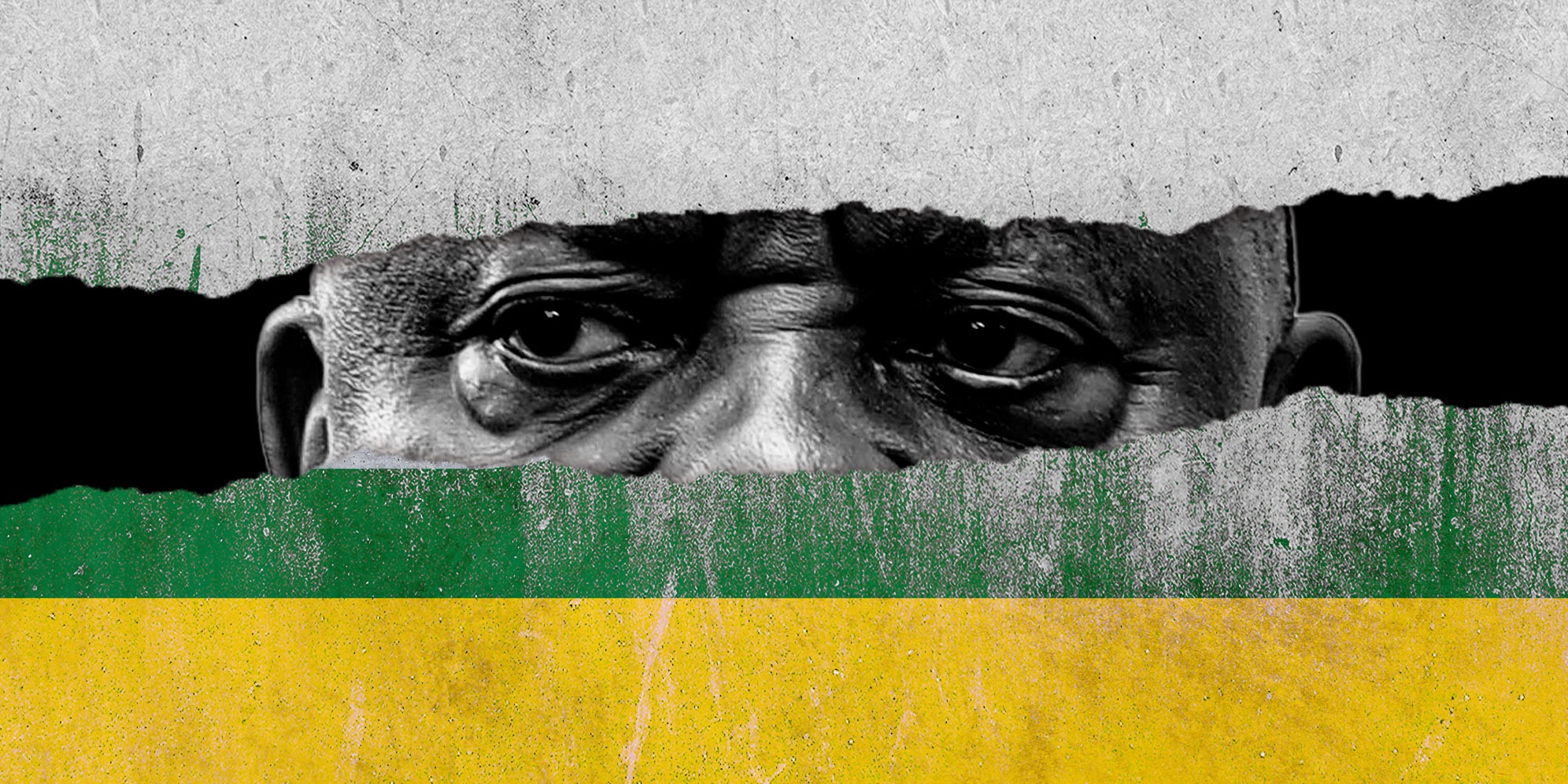
 Illustrative Image: President Cyril Ramaphosa. (Photo: Gallo Images / Sharon Seretlo) | (By Daniella Lee Ming Yesca)
The intense focus last week on the personage of President Cyril Ramaphosa and the anxiety displayed in some circles about his future reveals how dependent our politics appears to be on just one person.
It is always unhealthy for a country or a party to rely on one single personality. And yet, with some exceptions, this is becoming more the rule in democratic politics than in the past.
When the Constitutional Court ruled 10 days ago that Parliament must constitute an impeachment committee to consider the claims against Ramaphosa, some party leaders tried to claim this was a ruling against him.
It was not, obviously. It was a ruling against Parliament. But they attacked Ramaphosa personally and stridently.
There was also some concern in business circles that the reform projects that Ramaphosa has started would now be at risk. That if he left government the very direction of government, and thus of South Africa, would change.
At the same time there is a more generalised anxiety, particularly in the chattering classes (of which this journalist is a fully paid-up member), about what will happen “when Ramaphosa goes”.
It is interesting how often our history can repeat itself. In the late 90s the SABC’s former political correspondent Lester Venter published the book When Mandela Goes.
In healthier politics, an entire agenda would not appear to depend on one person. And while the nuance of agendas could change as leaders changed, the broad thrust of a party would not change dramatically.
Instead, a political party would surely continue to push in the direction on which there was broad consensus among its members and leaders.
While there would be differences in approach depending on who was leading them at a particular time, there would be structures that would ensure consistency, thus making those differences more nuanced.
And policy would be less personalised. Instead of using names such as Ramaphosa, Mashatile, Morero or Zille, we would use concepts such as reform, patronage or service delivery.
Instead, for a variety of reasons, here and in other countries, we focus on personalities.
And in our case the unspoken fear of the middle classes is how the African National Congress (ANC) and thus the country could change dramatically if Ramaphosa resigned.
This issue of dominance by personalities has become common among most of our parties. Several depend on just one personality.
Cult of personality
The uMkhonto Wesizwe party is obviously centred on Jacob Zuma, Julius Malema will not tolerate anyone else leading the Economic Freedom Fighters, the African Christian Democratic Party has had one leader since its formation as has ActionSA, and the Inkatha Freedom Party (IFP) has changed leaders precisely once in the 51 years since it was formed in 1975.
/file/attachments/orphans/ED_595186_750543.jpg "EFF leader Julius Malema at the Parliamentary Ad Hoc Committee inquiry into alleged corruption and political interference in the criminal justice system at Good Hope Chambers on February 10, 2026 in Cape Town, South Africa. T (Photo: Gallo Images / Brenton Geach)")
It is entirely understandable why this is so.
In our politics, as it is in many many other places, people come to personify the agenda they push for.
Just as Thatcher pushed for privatisation, Zuma for State Capture and Ramaphosa for reform, so those names have become synonymous with those agendas.
And in our parties, Malema has come to symbolise radical change, while Zuma now appears to be the personification of an ethnic nationalism.
It is not surprising we have come to see our politics in these terms.
Obviously, the leader of a party or a president becomes the most recognisable symbol of that formation. They are so endlessly quoted and discussed, that their names come to refer to economic policies.
And in our own history the personalities of particular leaders has also had a fundamental impact.
From his Rubicon speech in 1985 until his stroke and forced resignation as president in 1989, PW Botha showed no indication he would release Nelson Mandela (despite a meeting between the two in July 1989). When FW de Klerk took over, he decided to release Mandela. It was a decision that surprised almost everyone; he had told hardly anyone of what he was planning (famously, he told his wife moments before the speech that “after today South Africa will again never be the same”).
/file/attachments/orphans/GettyImages-107142020_971202.jpg "Making of the South African Constitution: Front row: Roelf Meyer, Frene Ginwale, FW De Klerk, Cyril Ramaphosa, President Nelson Mandela, Leon Wessels, Thabo Mbeki, Kobus Coetzee, and Constant Viljoen (far right), in 2006. (Photo: Oryx Media Archive / Gallo Images / Getty Images)")
During sometimes difficult and dangerous negotiations it was the personality of Mandela who was able to keep the process going.
But of course, behind the scenes, there were many other actors. Ramaphosa, for example, was negotiating with Roelf Meyer. In our current situation, Rudi Dicks is running Operation Vulindlela while many ANC ministers clearly support Ramaphosa’s agenda.
As democracies have changed so this process of the personification of policies has increased. In particular, the broadcast media, which focuses on speeches and comments by these leaders, may have played a role.
But this has become even more energised during the era of social media.
Personality politics
President Donald Trump is probably the ultimate expression of this. The Maga movement seems completely centred on him. Every decision is subject to his whim (in recent days he has spent money and political capital on supporting candidates in incredibly local primaries simply because their opponents were Republicans who had opposed him in the past).
But this era of personality politics, or policy by personality, has incredible shortcomings.
First, the media and voters are forced to spend more time considering the personalities of people rather than examining their policies and ideas.
In the UK this weekend, there was much discussion about the current prime minister, Sir Keir Starmer. But very little discussion about his policies, or the policies themselves, would change if he goes (outside of bond markets and financial media, which is obviously preoccupied with this).
The other shortcoming is much more damaging to the agendas of the actual individuals involved.
When politics becomes dominated by personalities, it becomes almost impossible for political movements, whether they be factions in a party or groups of people with particular ideas, to survive their political demise.
If Ramaphosa were to leave now, there is no obvious successor and no public group of people who are likely to continue his reform agenda (Jonny Steinberg has suggested the fact no one has obviously been groomed for the role is Ramaphosa’s biggest failure).
When Trump’s term ends, as much as it has changed US politics and society, there appears to be no one who will be able to continue with his movement. Maga will probably die with him.
This is important, because the real aim of people involved in politics, and their movement, should be to change the trajectory of a society over a longer term. There is virtually no point in changing a society, if those changes are only temporary and end with your political career.
Obama’s “Yes we can” became Maga very quickly.
Policy consistency = impact
This may mean that parties that are able to not rely on personalities, that are able to endure through different leaders while consistently advocating for a set of policies, may have a much bigger impact.
In our politics the party that most fits that bill is probably the Democratic Alliance (DA).
While different DA leaders have had different nuances, there is not nearly as much difference between say, Tony Leon and Mmusi Maimane, as there is between say, Ramaphosa and Zuma (or possibly even Ramaphosa and Mashatile – but this is difficult to know because Mashatile is virtually silent on policy).
The same is probably also true of the IFP, although it does not have the same level of support it did during the era of Mangosutho Buthelezi.
Should the DA become a bigger party on the national stage this may well change as its constituencies become more diverse.
For the moment this change, the personification of politics in our democracy, seems unstoppable. It will require the creation of more movements, of large groups of people, of parties that are able to change leaders without huge disruption to change course.
And that seems unlikely. DM
Comments
Scroll down to load comments...