




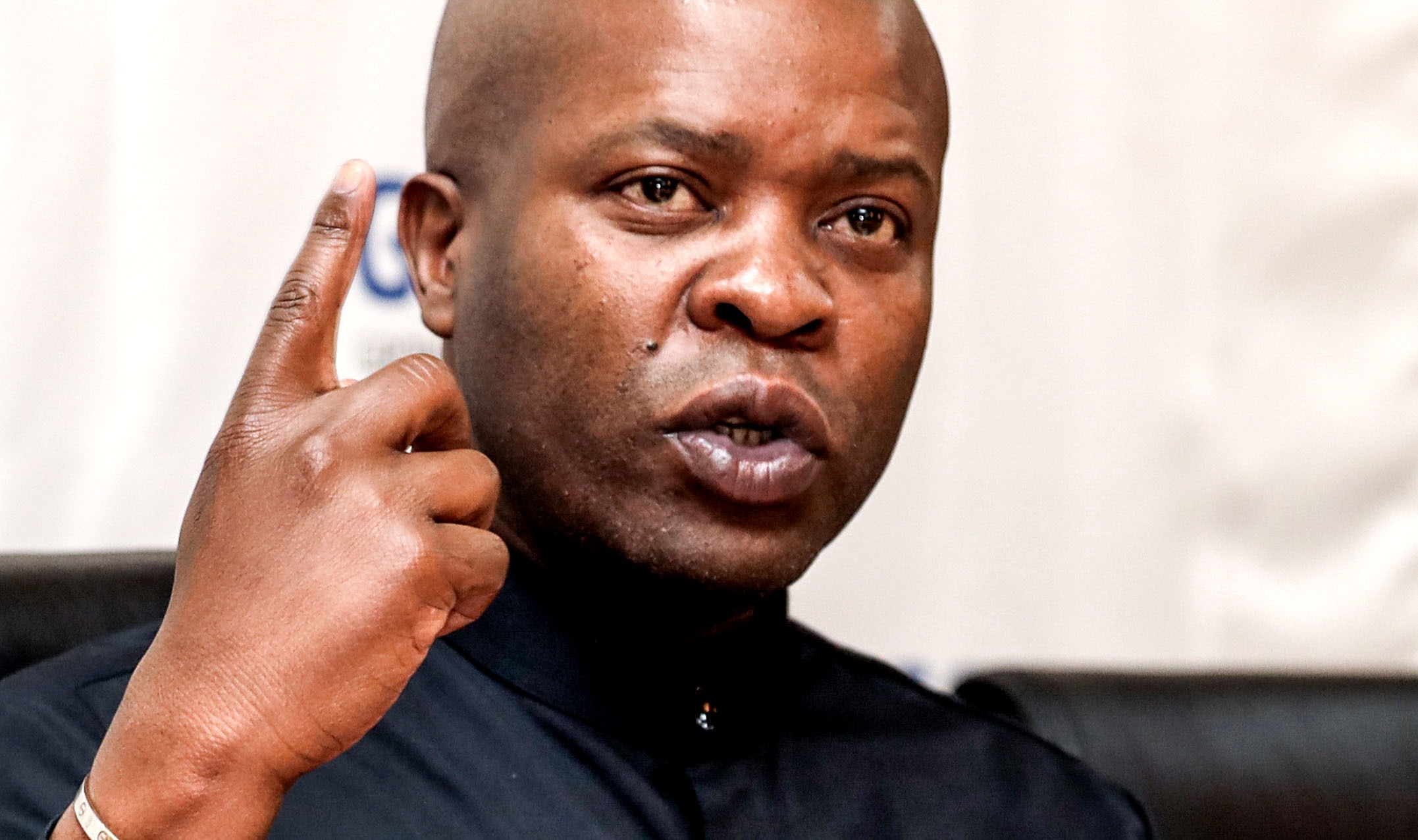
 Gauteng education MEC Lebogang Maile has announced a review of the decentralised financial model for schools. (Photo: Gallo Images / Fani Mahuntsi)
The Gauteng Department of Education will review the current model allowing school governing bodies (SGBs) to independently determine how their budgets will be spent in a bid to cut down on schools’ municipal debt and avoid them being left in the dark.
This move was announced by education MEC Lebogang Maile in a media briefing at Lyndhurst Primary School on Sunday, 17 May 2026, following a Pretoria High Court judgment earlier this month ordering the Tshwane Municipality to restore electricity supply to all schools that had been cut off for nonpayment.
By the end of March Gauteng schools had accumulated municipal debt of up to R583.9-million over 60 days. The City of Johannesburg accounts for the lion’s share of this at R390.7-million, followed by the City of Ekurhuleni (R75.14-million) and the City of Tshwane (R51.7-million). Gauteng schools also owe Eskom a debt of R6.32 million.
As a result of unpaid debt, schools across the province have faced disruptions to electricity and water supplies.
The debt is caused by factors such as unpaid historical debt, municipalities overcharging schools, weak systems for disputing incorrect bills, and “misalignment” between annual increases in municipal tariffs and the annual incremental allocations provided to schools by the department.
The large number of people migrating to Gauteng has placed additional pressure on the education system, which has caused overcrowding in schools, with which the infrastructure and maintenance budgets have not been able to keep up.
The decentralised model allowing schools to independently determine how their budgets are spent was introduced to promote service delivery, allowing schools to respond to their challenges quickly and independently. However, Maile argued that rising financial costs, insufficient funding and weak financial skills within SGBs has undermined its effectiveness.
“[The review] has been made necessary by the impediments that it has posed, particularly as it pertains to challenges with financial management and sound judgement. Ultimately, schools must focus on the core mandate of delivering the curriculum successfully, and administrative functions must be performed by experts to prevent governance failures and other factors that may obscure the focus of school management teams and governing bodies,” Maile said.
Schools left in the dark
This month, on 5 May 2026, the Pretoria High Court ordered the Tshwane Metropolitan Municipality to restore electricity to all schools that had been cut off due to nonpayment of their property rates, following a successful urgent application brought by AfriForum and Laerskool Wierdapark.
In addition, the court ordered that the municipality may not cut off any other schools for this reason and that any affected schools are entitled to claim compensation from the municipality. This decision was taken after several schools were left in the dark for unpaid property taxes, despite paying their electricity bills.
/file/dailymaverick/wp-content/uploads/2025/06/Oped-Cele-ECD-TW-option-2.jpg "Many non-fee-paying schools across Gauteng face the threat of having their electricity and water cut off. (Photo: Leila Dougan)")
“It is unfair that learners and staff’s rights to have access to quality education, safety and even the provision of their basic needs are being violated due to the authorities’ maladministration. At the affected schools, teaching could not take place as usual. Systems that should protect safety on the premises were not working. Feeding schemes that should provide hot meals to the most vulnerable children could not continue, while supplies in refrigerators spoiled,” argued Alana Bailey, AfriForum’s head of cultural affairs.
Official opposition party, the DA, has laid the blame squarely with premier Panyaza Lesufi’s government. It argues that the crisis is the result of a lack of coordination between the Gauteng Department of Education, the Department of Infrastructure Development, the Department of Cooperative Governance and Traditional Affairs and municipalities, compromising service delivery in schools.
“The situation has now worsened to the point where teachers in some schools are struggling to print teaching materials, cannot use smartboards, and learners are left without access to basic sanitation because electricity and water bills remain unpaid,” the party said immediately after the ruling.
“The DA reiterates its call for the immediate establishment of a permanent intergovernmental committee comprising these departments, provincial Treasury and municipalities to coordinate, audit and resolve municipal billing and utilities disputes affecting schools across Gauteng. This committee must establish whether municipal bills are accurate, correct that meters are linked to schools and determine if underground leaks exist.”
Maile reiterated that schools should not be cut off from essential services due to unpaid bills and said the government was engaging with municipalities to ensure the court ruling is upheld. DM
Comments
Scroll down to load comments...