




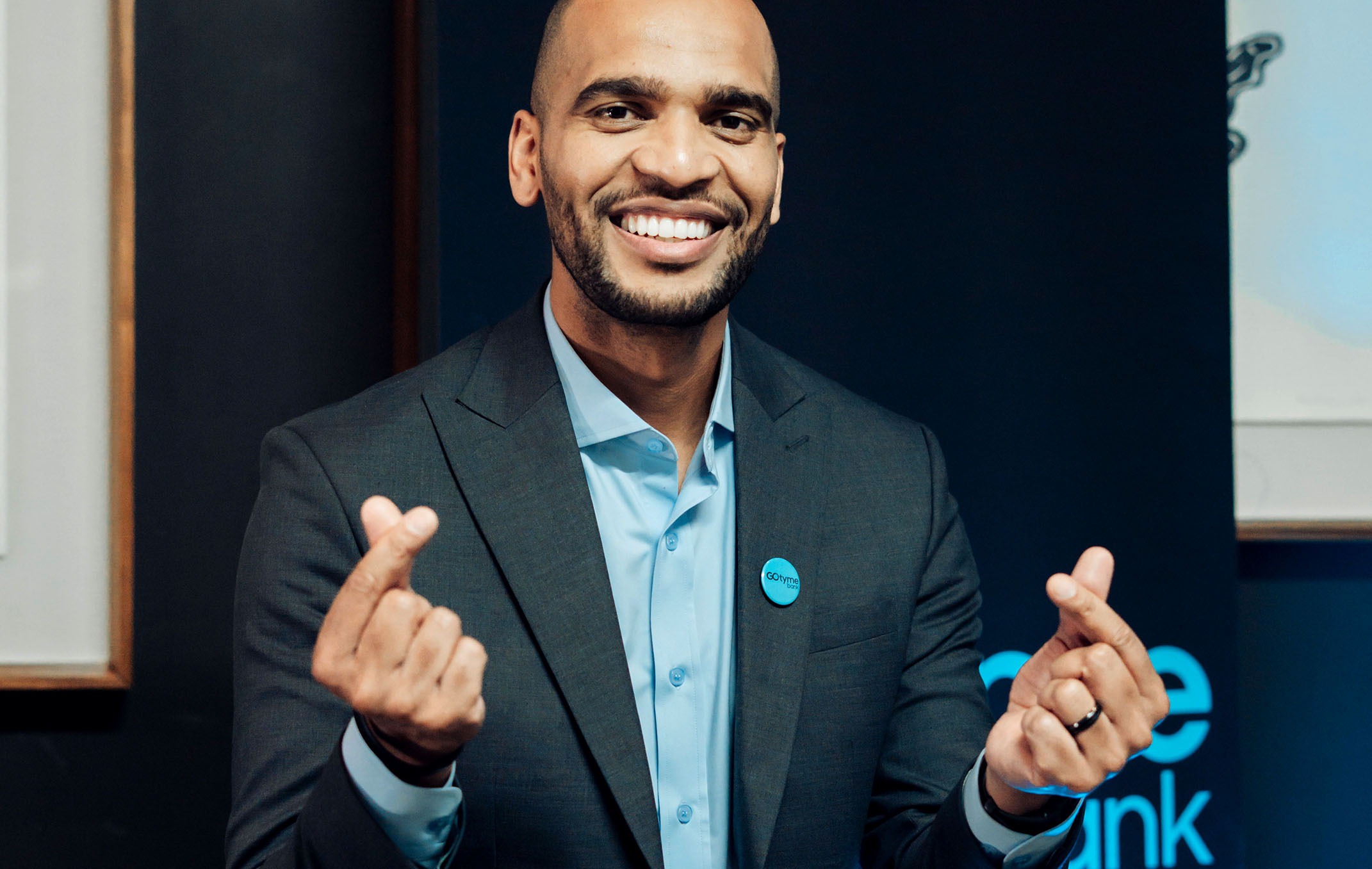
 Cheslyn Jacobs, GoTyme Bank’s CEO. GoTyme Bank has introduced an employee share ownership scheme, empowering over 95% of staff with a direct stake in the digital bank’s growth. (Photo: Supplied / GoTyme Bank)
South Africa’s digital banks have spent the past few years fighting for customers, deposits, downloads and relevance in a market where the incumbent banks remain muscular, well capitalised and deeply embedded in people’s financial lives.
Now GoTyme Bank, formerly TymeBank, is trying to make a different kind of statement: the people building the bank should share in the value they help create.
The digital bank has introduced an employee share ownership programme that will give qualifying staff a direct stake in the business. The scheme comes as GoTyme moves beyond its early challenger-bank phase, following its rebrand from TymeBank, strong customer growth, expanded retail presence and what it says is its recent achievement of becoming Africa’s first profitable digital bank.
For Cheslyn Jacobs, CEO of GoTyme Bank South Africa, the move is not just a retention device or a warm corporate slogan wrapped in share certificates.
/file/attachments/orphans/GoTyme_Bank_Launch_Audience_View_949301.jpeg "The launch of GoTyme Bank’s new initiative. (Photo: Supplied / GoTyme Bank)")
“It’s less about retention, actually,” Jacobs told Daily Maverick. “It’s more about the psychology of ownership.”
The basic message, he says, is simple: “When you walk through the doors of this business as an employee, it’s yours. Part of it is yours.”
The scheme is unusually broad in its design. Jacobs says more than 95% of staff qualify, with eligibility based on tenure and performance standing. Staff must have worked for the business for at least six months and must not have been rated as poor performers in their most recent performance cycle.
Not a once-off windfall
Unlike other typical broad-based BEE staff share schemes, the programme is not intended as a once-off windfall for people who happen to be on the payroll at the right moment. Jacobs says the intention is to make annual allocations, meaning employees who do not qualify in one year may have the opportunity to qualify in future.
“The intention is to have an annual distribution,” a visibly enthusiastic Jacobs said.
The shares will vest over three years. If an employee leaves before the vesting period is complete, the unvested allocation returns to the pool. But once the shares vest, Jacobs says, they belong to the employee.
The quantum has not been fully disclosed, but Jacobs says the allocation is material. He puts the value at “north of R100-million”, adding that, if the bank delivers on its growth ambitions, the value created for employees could be significant.
/file/attachments/orphans/CheslynJacobs_753968.jpg "Cheslyn Jacobs says the initiative is about cultivating a sense of ownership among employees, not just retention. (Photo: Supplied / GoTyme Bank)")
The structure is also different from many empowerment share schemes, which are often housed in a trust and can feel remote from ordinary employees. Jacobs says GoTyme’s staff will participate through a founders’ vehicle established years ago. The shares are not individually voting shares, but the structure in which they are held can vote on behalf of the collective.
What makes the scheme notable is that senior executives and junior employees participate under the same rules.
“There’s absolutely no differentiation in the scheme,” Jacobs says. “The executive team, or the most senior team in the business, is participating versus the most junior team in the business. We all participate in exactly the same scheme.”
He uses the example of a call centre employee to make the point: “Another Cheslyn who happens to be a call centre agent… will participate in the same scheme I’m participating in, with the same set of rules.”
That is not how share-based incentives usually work in corporate SA. Long-term incentives are often concentrated among executives and senior managers, while lower-paid employees receive salaries, bonuses or benefits but little direct exposure to equity upside.
Staff allocation
Jacobs says GoTyme’s senior people had to make room for the broader staff allocation.
“The most senior people [made] the largest allocations at the sacrifice of what they would ordinarily receive, so we can redistribute this to the people across everybody,” he says. “There was not a single senior executive across the world that voted against this programme.”
The idea, he says, was born in the wider Tyme Group, during conversations with Nathaniel Clarke, CEO of GoTyme Bank in the Philippines. Both have been part of the South African business from its early days and had recently been involved in internal culture sessions with staff.
Those sessions, Jacobs says, were designed to explain the group’s story, values and purpose to employees. But they also revealed how strongly staff identified with the business.
“It was through these sessions, sitting in these sessions, watching our staff interact… that the idea came,” he says.
From first conversation to approval, the process moved quickly – in a matter of weeks. Jacobs says the idea was taken to senior leaders, founders and the group remuneration committee, where it received unanimous support.
The scheme will apply beyond SA. Jacobs says teams in the Philippines and Vietnam are also participating, making it a broader Tyme Group initiative, touching about 2,000 employees in total, rather than a South Africa-only programme.
In SA, GoTyme has been building momentum on several fronts. The bank says more than one million South Africans have downloaded or migrated to the new GoTyme app, including more than 200,000 existing customers who had not used the previous version. It has also been expanding its physical footprint through Customer Hubs in retail centres, with nearly 30 already operating and plans to grow that number to about 100.
The broader Tyme Group now serves more than 21 million customers globally, including 13 million in SA, according to the bank. Its markets include SA, the Philippines, Vietnam, Indonesia, Hong Kong and Singapore.
Delicate moment
For GoTyme, the employee share scheme is being introduced at a delicate moment in the digital banking story. Customer acquisition has been the easy-to-understand scoreboard. Profitability, trust, customer usage and long-term value creation are harder tests.
Jacobs says the bank has moved into a new phase.
“Becoming profitable showed us that the model works,” he says. “Now it’s about the next phase, growing responsibly, earning trust, and making sure the people who helped build this business are part of where it goes next.”
The staff response, he says, has been a mixture of excitement and curiosity. Employees have received their letters, but the bank is also running internal education sessions to explain how the shares work, how value is created and what influences valuation.
/file/attachments/orphans/GoTyme_Bank_Debit_Card_355506.jpg "GoTyme Bank’s debit card. (Photo: Supplied / GoTyme Bank)")
In a country with a low savings culture and limited financial literacy, even among many formally employed people, equity ownership can be powerful, but only if staff understand what they own, how it may grow, what risks come with it and what patience is required.
Jacobs says that is part of the work.
“The buzz on the floors [is], ‘We are owners’ or ‘We are shareholders’,” he says. “But the curiosity is: How does this work? What does that mean?”
For a digital bank trying to become one of the country’s most loved banking brands by 2030, the bet is that ownership changes behaviour. Not by locking people in, but by changing how they see the institution they are building.
In banking, trust is usually discussed as something customers must feel. GoTyme is now testing whether the same principle applies inside the business: whether employees who feel like owners can help build a bank that customers choose to trust. DM
Comments
Scroll down to load comments...