



 Illustrative image: Sources generated with Google Gemini Flash Image 2.5
It is a terrible thing to contemplate but we must have some of the world’s worst car accidents.
The fact that we are such a big country, where people have to regularly travel long distances, the type of vehicles so many are forced to use and then on top of that the incredibly bad driving, just add to the worst kind of cocktail.
Very few stories I’ve covered in my years have affected me as much as what happened to that poor family in Limpopo this week.
When a woman heard her husband had been killed on the N1 near Bela-Bela she rushed across the road, her baby strapped to her back. Then the VIP cavalcade carrying Health Minister Aaron Motsoaledi ploughed into her, killing them both instantly.
I have no idea if there was any wrongdoing or how fast that car was going. But having argued with Motsoaledi about many things for many years I am almost certain he would have been deeply affected by this on a personal level. He’s a very human person, someone who is not afraid to show you how he is feeling. And unlike many other people who occupy high office I always feel he is very connected to the people he is trying to serve.
But the cars we drive are also a big part of this story.
The AA has started a #SaferCarsForAfrica campaign, with CEO Bobby Ramagwede suggesting that some assembly lines skip certain steps when making cars for different markets.
Some cars are made to be safer and some are made to be more dangerous.
Guess which ones come to Africa?
As an example the AA used the Toyota Starlet, after it received a zero-star rating from the safety organisation Global NCAP.
Toyota, who really should have known better, decided their response would not be some kind of reassuring corporatese about safety. Instead some lawyer who engaged only the legal part of their brain, wrote a “cease-and-desist” letter.
If you want your story to be the most-discussed issue in a newsroom, try to stop someone from publishing it. Any PR person could have told them that.
Toyota claims the car NCAP tested was an older model, and that their updated model, the one they sell new now, is much safer.
That may be so, but you can imagine how many older Starlets there are on our roads. So I’m not sure I’m that reassured.
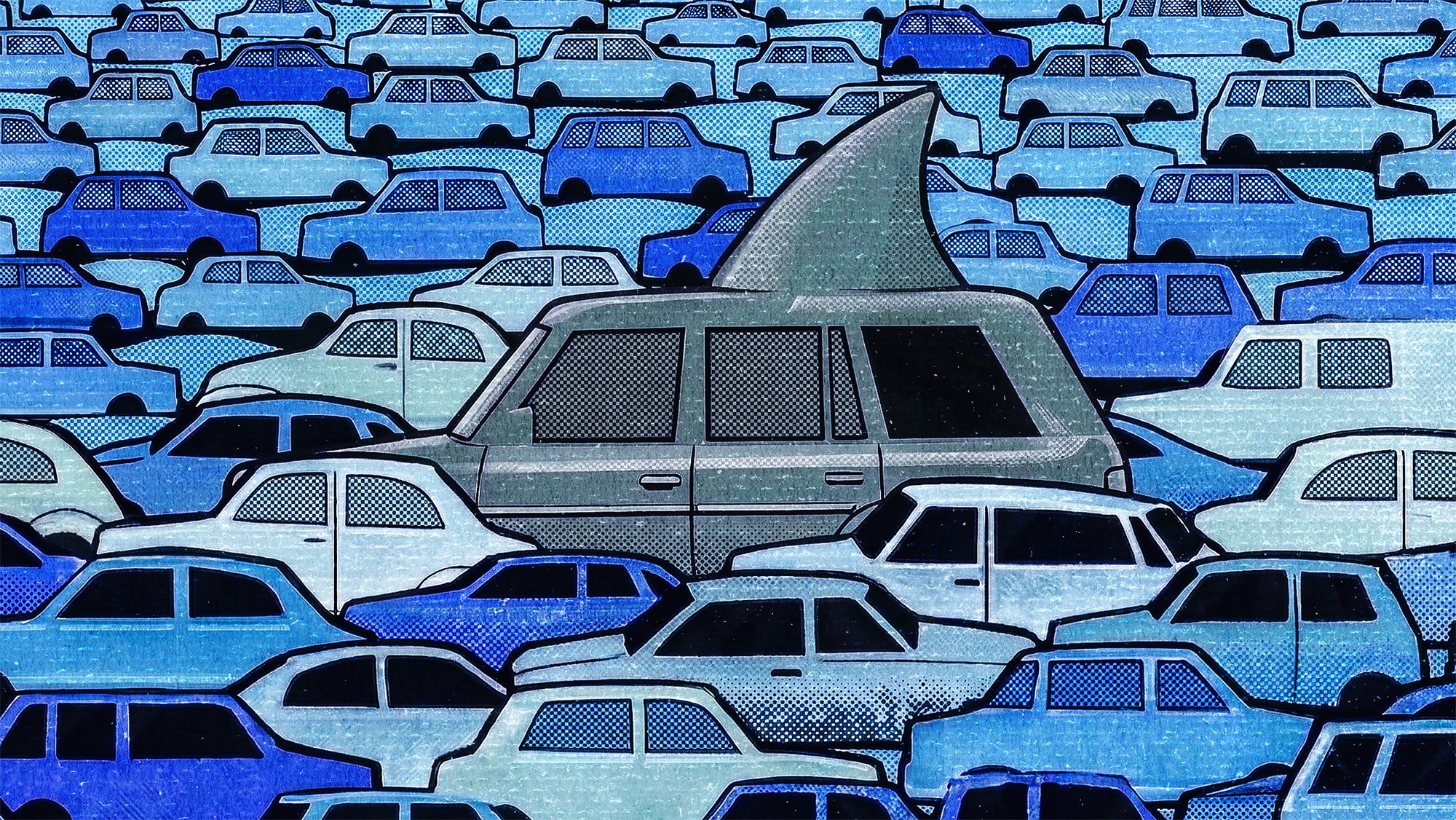
Within this is the fact that the size and weight disparity between the cars on our roads has probably never been greater. So many of us drive huge cars, while so many more are crammed into something not much bigger than a go-kart.
And with Uber and Bolt offering rides in tiny electric vehicles, some cars on our roads are smaller than anything we’ve seen before (in fact, legally, the little orange Bolts you see on the road aren’t cars at all, they’re technically a quadricycle).
You are allowed to ask at this point: “And you, Stephen, what do you drive?”
Um. Well, you see, we have teenagers. And we go camping. And tow a trailer behind us. And and and.
I justify my monstrosity to myself.
But karma ensures that I am punished at least five times a week.
A parking garage I regularly have to use has pretty tight spaces. So I lose minutes of my life every morning trying to force a massive needle into a tiny spot. Sometimes it’s easy… and after a moment of celebration I find I can’t open my door enough to get out.
This increasing addiction to bigger cars is incredibly dangerous.
A couple of years ago The Economist crunched numbers from accidents in the US and found that bigger cars are killing people. As a reference they used the Honda CR-V as the midpoint.
By happy coincidence we happen to have one in our family. And I still remember how big the CR-V felt when I first drove it. Now, when I go through the drop-and-go at a school that claims to be posh, I think the CR-V is probably easier to park than just about anything else around me.
It’s amazing how things have changed over the past decade.
While it’s true that if you are in a bigger car you are much safer in an accident, the Economist found that “for every life that the heaviest 1% of SUVs and trucks save, there are more than a dozen lives lost in other vehicles”. In other words, bigger cars end up killing more people.
That’s before you even consider what happens to pedestrians, who simply don’t stand a chance against bigger SUVs.
But, despite all of rationality bolstering the argument that we should have smaller cars, I don’t think it will happen. I have no plans to give up mine (although the Strait of Hormuz is slowly exacting justice for my choice).
As the roads around Gauteng continue to get worse, and the driving appears to get more dangerous, it’s only going to convince more of those who can to get still bigger cars.
They make you feel safer.
Even if they make everything around them more dangerous. DM
Comments
Scroll down to load comments...