



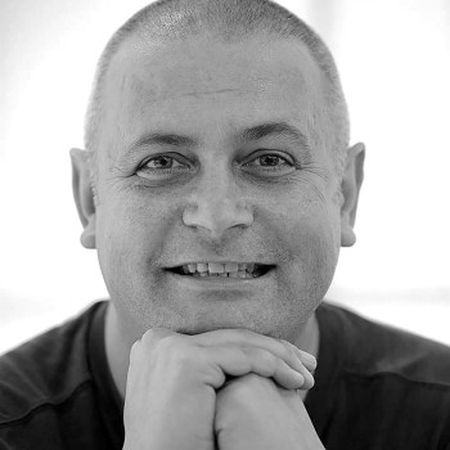
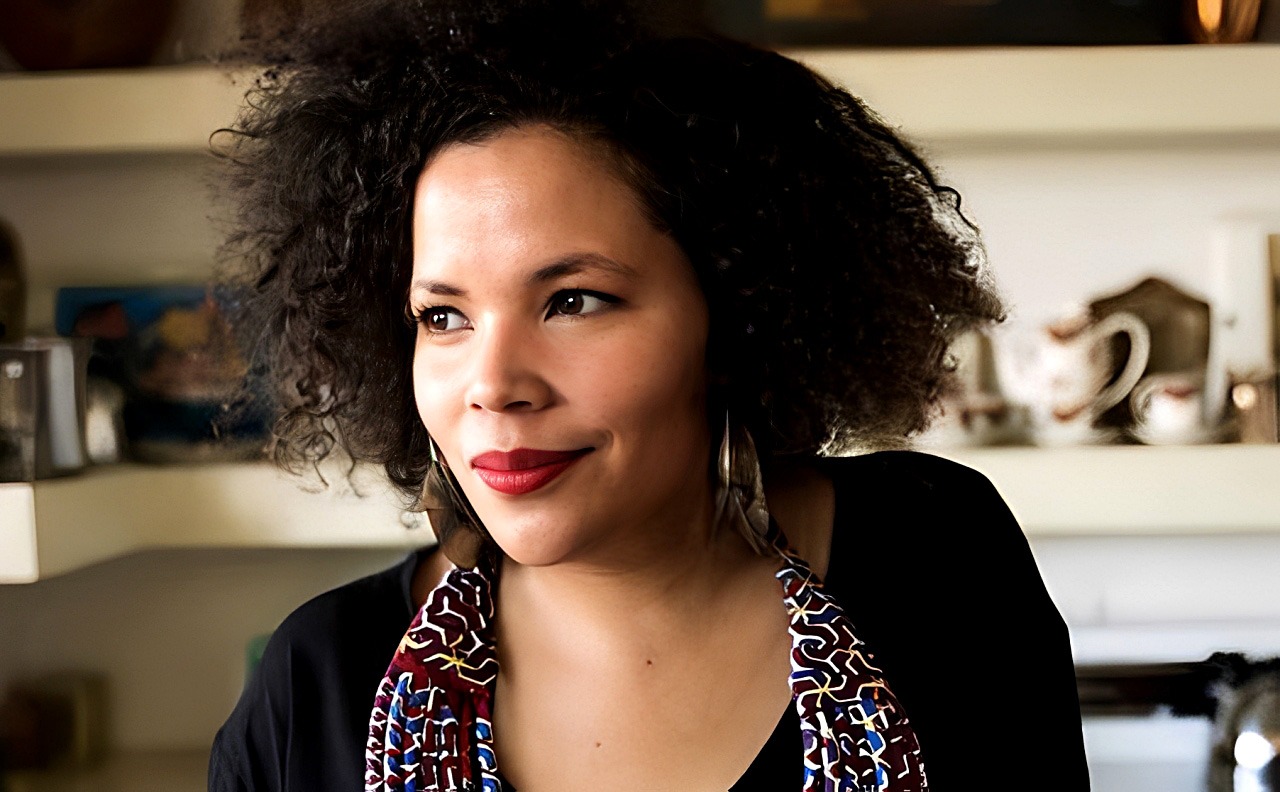
 Maria McCloy died on 12 May 2026 from heart failure. (Photo: Africa Affair Journal / X)
On the morning after Maria McCloy died at Milpark Hospital from heart failure on 12 May, a huge circle of friends, journalists, designers, musicians and former television producers collectively lamented the loss of one of Johannesburg’s most artistically visionary people. There was nothing stilted, stale or boring about her.
McCloy had spent the best part of three decades working at the intersection of South African urban culture, media and design. When she co-founded Black Rage Productions in 1995 with two fellow Rhodes University journalism graduates, the intention was to fill a gap that struck them as obvious.
South Africa had just emerged from apartheid, Kwaito was pulsing through the townships, a generation was finding its voice, and almost nothing in the mainstream media was paying attention.
“We saw that in America there was Vibe, and The Source, and television that reflected their culture with serious writing,” she later told The Pug magazine.
“We were like. Wow, that culture is beautifully analysed, but nothing here is 1995.
“Kwaito’s happening, we have freedom, there is fashion, poetry, arts and music, but nowhere can you go to read this”.
/file/attachments/orphans/ED_189458_120167.jpeg "Maria McCloy during the launch of the AfricaRise Retail Concept Store at Sandton City Mall on 24 October 2019. (Photo: Gallo Images / Oupa Bopape)")
Black Rage Productions became the record that was missing. Its website, rage.co.za, became required reading for cognoscenti following urban South African culture. Its television productions, Bassiq, Street Journal, Noted and Soul Sundays, gave screen time to a group that had largely been invisible to broadcasters.
Outrageous Records, the label arm, signed artists including Reason, Zubz, H2O and Pebbles, produced the Expressions compilation and the Maximum Sentence mixtape, and in doing so helped lay the infrastructure for what would eventually become a mainstream South African hip-hop industry.
She was born in Maseru on 20 January 1976, the eldest child of Jim McCloy, who was English, and Mathabo, who was Mosotho. The family seldom stayed long in one place.
McCloy grew up absorbing Khartoum, Lagos, Maputo and stretches of suburban Britain before the family settled in South Africa, and she was sent to St Anne’s Diocesan College in KwaZulu-Natal.
In York, on visits to an English great-aunt, she combed charity shops and cobble street boutiques. In Mozambique, she had her own capulana, a traditional, brightly coloured, rectangular piece of cotton cloth that acts as a vital, multi-purpose garment for women in Mozambique.
McCloy was a chameleon and could work in more than one industry, as long as it had spunk and funk. There was public relations for MTV Networks Africa and Paramount. Her clients ranged from Bongo Maffin, vocalist Thandiswa Mazwai and jazz musician Hugh Masekela’s television venture, to Toni Braxton and Babyface during their South African tours.
Her design label began with a chance encounter. She was home in Maseru for a weekend when she came across Ntate David Makoae at a market near the capital, making copper wire earrings. She asked him to make her a pair, but much bigger.
He told her her ears would fall off. She brought the earrings back to Johannesburg, where Mokgadi Itsweng, then in hospitality, spotted them at a restaurant and placed an order.
Nkhensani Nkhosana, founder of Stoned Cherrie, followed. From there, things catapulted organically through networks of people and through the fine attention she paid to designers and craftspeople.
Maria McCloy Accessories started at monthly markets in Newtown and Greenside. In 2011, she took a stall at Market on Main in the Maboneng precinct, which became a Sunday fixture.
/file/attachments/orphans/IMG_9275_655050.jpg "Maria McCloy. (Photo: @mariamccloy/instagram)")
A commission to create media gifts for the publicity campaign around the Congolese film Viva Riva! produced her first African-print clutches, and from there the work expanded: wax- print shoes in 2012, features in True Love, Destiny and Cosmopolitan, a CNN Inside Africa interview, a magazine cover.
She had no formal design training. What she had was the ability to improvise while learning on her feet. She worked with a Tanzanian artisan for necklaces, a Nigerian craftsman for bags, a factory in downtown Johannesburg run by an elderly Italian for footwear, and held a strict position on where her goods should be produced.
“It would be easier and cheaper to produce in the East”, she told Fairlady, “but I want my continent to win and my collaborators to win with me.”
A collaboration with Woolworths, for which she was selected as one of eight South African designers for the retailer’s Style by South Africa collection at South African Fashion Week, was the moment she described as her greatest professional achievement, the move from markets to mainstream.
Later came a limited-edition range with Lucky Star, the tinned food brand, translating its distinctive reds, yellows and greens into tracksuits, puffer jackets and beaded jewellery. She also worked with Thula Sindi’s Africa Rise collective, which gave her pieces a retail presence in dedicated spaces rather than the runway and then nowhere. Her work appeared in the Fashion Cities Africa exhibition at Brighton Museum and at the Tropenmuseum in Amsterdam. Lupita Nyong’o and Michael B. Jordan asked for her shoes. She gave a TEDx Talk.
/file/attachments/orphans/HILncOJWIAEJUhP_528244.jpeg "Maria McCloy. (Photo: @MikeyMashila / X)<br> <br>")
Her position on all of this was consistent and, by her own account, political. When The New York Times spoke to her about cultural appropriation and authenticity in Johannesburg, she said she hated the word authentic. There was no single definition of being African, she said.
“It’s a stylish, evolving Pan-African, very rooted city. Despite what has happened to people, apartheid and colonialism did not kill self-love, creativity or a sense of occasion and style.”
She wanted African design worn on ordinary days, in offices and clubs and schools, not preserved for Heritage Day or wedding receptions. “We can change that mentality where people feel that they should wear traditional African clothes for weddings and Western attire when they want to be formal or sexy,” she told True Africa.
Xolisa Radebe, who had known her since the Black Rage years, described a habit he had of writing long, occasionally provocative posts about Lesotho on social media, partly to see whether she was still reading them. “Message me and ask me to delete some of them,” he says. “Amazing soul. She made me a better creative. When I was in Cape Town, I was an advertising creative, but the more I spent time with her, I knew creativity has many avenues.”
He says that her behind-the-scenes advocacy had made his first major advertising campaign possible. She had pulled strings to get him on a shoot with Miriam Makeba and Thandiswa Mazwai. McCloy would not have mentioned it herself.
Ebrahim Fakir, a sociopolitical researcher, says the breadth of what she read and thought about, the range of conversation she was capable of, was immense. He had crossed paths with her repeatedly in the months before her death, at events, in the streets, at the mall. “One of the last times, she asked me if I had read something or the other, and I said no,” he says. “I would rather spend Friday reading your gig guide on what is happening in Joburg. I meant it.”
Ishvara Dhyan, founder of Ancient Secrets, who leads cultural walking tours through Johannesburg’s inner city, spoke of the hours they spent talking whenever he returned from trips to rural areas on the continent.
“She would visit for hours to see my latest acquisitions and chat about everything from sex to politics,” Dhyan says. “Of course, she always bought some beadwork from my collection as well. As a fellow maximalist, we never could get enough of all things African.”
Dawn Robertson of Jozi My Jozi remembers the force that was McCloy.
“What stood out most about Maria for me was the way she made culture feel both intimate and expansive at the same time. She was a force in Jozi’s music, culture and fashion scene – a publicist, DJ, fashion designer and urban media pioneer with a rare gift for making Jozi, the city we loved, feel like home,” Robertson remembers. “I will always remember how she stitched together people, places and stories, always centring African creativity. Her work helped keep Jozi’s arts and culture scene alive.”
To writer Bongani Madondo, it is the memory of her smile and hair.
“The only thing better than her smile was her very brief, two-step laughter, like: Haw-haw! And she will quickly say something even funnier, but looking the other way as though in search of a misplaced item,” he says. “The more you got close to her you realised how hardworking Maria was. She was, I don’t have the words to say ‘obsessive’ without sounding weird: Let’s say she put dignity back into the phrase, ‘hustle...hustling...’ Maria McCloy hustled like a muthah.”
McCloy lived in Yeoville and spent much of her time in the city centre, at Kwa Mai Mai market, talking to beaders and bag makers and embroiderers. McCloy believed in the Johannesburg central business district at moments when that belief was not widely shared.
The National Arts Festival, with whom she had worked, described her as someone whose ability to weave together people, places and ideas was exceptional.
She is survived by her mother and her sisters, Thandiwe and Natasha. On the morning of 20 January 2026, her 50th birthday, she woke to what she described on Facebook as an abundance of the overwhelming: “Words, Texts, Video Calls, Calls, Gifts, Lunches, Social Media, Visits from sisters, friends who are family old and new, from near and far, songs and more flowers literally and figuratively than you could imagine!! I’m still swimming in your ocean of affection and I think I will all year!” DM
Comments
Scroll down to load comments...