




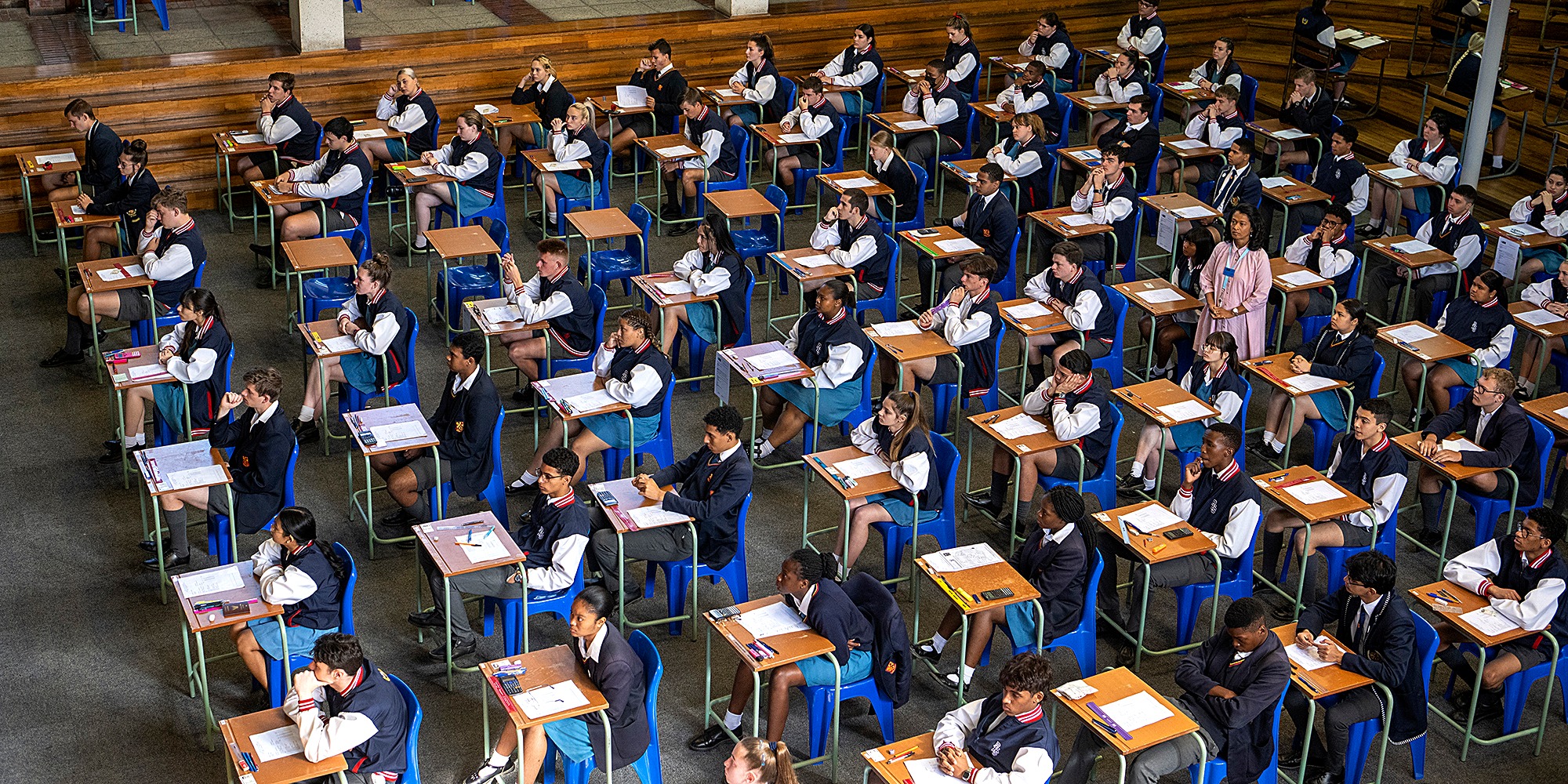
 Candidates at Brackenfell High School, Cape Town, begin their exams. (Photo: Gallo Images / Die Burger / Jaco Marais)
 The KwaZulu-Natal Department of Education has declared itself “combat ready” for the 2026 mid-year examinations, with more than 25,000 candidates set to begin writing across the province. In a comprehensive readiness briefing, the department confirmed that all systems are in place to administer the National Senior Certificate (NSC) and Senior Certificate exams, emphasising a zero-tolerance policy toward cheating or the leaking of papers.
“We have worked hard to ensure these examinations are conducted with the highest levels of integrity, security and fairness,” said Sipho Hlomuka, the KwaZulu-Natal MEC for Education.
/file/attachments/orphans/ED_533700_989178.jpg "Sipho Hlomuka, the KwaZulu-Natal MEC for Education. (Photo: Gallo Images / Gerhard Duraan)")
Hlomuka said the province had put extensive systems in place to ensure the examinations ran smoothly and credibly for the 25,399 registered candidates across the province.
To oversee the schedule, approximately 1,000 invigilators had been trained to manage sessions across 900 examination rooms throughout the province. The distribution of examination materials was being handled through a network of 13 storage points and 103 distribution and collection centres.
Hlomuka confirmed that 681 markers and 65 internal moderators had already been selected, with official appointment letters set to be released by 19 June 2026. The marking session was scheduled to run from 3 July to 9 July 2026, with the final results slated for release on 7 August.
More than grades
The June exams traditionally mark a high-pressure period for South African youth, and the South African Depression and Anxiety Group (Sadag) reports that this year is no exception.
“We’re constantly seeing a rise in stress-related concerns amongst our teens, especially during exam periods,” said Roshni Parbhoo-Seetha, Sadag’s Project Manager for Education.
She noted that the most common challenges included heightened anxiety, feelings of being overwhelmed, difficulty concentrating, low mood, panic, sleep disturbances and, in some cases, hopelessness and an emotional shutdown for some learners.
Parbhoo-Seetha said that exam stress was not just about academics.
“It is often linked to a fear of disappointing parents, uncertainty about the future, and even financial pressures,” she explained.
The psychological toll was further compounded by a pervasive sense of loneliness. Sadag had observed that a significant number of teenagers felt profoundly isolated during these periods.
When this distress was left unaddressed, it began to affect a teenager’s physical and emotional wellbeing. According to Parbhoo-Seetha, anxiety often showed up as racing thoughts, irritability and physical symptoms like nausea or panic attacks, fuelled by a constant worry about failing.
For learners already vulnerable to depression, the stress could trigger feelings of worthlessness and hopelessness, leading them to withdraw or feel completely exhausted.
“Sleep is often one of the first things to suffer. Many teens stay up late studying and struggle to switch off mentally... unfortunately, poor sleep then impacts their concentration, their memory, emotional regulation and academic performance, and it creates a difficult cycle,” she said.
Spotting a teen in distress
According to Parbhoo-Seetha, identifying a teen in distress required looking for specific changes in their baseline behavior. These included:
- Significant changes in mood: Watch for increased irritability, cheerfulness, anger, or emotional outbursts.
- Social withdrawal: Withdrawing from friends, family or activities they used to enjoy.
- Changes in sleep or appetite: This includes sleeping too much or too little, and eating too much or too little.
- Physical complaints: Frequent headaches, stomach aches, or other stress-related physical complaints.
- Mental “shutdown”: Difficulty in concentrating, or appearing “mentally checked out”.
- Extreme fear of mistakes: This is often accompanied by negative self-talk, such as “I’m going to fail” or “I’m not good enough.”
- Avoidance behaviour: Refusing to attend school or write tests, and an increase in conflict at home.
- Signs of burnout: Evident through exhaustion, numbness or giving up entirely.
- Critical distress signals: If a teen expresses hopelessness, talks about wanting to disappear, or mentions suicide or self-harm, Parbhoo-Seetha warns that “immediate support is critical”.
Coping strategies for teens
Parbhoo-Seetha encourages learners to move away from aiming for perfection and instead focus on simple, realistic strategies:
- Avoid the cram: Instead, break the material into manageable chunks.
- Follow a structured routine: Use a study timetable that includes regular, short breaks.
- Prioritise sleep: Parbhoo-Seetha emphasises that “your memory and concentration depend on that sleep”.
- Manage physical health: Stay hydrated, eat regularly and eat healthily.
- Monitor stimulants: Limit caffeine and energy drinks, especially late in the day.
- Physical movement: Parbhoo-Seetha encourages teens to move their bodies, even if it’s just a short walk or stretching.
- Practice grounding: Use deep-breathing exercises when feeling overwhelmed.
- Communicate: Talk to someone you trust instead of bottling things up.
- Self-Compassion: Parbhoo-Seetha stresses being kind to yourself.
Sadag offers free, confidential, 24-hour support for learners, parents and teachers nationwide. Trained counsellors are available at any time to provide guidance, practical next steps and emotional support:
- Telephone: 0800 567 567 (available 24/7)
- WhatsApp Chat: 087 163 2030 (8am to 5pm)
- SMS “Help” to 31393 and a counsellor will call you back
“We want young people to know that there is always help and always hope. If you’re feeling anxious or scared, talk about it early. You don’t have to wait for a crisis, there is someone ready to listen and help you find your way forward,” said Parbhoo-Seetha. DM