




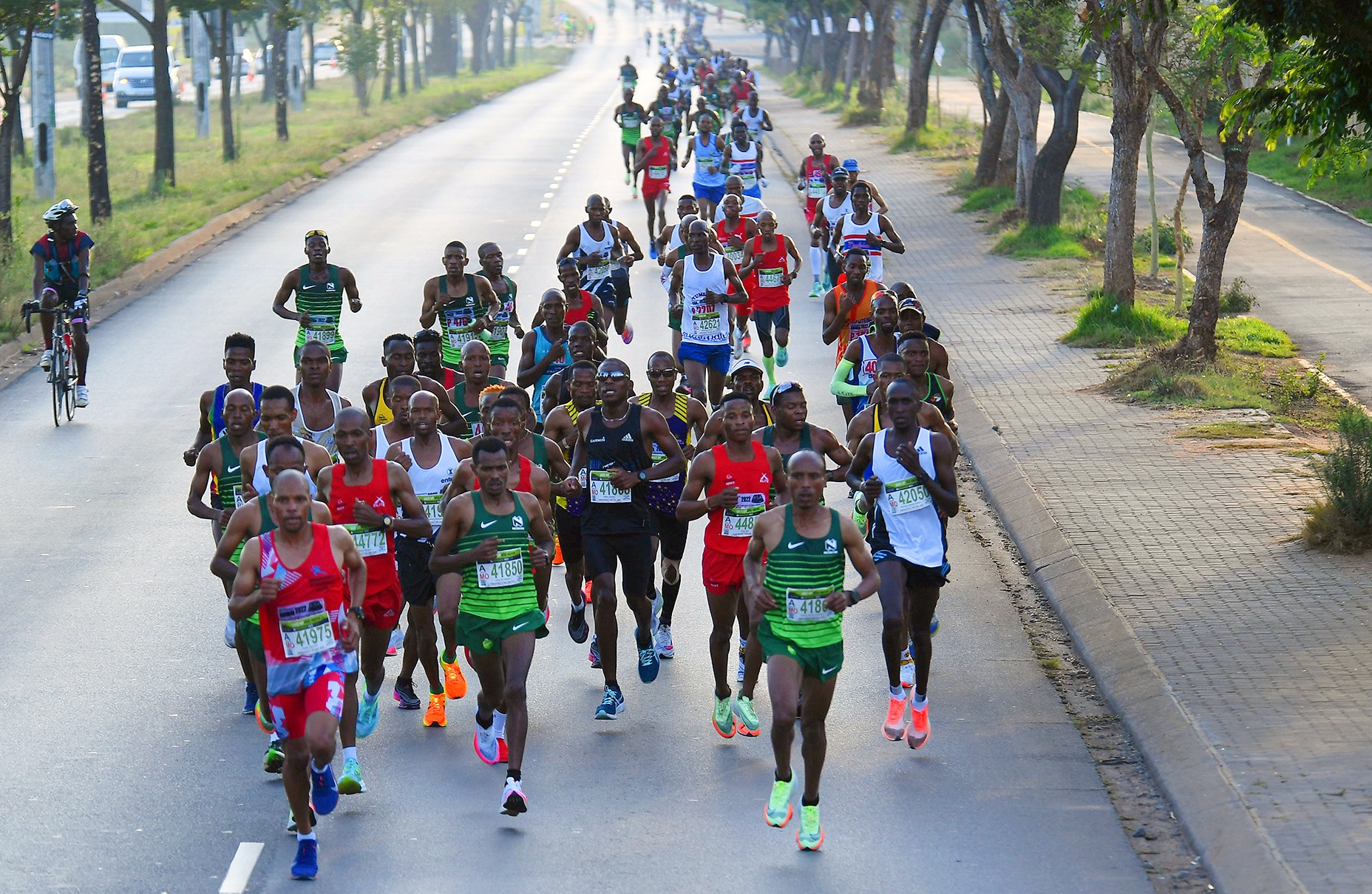
 Runners during the 2022 Soweto Marathon. Winners from the 2025 event remain unpaid. (Photo: Lefty Shivambu / Gallo Images)
 Minister of Sports, Arts and Culture Gayton McKenzie said his department would not let the Soweto Marathon “die in our hands”, even if it meant “redirecting” funding from other projects to pay the athletes the prize money they were owed.
McKenzie made the remarks during a virtual press conference on 12 May, where he presented the 2026/27 budget vote for his department to the National Assembly.
Nearly six months have passed since the historic Soweto Marathon took place on 29 November 2025, yet the elite podium finishers still have not received their payment.
Earlier this month, McKenzie told Sunday World that his department was “taking over” the Soweto Marathon. He said it would ensure the winners were paid, and would pursue criminal charges against the race organisers.
“As a department, we are taking over the Soweto Marathon,” he said. “Secondly, we are going to pay the winners; this is our country, and athletics is our sport. We are also going to open criminal cases against the organisers who disappeared and stole that money. We cannot have athletes run and they cannot get paid. I am sorting out everything.”
Daily Maverick sent questions to McKenzie’s department seeking clarity on his statement, but did not receive a response. Both Central Gauteng Athletics (CGA) and Athletics South Africa (ASA) said the government had yet to formally engage with them.
/file/attachments/orphans/TL_2538945_445968.jpg "Gayton McKenzie, Minister of Sports, Arts and Culture. (Photo: Sydney Seshibedi / Gallo Images)")
But in the virtual press conference, McKenzie shed some light on the department’s plans to address the governance and payment crises.
“What we said to the journalists in question is that we’re planning to take over the marathon, but it’s temporary,” said the minister. “We don’t run marathons. But when we say we’re taking over, it’s like what we’ve done with basketball.
“We are taking over [the Soweto Marathon] until we put the governance and the structures in place. We did it with boxing also.” (Upon taking office, McKenzie dissolved the existing board of Boxing South Africa, appointed a new one in December 2024 and promised a forensic investigation into misappropriated funds. In early 2026, he also formally de-recognised Basketball South Africa due to “prolonged governance and administrative failures”.)
McKenzie said the department’s strategy to rectify the Soweto Marathon crisis was threefold.
Firstly, the department will meet with the organisers, the Soweto Marathon Non-Profit Company (NPC) as well as ASA next week to better understand why the runners had not been paid.
Secondly, the department intended to open a criminal case against the non-profit company and, thirdly, McKenzie said he would hand the matter “over to people that understand what needs to happen”.
“We’re not going to allow the Soweto marathon to die in our hands,” he said. “The runners are the product. There’s no marathon without the runners.”
Athlete livelihoods
For elite athletes, preparing for and competing in races is their full-time job, and like any profession, they expect to get paid.
“Training towards the Soweto Marathon, it is not just the loss of prize money, but it’s also the loss of making income in other places,” said Gerda Steyn on Metro FM in April. “I had to say no to various other races around the world to focus on the Soweto Marathon, but then walked away with nothing to show for it, even though I finished on the podium.”
/file/attachments/orphans/TL_2547063_168369.jpg "Gerda Steyn, seen here winning the women’s event in the Two Oceans Ultra Marathon in Cape Town on 11 April, has still not received her prize money for finishing third in the Soweto Marathon on 29 November 2025. (Photo: Grant Pitcher / Gallo Images)")
McKenzie also reiterated his intention to pay the podium finishers their outstanding prize money.
“As a minister, I cannot sit back and one of the greatest athletes, Gerda Steyn, has not been paid her money,” said the minister. “For runners to run in a marathon, it costs a lot of money. They have to pay for transport, preparation, physios and coaches. By the time they run, they’ve already spent 25% of the prize money on preparation.”
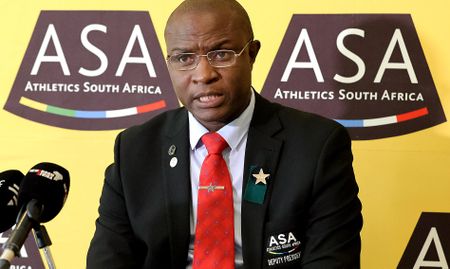
When asked how the department planned to pay the athletes, McKenzie said the department would “redirect” projects if necessary because the issue had become “national news”.
“You do not want people running the Comrades Marathon to be scared to come to SA because we are known as a country that does not pay,” said McKenzie.
Ongoing instability
The prize money fallout comes after months of instability and infighting over who actually controls the Soweto Marathon.
The dispute involved three primary stakeholders: the Soweto Marathon Trust, which claims historical custodianship of the race; Central Gauteng Athletics, the provincial body responsible for sanctioning regional events; and the Soweto Marathon Non-Profit Company, a newly formed entity appointed to organise and run the 2025 race after gaining support from nine out of 11 Soweto athletics clubs.
The conflict began in 2025 when Central Gauteng Athletics replaced the trust with the non-profit company as the race organiser, igniting a bitter power struggle defined by protracted court battles and governance disputes.
Although the race eventually went ahead under the non-profit company, the ongoing prize money crisis has raised serious questions about how the event was approved and managed in the first place. DM