




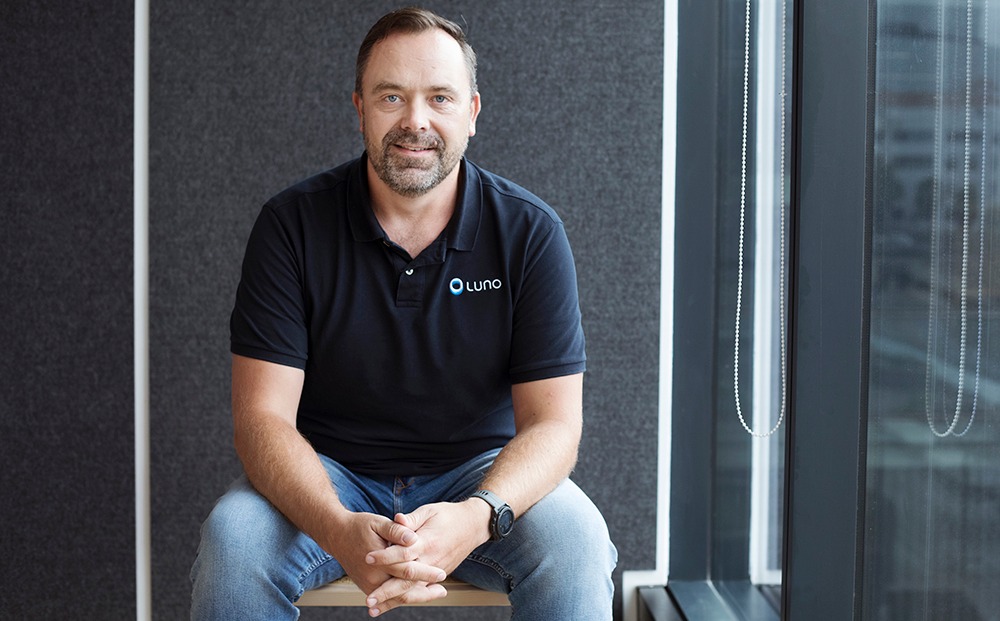
 Christo de Wit, Luno’s Country Manager
 The question of whether retail investors should own digital assets has largely been answered. Discovery Bank now offers crypto trading through Luno, crypto and stablecoin payments are accepted at over 650,000 merchants nationwide, and a rand-backed stablecoin, ZARU, has been launched by a consortium to modernise payment infrastructure by bringing the rand onto blockchain rails. The conversation is turning institutional: how to use this infrastructure to move value, manage liquidity and access new asset classes at scale.
Stablecoins are at the centre of the institutional shift. Blockchain-based settlement networks now move value in seconds, without the lag that adds cost and delay. The appeal is straightforward: faster settlement, fewer intermediaries and payments that can be automated.
The ZAR Universal (ZARU) stablecoin is significant because the country's financial establishment is firmly on board, with partners including Sanlam, Luno, EasyEquities, and Lesaka. Each ZARU coin is fully backed by high-quality rand-denominated assets, including cash, bank deposits, and South African government bonds, and its reserves are verified monthly by Moore Johannesburg.
Institutional-grade credibility makes ZARU viable as financial infrastructure. Christo de Wit, Luno’s country manager, says, “ZARU is a crucial milestone for South Africa's digital economy, making everyday payments and money transfers faster and cheaper, while being fully supported by secure reserves that help strengthen the local financial system.”
The nuances of making a rand-backed stablecoin work in the South African context are complex. ZARU's reserve structure, managed by Sanlam Specialised Asset Management and verified monthly by Moore Johannesburg, is designed to ensure the coin maintains its value as interest rates and market conditions shift.
The institutions, the regulation and the infrastructure are converging. Industry players argue that stablecoins are a prerequisite for broader tokenisation: the longer-term evolution in which assets like equities, funds and property are represented digitally and settled instantly. The stablecoin debate, in other words, is really a debate about the future of South African financial markets.
Applications to attend the Luno Institutional Digital Assets Conference (LIDAC26) in Cape Town are open at www.lidac.io. Along with Luno CEO James Lanigan, SA Deputy Finance Minister Ashor Sarupen, Sanlam Financial Markets CEO Jacques le Roux, and economists Adrian Saville and Refilwe Moloto, are confirmed speakers. DM
Investing in crypto assets may result in capital loss. Luno (Pty) Ltd is an authorised financial services provider (FSP No. 53314) and registered credit provider (NCRCP22123)
This information is not intended to be nor does it constitute financial, tax, legal, investment or other advice; nor is it a call to trade. The information is intended as general market commentary for information purposes only. Before making any decision or taking any action regarding your finances, you should consult a qualified Financial Advisor.