



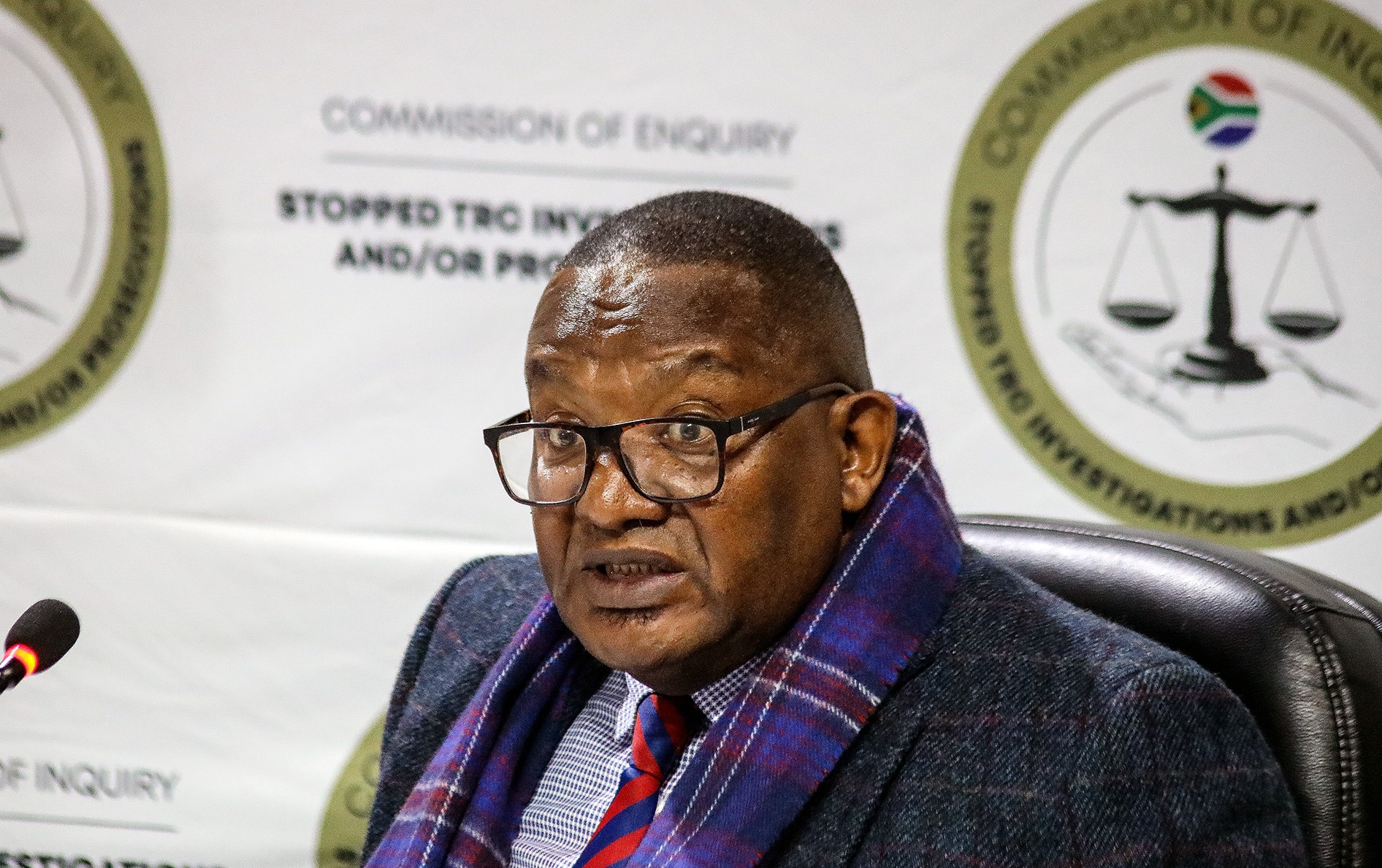
 Former NPA boss Vusi Pikoli testifies at the Khampepe Commission in Johannesburg. (Photo: Gallo Images / Fani Mahuntsi)
Advocate Vusi Pikoli, former head of the National Prosecuting Authority (NPA), has told the Khampepe Commission of Inquiry into TRC prosecution delays that former SAPS national commissioner Jackie Selebi used former President Thabo Mbeki as a “scarecrow” to obstruct the work of the NPA.
Pikoli, who appeared before the panel in March, returned to the commission to face cross-examination by various legal representatives from the Department of Justice (DOJ), the National Prosecuting Authority (NPA) and the South African Police Service (SAPS) about alleged political interference in the delaying of TRC prosecutions.
Responding to questions about the nature of this interference, Pikoli pointed to his own suspension in 2007 and the subsequent charges he had faced at the Ginwala Commission into his fitness to hold office as “the ultimate proof of political interference”.
His suspension, he said, had sent a “chilling message” to future national directors of public prosecution (NDPPs), as one of the charges he had faced at the Ginwala inquiry was over his insistence on pursuing TRC prosecutions.
/file/attachments/orphans/7d4267207515b83f00ad645fb3f39ac3_381272.jpg "Jackie Selebi, the former head of South Africa’s police force, during his sentencing to 15 years’ imprisonment after he was convicted at the Johannesburg high court on 3 August, 2010. Selebi had been found guilty of receiving bribes from a drug kingpin. (Photo: Reuters Werner Beukes)")
Ulterior motives
On day 41 of the inquiry on 8 May, Pikoli also identified the SAPS’ refusal to provide investigative capacity to the Priority Crimes Litigation Unit (PCLU) as a central method of obstruction.
He noted that police officials, led by Selebi, had viewed advocate Anton Ackermann, head of the unit, as an “obstacle”. Pikoli accused Selebi of using Ackermann’s involvement as “a pretext for not cooperating”.
The national police commissioner had repeatedly raised questions about the “true motive” of the NPA and had accused the authority of focusing on prosecuting apartheid-era accused, including former police minister Adriaan Vlok and South African Police (SAP) head, General Johan van der Merwe.
However, Selebi had believed and claimed the ultimate underlying objective had been to target President Mbeki and other ANC leaders who had been denied amnesty.
/file/attachments/orphans/000044435_968130.jpg "Former minister of justice Bridget Mabandla. (Photo: Felix Dlangamandla)<br>")
Held to ransom
Selebi, in framing the investigations as a threat to the then ANC leadership, sought to create “political resistance” against pursuing post-TRC cases. Pikoli characterised this as an attempt to hold the NPA “to ransom”.
The Directors-General (DGs) Forum, made up of the departments of Justice, Police and National Intelligence Agency, had attempted to impose a decision-making regime on the NDPP to await recommendations from the forum before reaching a prosecutorial conclusion, said Pikoli.
He characterised this to the panel as an unconstitutional attempt to fetter his independent discretion and ensure the NPA “played along with a general expectation that no prosecutions would occur”.
He said that after he had ordered a probe into a forged letter following a 2007 article in Rapport falsely claiming that the NPA intended to target Mbeki and other ANC leaders, then minister of justice Brigitte Mabandla had directly instructed him to halt investigations.
The letter, purportedly penned by Ackermann in 2006, had originally been penned in 2003, but the date was later altered.
Pikoli had refused Mbandla’s instructions, viewing the forgery as part of a broader attempt to intimidate the NPA. He was suspended in September 2007 as a result of this conflict with the minister.
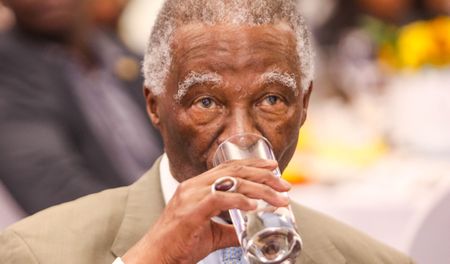
/file/attachments/orphans/ED_590683_848672.jpg "Former president Thabo Mbeki. (Photo: Gallo Images / Sharon Seretlo)")
Not so ‘Machiavellian’ Mbeki
Ackerman previously told the commission that he had viewed then president Mbeki’s establishment of an Amnesty Task Team made up of representatives of the new ANC government and lingering old-guard officials, as offering a “back door” amnesty to high-profile perpetrators who had not applied for amnesty.
According to Ackermann, the process (initiated after a 2003 speech by Mbeki), which included the work of the amnesty team, the drawing up of a draft amnesty Bill and eventual amendments to the TRC prosecution policy, was designed to facilitate a “re-run of the amnesty process”.
This process, in his view, was an attempt to bypass the established legal and constitutional framework following the conclusion of the Truth and Reconciliation Commission (TRC).
Pikoli said he had initially disagreed with Ackermann about Mbeki’s motives. A significant point of departure between the two men centred on their interpretation of Mbeki’s speech on the handling of TRC cases.
Ackermann had experienced the speech as “Machiavellian”, arguing that the process proposed was “morally questionable and aimed at an unconstitutional end – specifically a re-run of the amnesty process”.
Bigger project
Pikoli told the inquiry he had disagreed with this view, stating there had been “nothing mischievous” about Mbeki’s speech.
He had, at the time, viewed it within the broader context of South African history as a “genuine attempt to achieve national unity and reconciliation”. He noted he had “fully agreed” with Mbeki at the time.
Ackermann and Pikoli also held differing perspectives on the legal validity of the amendments made to the TRC Prosecution policy.
Ackermann had opposed these from the outset, and the PCLU head believed the amendments violated the constitutional rights of complainants and represented “unwarranted interference” in the independence of the NPA.
Pikoli said that at the time of the drafting of the amendments, he had not viewed these as unconstitutional or a violation of rights. Rather, he had believed this was a “necessary legal mechanism” to address outstanding TRC matters.
However, he conceded to the panel that Ackermann had, in fact, been “proven correct” when the courts eventually declared the amendments invalid.
Political pressure
While Pikoli and Ackermann both acknowledged that few cases were prosecuted, they emphasised different reasons for this failure.
Ackermann had highlighted institutional challenges, specifically a “lack of investigative capacity” and difficulties in convening a multi-departmental committee.
Pikoli agreed that the lack of investigators had been a “central factor”, but claimed “political interference” and deliberate obstruction by other state organs, such as the police and the Ministry of Justice, had contributed to the obstruction of work.
He argued that the lack of cooperation was often a manifestation of political pressure.
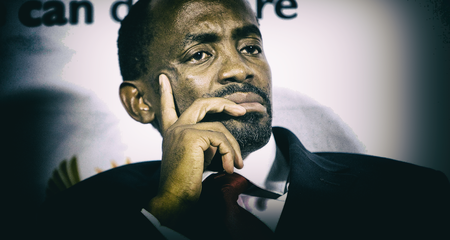
/file/attachments/orphans/ED_0143241_761584.jpg "Pikoli told the commission he eventually moved Dr Silas Ramaite (above) to chair PCLU task team meetings to ‘deflect attention away from Ackermann’. (Photo: Gallo Images / Phill Magakoe)<br>")
No direct orders
Pikoli told the commission he eventually moved Dr Silas Ramaite to chair PCLU task team meetings to “deflect attention away from Ackermann” and prevent his personality from being used as a justification for inactivity.
Questioned by advocate Kgomotso Moroka, for the DOJ, as to whether he had ever been directly ordered to halt a prosecution, Pikoli responded that no one had given him an instruction to do so.
However, “they were clearly voicing their concerns that if we go ahead with the prosecutions of the apartheid generals and other officers, then it would lead to pressure growing for [the] ANC to be prosecuted, ANC members, particularly those who were denied amnesty”.
/file/attachments/orphans/000065683_789244.jpg "Former minister of law and order Adriaan Vlok (centre), with former South African Police commissioner Johan van der Merwe (right), Gert Otto, Hermanus van Staden and Christoffel Smith after their high court trial on 17 August 2007, relating to the attempted murder of Reverend Frank Chikane. (Photo: Johnny Onverwacht / City Press / Gallo Images)")
Accountability
The prosecution of former Minister of Police, Adriaan Vlok and SAP head General Johan van der Merwe for the attempted poisoning of Reverend Frank Chikane in 1981 had served as a “test case” and “low hanging fruit”.
The matter was ready for trial without further investigation, said Pikoli. This had later resulted in a plea bargain by the two former officials.
Pikoli confirmed that he had been prepared to support efforts to achieve accountability concerning the murder of student Nokuthula Simelane, whose family, alongside many others, fought for this commission.

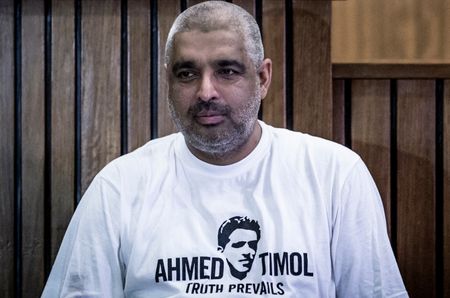
Similar to the Simelane matter, Pikoli identified the murder of Ahmed Timol and the kidnapping and assassination of the Cradock Four by security police as other cases he had supported in the families’ pursuit of justice.
Ultimately, Pikoli maintained that while some officials had framed their delaying tactics as a “misunderstanding” of policy, his experience had been that these were “deliberate acts of obstruction”.
Pikoli said: “ ‘Misunderstanding’ might have been diplomatic language, because it was more than a misunderstanding. It was deliberate obstruction, camouflaging as if it is a misunderstanding in the reading and interpretation of the guidelines, when the guidelines are quite clear”.
This “misunderstanding” was “a convenient word to use because it was a clear obstruction”. DM
Declaration: Advocate Vusi Pikoli is the father of Daily Maverick news editor Zukiswa Pikoli.
Comments
Scroll down to load comments...