




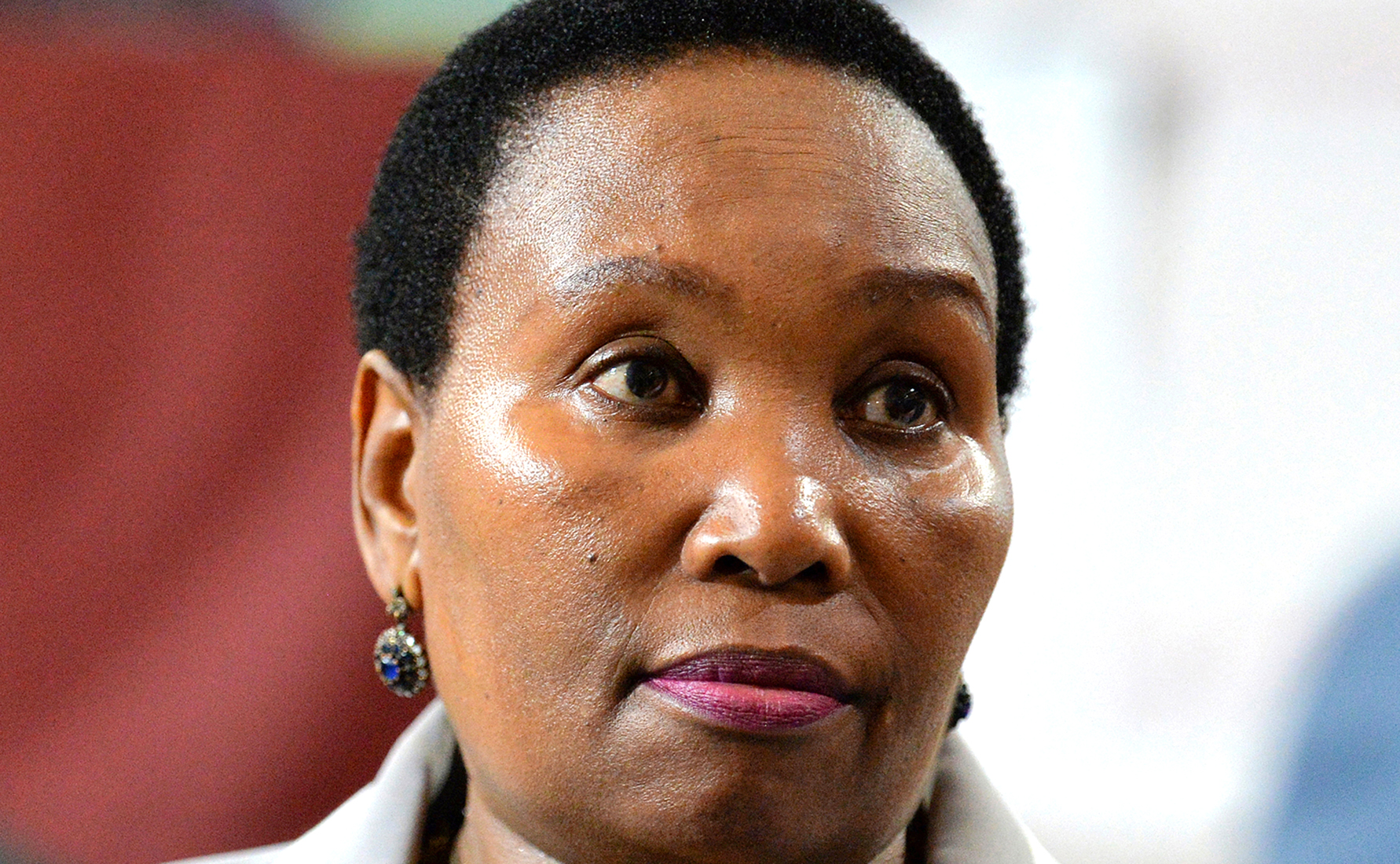
 Nelson Mandela Bay's suspended city manager, Nxolo Nqwazi. (Photo: Deon Ferreira)
 For seven days in May, Nelson Mandela Bay drifted rudderless without a city manager or acting city manager — a metro of more than a million people, still reeling from devastating floods, running without clear executive oversight.
The city now has until 31 May to resolve the standoff over suspended city manager Noxolo Nqwazi — or face the possibility of being placed under full provincial administration, Cooperative Governance MEC Zolile Williams has warned.
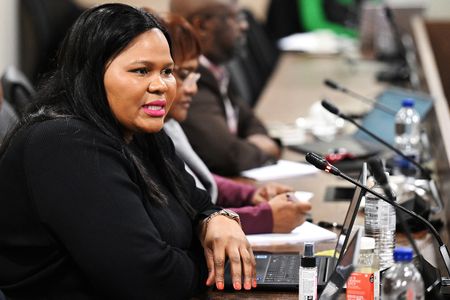
Williams has, in the interim, seconded Cogta deputy director-general Charity Sihunu to act as administrator in the metro from 8 to 31 May.
/file/attachments/orphans/ED_552468_274720.jpg "The Eastern Cape MEC for Cogta, Zolile Williams. (Photo: Lulama Zenzile / Gallo Images / Die Burger)")
Nelson Mandela Bay’s administrative crisis was triggered when its chief financial officer, Jackson Ngcelwane, rejected his appointment as acting city manager just one day after being elected by the council on 30 April.
The metro’s ongoing instability has been worsened by its reliance on its chief operating officer, Lonwabo Ngoqo, whose tenure has skirted legal limits. Despite already serving beyond the permitted six months, Ngoqo remained in office from October 2025 until March 2026 following a controversial extension approved by MEC Williams.
The leadership vacuum forced MEC Williams to intervene on 5 May. He directed Mayor Babalwa Lobishe to reinstate Nqwazi, noting that her long-standing suspension had legally lapsed due to the city’s failure to act since April 2023.
This followed a move by Nqwazi’s legal team, who argued that because no formal proceedings had been launched in over a year, she was entitled to return to her post on 1 May. While the city’s lawyers issued a rebuttal to block her return, the lack of a standing city manager left their position weakened.
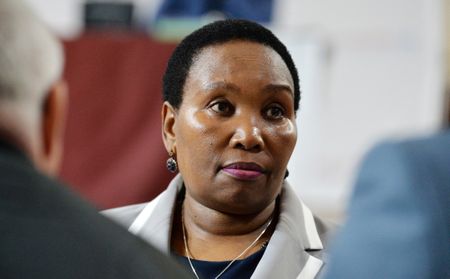
The metro was invited to Cogta’s parliamentary committee on 6 May to discuss matters of governance and the state of the metro.
During deliberations and after learning about the chaos caused by the city manager’s revolving door, committee chair Zweli Mkhize directed Williams to urgently address the matter.
‘Unintended consequences’
At a special mayoral committee meeting on 8 May, a Cogta delegation led by Williams introduced Sihunu as the new administrator. Sihunu will serve as acting city manager while Williams pursues further strategies to restore governance, improve service delivery and stabilise the metro.
In a leaked audio recording from the meeting, Williams is heard warning that Cogta Minister Velenkosini Hlabisa had expressed concern about the situation in the city.
“After this week’s interaction with Parliament, I told you that this dilly-dallying will result in unintended consequences. As the municipality is interacting with the Cogta portfolio committee, don’t be shocked when the minister invokes Section 139 and places this municipality under administration,” he is heard saying.
“Once you’re under administration, you will report directly to that official [the administrator], and they will be responsible for taking decisions in the city. Your opinions will matter less; imagine a metro under administration, it speaks to your capacity to manage and lead the city politically.
“So there’s this expression from the minister, and we don’t know if the minister will drive this to the Cabinet for approval — anything can happen.”
What would Section 139 mean?
Section 139 of the Constitution allows provincial governments to intervene in municipalities that fail to fulfil their executive obligations. It is a mechanism to protect service delivery, governance and financial stability, and can include issuing directives, taking over certain functions, or, in severe cases, dissolving councils.
In practice, this means an administrator is appointed to take over key decision-making functions, with the municipality effectively placed under their oversight.
Administrator’s terms of reference
A confidential report to be tabled in council on Wednesday sets Sihunu’s terms of reference, which include:
- Restoring administrative stability to improve service delivery, including cleaning the city, water provision, energy supply and road maintenance.
- Addressing poor expenditure across all grants and accelerating project implementation.
- Prioritising the filling of vacant executive director positions.
- Assisting in concluding the disciplinary process involving suspended city manager Nqwazi, including all outstanding disciplinary matters.
- Strengthening supply chain management systems to improve spending and operational efficiency.
- Supporting the implementation of disaster relief programmes in flood-affected areas.
- Restoring a culture of compliance and performance across the municipality.
- Rebuilding relations with other spheres of government and state entities to mobilise additional support for the metro.
What about the Section 154 support?
Sihunu is part of a Section 154 support initiative launched by Cogta last year. Under this mandate, a 10-member team appointed by Hlabisa is working from within the metro’s core departments — specifically energy and supply chain management — to overhaul governance and restore essential services.
Section 154 of the Constitution requires national and provincial governments to support and strengthen the capacity of municipalities to manage their own affairs, exercise their powers, and perform their functions through legislative and other measures.
Ngcelwane’s explanation
On 5 May, Ngcelwane wrote to Lobishe explaining his inability to accept the acting city manager (ACM) role, effectively overturning the council’s earlier resolution to appoint him.
“You will be aware that on 6 May we are required to return to the Cogta parliamentary committee to continue with the task that commenced in late March 2026. It would be much more appropriate or better for us to face the committee as the same team that attended the last session. I am certain that it will raise a huge debate for me to go back to the committee wearing both caps of a CFO and ACM.”
/file/attachments/2984/CFOJacksonNgcelwane_714366_b339ba66dc55599156315213a751123c.jpeg "Nelson Mandela Bay CFO Jackson Ngcelwane. (Photo: Nelson Mandela Bay municipality)")
His second reason involved the 2026/27 budget; Ngcelwane noted that he and the city’s financial team must collaborate closely to undergo a mandatory National Treasury assessment, a task requiring his full focus.
“Currently, I occupy two positions — that of senior director for budget and financial accounting and CFO. It is unfortunate that the position of the senior director: budget and financial accounting ... cannot be filled until council concludes the contract for the CFO position. All these are factors that inhibit my performance, making it difficult for me to accept added responsibilities,” Ngcelwane wrote.
How did we get here?
The municipality’s current crisis stems from its inability to spend its budget across departments and ongoing underperformance, driven by weak internal controls that have delayed key service delivery projects.
After it repeatedly failed to meet spending targets and address a growing UIFWE (unauthorised, irregular, fruitless and wasteful expenditure) bill as instructed, the National Treasury threatened to halt the transfer of grant funding to the municipality.
Continued governance failures have led Cogta to intervene in the metro under Section 154 four times over the past decade, with little sustained improvement. As a result, R267-million in funding was withheld. DM