




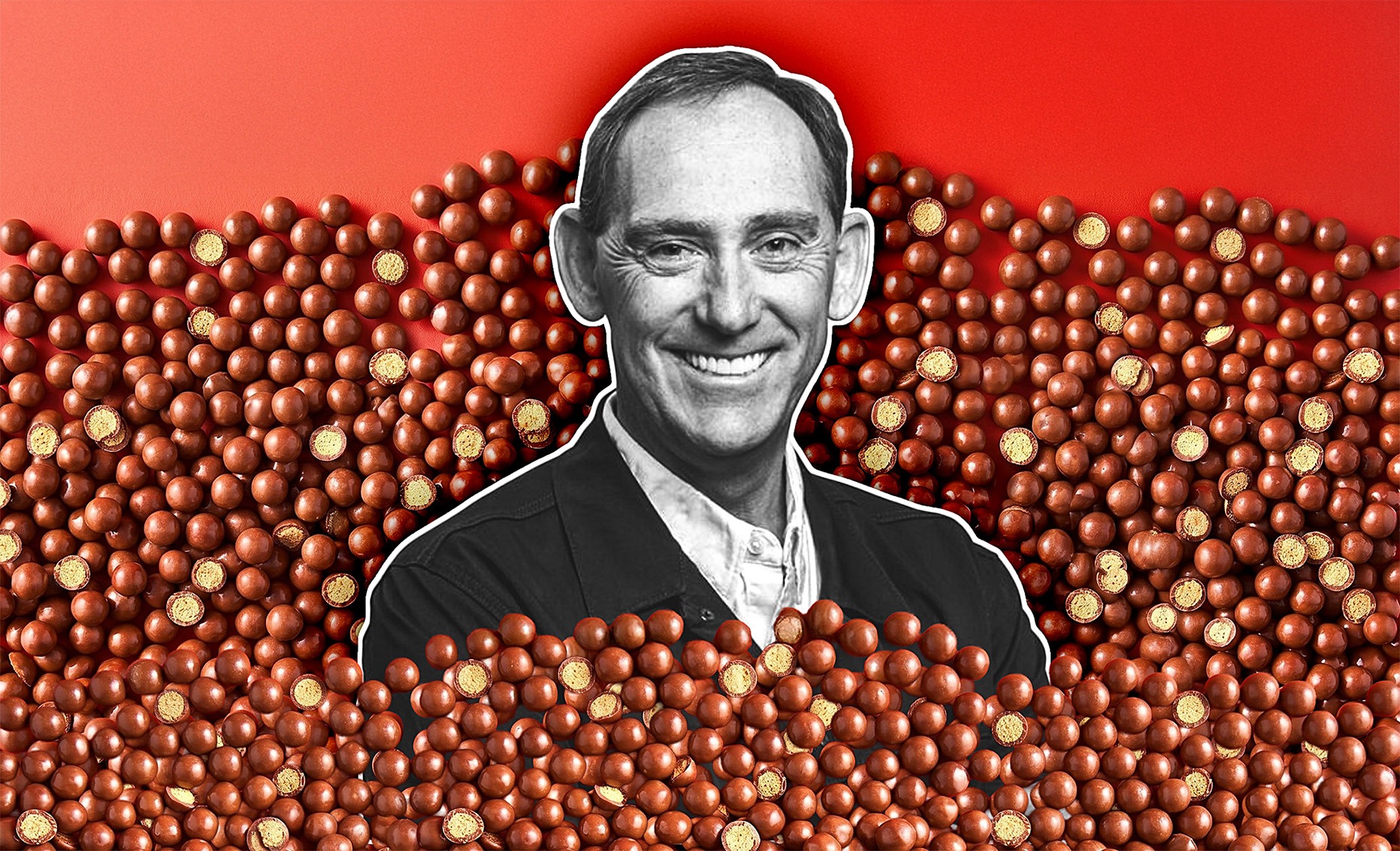
 Illustrative image: Woolworths CEO Roy Bagattini (Photo: woolworthsholdings.co.za) | Chuckles promotional image. (Photo: woolworths.co.za)
 The story so far
23 April: Financial Mail reports Beyers Chocolates is in liquidation following a dispute with Woolworths.
28 April: Kees Beyers, owner of Beyers, tells The Money Show that Woolworths pulled its business deliberately to shut him down. Woolworths issues statement denying this.
6 May: Woolworths issues a longer statement claiming it could not resolve its dispute with Beyers over exclusivity, and again denies unfair business practices.
Whenever there is a dispute involving a big corporate you can tell how serious it is by the level of the person involved. And when the CEO has to step into the ring you know that things have escalated, that whatever is going on has come to pose some kind of risk to the business.
For Woolworths, a company that was able to increase the price it charges you for food by about 4.6% in its 2025 financial year, it probably matters more than most. Because, almost by definition, Woolies is a shop for people who have choices; it is not competing for market share in the way Boxer is, where the period to the beginning of March saw price deflation of 1.2%.
That means its reputation really is valuable. It has to be protected at almost all costs.
So the dispute with Kees Beyers, the man who started Beyers Chocolates, is probably more dangerous to its name, and thus its sales, than a similar fight would be to Boxer or Checkers or even Pick n Pay.
In short, Beyers has previously claimed that Woolworths pulled its business right at the moment it was most vulnerable, after Beyers had decided to buy a new factory to supply other retailers.
And that he was doing this because he was worried they were too dependent on Woolworths which they believed was becoming more and more aggressive with them.
After two weeks of bad press, during which Woolworths published just two statements, its CEO, Roy Bagattini, decided to step into the ring. First he spoke to Moneyweb on Radio Sonder Grense, and then last night to The Money Show.
And, as he put it, he “should probably have stepped into the fray a little earlier”.
In his version, Woolworths and Beyers were happy together, they had the necessary agreements in place and Woolworths was about to give Beyers a lot more business.
Then they realised that Beyers was using its joint intellectual property and selling products a lot like the ones that were under IP, to Woolworths’ competitors.
As Ferial Haffajee might say this Phala Phala season, sofa so good. No one would put up with that, nor should they. Especially considering that it’s a huge breakdown in trust.
But things get a little stickier on the issue of whether there was a written agreement, or a legal contract, that spelt out exclusivity.
In response to a direct question about this, Bagattini was adamant: “Yes, we have an exclusivity contract and in fact it was an open-ended contract.”
But Beyers has told me something very different, and very specific.
He says that when the contract ran out in 2019 Woolworths sent him a new 30-page document. He replied with a legal opinion from his lawyer which spelt out why this contract was illegal in law. He never signed the contract.
And Beyers says he never received a reply to that letter. Which meant, in his version, that they continued with their arrangement but with no contract.
When I put all of that to Bagattini, when I asked specifically “are you sure?” that there was a contract, he actually laughed.
“Yes, I am sure. And you know this is one of the issues one has when you try to have this out in public. We tried to work with him for a period of about two years after he breached the contract and tried to put together a set-up that would work for him.”
I have to say, Beyers’s denial is so specific in its details, yet the ease with which Bagattini responded makes it difficult for me to know where the truth might lie.
You may remember one of the other claims Beyers made was that towards the end of increasingly difficult negotiations, one of the officials representing Woolworths said to him: “We will use you as an example to other suppliers.”
When I asked Bagattini if that was true, again he had a strong denial.
“What I can say is, I know our people and I know our business, and our suppliers are very much part of the Woolies family… It’s not the way we would ever speak to a supplier. He might have picked that up or inferred it or whatever, and I’ve had the team in several times in the last two weeks and at no point was anything like that said to him.”
Hmmm.
I’ve spent virtually a career trying to work out the truth of what happened in meetings which I had not attended. I don’t think I would be quite so quick to be so sure in public that something was not said.
Bagattini was not in the meetings. How could he possibly know?
It might have been said and then retracted and apologised for. Or said in response to an aggressive or insulting comment by Beyers. Or both.
He has no way of knowing for sure.
And if some kind of proof were to ever emerge, in the form of a recording or perhaps even an affidavit from someone who was there, well that would be very, very bad for Woolworths and even worse for Bagattini.
We are all hard-wired to defend David against Goliath. But the true test of Bagattini’s entry into the ring is whether he succeeded in changing your mind.
Has he? DM