



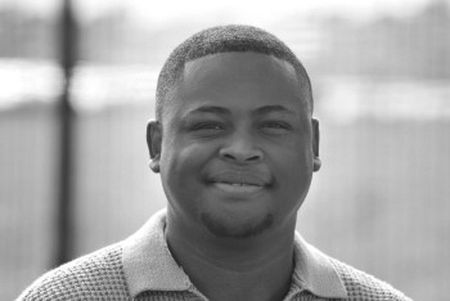
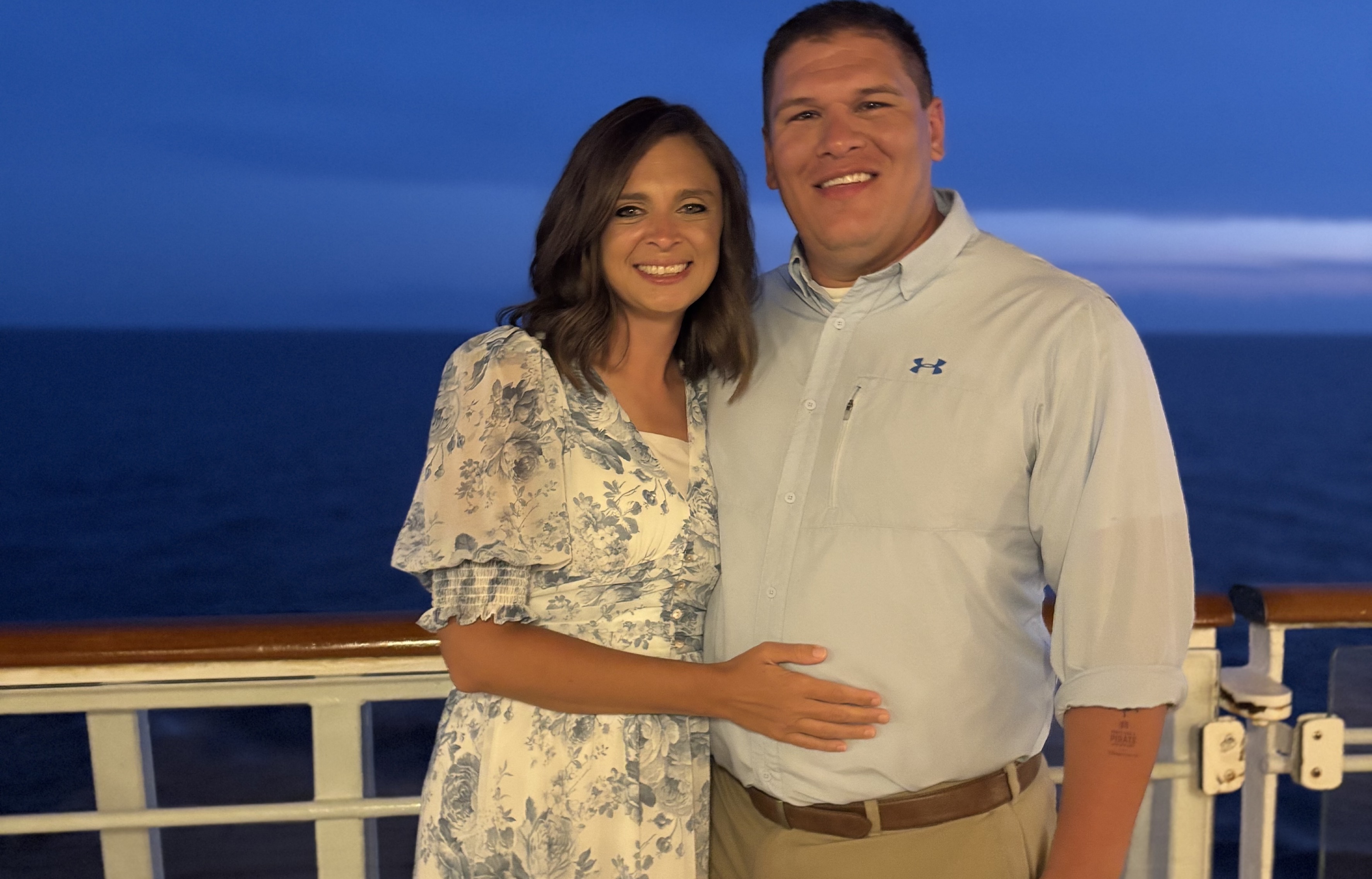
 Josh Sullivan, the American missionary abducted in Motherwell, Gqeberha, on 10 April 2025, with his wife, Meagan Sullivan. (Photo: Supplied / Josh Sullivan)
Josh Sullivan had barely started his sermon in his Motherwell church when four armed men walked in.
Thinking it was a robbery, he reached for his iPad to hand it over. Instead, the American pastor was struck in the head with a pistol and forced out of the church.
He was kidnapped in front of his congregation and driven away. Five days later, he was freed during a police operation in KwaMagxaki that ended in a shootout in which his captors were killed.
“Am I happy that they were filled with bullets? Absolutely,” Sullivan said in his first interview with South African media since his release. “They harmed me and my family. They changed the way that my family will be forever because of greed. But would I love to see them in heaven one day? Absolutely.”
The missionary from Tennessee has lived in Gqeberha since 2021 and has learnt Xhosa. He said he first visited “beautiful” South Africa in 2018. His decision to relocate to the country was made after prayer and reflection.
“We love South Africa. South Africa is a beautiful, beautiful country. I mean, the people are beautiful, the country’s beautiful.”
“Anyone who goes out there can see that it is a rough place and it needs help, and it’s not that we are some type of saviour of any kind. I know people look at us like you can go in there and make a difference. We know we can’t make a difference. It is the Lord that makes a difference. We just want to be available.”
With his wife, Meagan, Sullivan spent two years learning isiXhosa in an effort to integrate fully into the community. In 2021, the couple established Fellowship Baptist Church in Motherwell, the same church from which he would later be kidnapped.
/file/attachments/orphans/Pic1_Church_932924.jpg "The church in Motherwell, Gqeberha, where American missionary Josh Sullivan was abducted during a church service on 10 April 2025. (Photo: Kyran Blaauw)")
Life in South Africa had already exposed the family to crime, Sullivan said. His wife was once robbed at gunpoint at a traffic light in Kwadwesi, while he was previously robbed of his wallet in Motherwell.
Despite these incidents — including a moment when he intervened to prevent the man who stole his wallet from being assaulted by a mob — Sullivan said he never considered leaving South Africa.
“If you are working in the township, you’re going to get robbed. We were prepared for that,” he said.
‘No suspicion’
Sullivan said he had no suspicion he was being followed in the days before the kidnapping. It was only after his release that he began to see earlier incidents in a different light.
On 10 April — a date he says he no longer dwells on — Sullivan initially believed the armed men entering the church were there to carry out a robbery.
“I had a missionary tell me: ‘You may have good days in the township and bad days in the township, but you will never have an uninteresting day.’ And that is very true,” he said.
Recalling the moment, Sullivan said he had been preaching on the fruits of the Spirit and was barely a minute into his sermon — “before saying Amen” — when four armed men entered the church shortly after a young visitor made a phone call and left.
“I immediately thought they were going to rob us,” he said. “I had my iPad that I preached from, and I’m trying to hand him the iPad because I am assuming they are just here to rob us, but he does not take my iPad. He may have said, ‘Get on the ground’ — I don’t know,” Sullivan recalled.
Instead, one of the men struck him with a firearm before ordering him and the congregants to the ground and demanding his car keys.
“But before I could do anything, he hits me in the head with the pistol. I remember putting my hand in front of [my] face, waiting till I could see it again, because it almost, almost knocked me out.
“My wife laughs at it now, because they’re trying to lift me up, but they can't because I am a big guy. I got up, and they are not leading me or holding me. They just are directing me,” he said.
“We had a car seat in at the time, and so there were four guys, one guy in front, one guy in the passenger seat. I’m in the middle seat, one guy gets in, and the other guy is trying to get in, but there’s a car seat. I do not know how he got in. It was comical at the time watching him try to get in the car seat.”
Forced into vehicle
Sullivan was forced into his wife’s vehicle — a Toyota Fortuner — and driven away with his head covered.
During the drive, the kidnappers spoke about personal details they knew about him and other missionaries, which led him to believe he had been under surveillance.
“I do not think these men understood that we do not have money,” he said. “Just because we have a college and a school doesn’t mean it has thousands and thousands of rands. We don’t. We live month to month like everybody does.”
He was later transferred to another vehicle — a red hatchback, from what he can recall — and taken to a house in KwaMagxaki where he was held captive for almost six days.
Sullivan said it only fully dawned on him on the second day that he had been kidnapped.
Bound and blindfolded for most of the ordeal, he lost track of time while listening to conversations in isiXhosa — a language he understood, though his captors appeared unaware of this.
“They probably did not care that I knew Xhosa and that I understood them. I spoke to them in Xhosa. One main guy would come into the room where I was held captive. He’s the one that would bring food and water,” he said.
/file/attachments/orphans/Pic2_House_300462.jpg "The house in KwaMagxaki, Gqeberha, where Josh Sullivan was held captive, photographed on 16 April 2025, a day after police rescued him. (Photo: Kyran Blaauw)")
He described psychological pressure rather than sustained physical violence, saying the men repeatedly threatened him in an effort to increase urgency during ransom negotiations.
The kidnappers demanded R5-million, an amount Sullivan said he immediately believed was unrealistic. His family never paid the money.
Throughout his captivity, he said he prayed constantly and spoke about his faith with some of the men he believed had been assigned to “babysit” him.
“I gave them the gospel. The first guy that came in, he was very interested. Listened, did not interrupt. I actually shared with him Romans 10 verse 9. It doesn’t matter what you’ve done in your life, we’re all sinners.
“We’ve all fallen short. We all made mistakes. God knows that. I told him, and he said that he did something, I don’t know what. The second guy who was bringing me food, he didn’t care. He listened to me politely, but he did not care. The third guy, about the third or fourth day, came in, and I was going to witness him, but every time he came in the room, I just felt evil,” Sullivan recalled.
Sullivan said he soon realised that none of the men guarding him appeared to know who he was, leading him to believe they were not the ringleaders.
At one point, he said, the men even assumed he was British, which confirmed to him they were what he says, merely “babysitters who made sure I did not leave”.
Face covered
Sullivan said he did not see much of the room where he was held because his face was covered throughout most of the ordeal.
“I was totally covered, and I did not take off the [balaclava] they had put on. I took it off a couple of times when they let me bathe once in a baby bath.”
He described the space as small and enclosed, with basic furniture pressed tightly into the room.
Sullivan said: “I did not see much of the room because my face was covered. It was a room. I can say that. It was a room with the cupboards on the walls, like a normal room. Very small room. There was a window and door that went out.
“There was a large window on one side of the room. I am laying in bed. There was a wall behind me and cupboards just to my right. The window had curtains and it was closed up by this big window, and then to the left of me was a dresser and a bathroom back there, but the dresser and bed were too big for the room.”
During his captivity, he said he lost track of time completely. Sullivan said he knew when the sun was up and when it was down.
I actually may have lost a day. I may have lost the day, because when I got out, I thought it was Monday, and the FBI, the agent, told me that it was Tuesday,” he said
Distress and panic
He also described physical distress and panic during parts of his time in captivity. He recalls there were times when he could not breathe and had to ask his captors for assistance.
“I told the guy, like, I can’t breathe, probably the anxiety and the stress on top of that, I couldn’t catch my breath. My hands and feet were tied with the shoelaces of my vellies. I was wearing vellies. They took those shoelaces out.”
For the first day, said Sullivan, he had refused to eat, although his kidnappers often asked him whether he was hungry.
He said that he was unable to eat because he had felt too anxious and sick to his stomach. He did, however, start eating on the third day as a hostage, after being almost forced to eat by one of the men.
“The whole second day, they kept asking me what I wanted to eat, and I didn’t want anything. Still anxious, still not knowing what’s going on. The whole Friday I didn't eat.”
By Saturday, he said he eventually accepted food after repeated pressure from one of the captors.
They offered him some yoghurt, but still, he was hesitant to eat and did not have a big appetite. However, his captor, said Sullivan, became increasingly frustrated.
“And so I thought, well, shoot, I’ll eat. If you are going to be upset with me, I do not want you to be upset. I do not want you to be angry. I’ll eat,” Sullivan said.
The captor then brought a fast-food meal.
According to Sullivan, the man returned with takeaways from KFC – a Boxmaster, he remembers, after he was offered the yoghurt, and toast.
“I guess he wanted to go to KFC. So he left, and, like, it’s like, two-and-a-half hours later he comes back, maybe longer, he comes back with a Boxmaster.”
Lasting aversion
Sullivan said the experience had left a lasting aversion. He said for some time he was unable to stomach KFC, although he did eat the chicken his wife got over Easter for the children.
He added: “I didn’t eat chips for 10 months. I eat chips now, like Nando’s chips, McDonald's chips, but KFC... It does not affect me any more seeing it passing by. And like I said, I’ve eaten the fried chicken, but, um, almost probably never eat the chips, or a Boxmaster, that’s for sure.”
Sullivan says his faith kept him going through what he describes as one of the darkest periods of his life.
While he did try to hold on to memories of his wife Meagan, their children and their community, he said thinking about them became too anxiety-inducing and did more harm than good.
“I was praying almost non-stop, thinking a lot about my family and my kids, but I noticed after the third day that thinking about my family and kids was doing more harm to me. It was making me more anxious and stressed,” he said.
“I was doing a good job of controlling my heart rate the first couple days. But it got to a point where I was thinking about my family, and then I wouldn’t be able to control my heart rate.
Prayers
“So I think it was on Saturday or Sunday, probably Sunday. Sunday was a good day. I just felt, felt the prayers. I really did. I know there were people praying for me, probably all over the world.
“I spent all day Sunday thinking about all my children’s births, you know, all the fun that we’ve had, vacations that we had time with my wife, I spent the whole day thinking about that.”
By Monday, he said the atmosphere in the house and the energy he got from the men had shifted completely.
Unlike their normal routine of checking in on him, Monday went by and his kidnappers did not come in to check in.
He said that while there would usually be phone calls, this day there were none. Sullivan said the captors appeared distracted and disorganised.
“They’re wiping the walls. They’re wiping the door handles. They’re wiping everything down. This goes on for about an hour.”
Ready to go
“They then came in. I see their bags. I see they’re ready to go somewhere. They’re cleaning. They take all the sheets off the bed and put them in the bathtub.”
Moments later, he said, he was moved out of the room.
“They didn’t tie my feet, and we began walking. Now, the only room I’ve seen is the living room. In my mind, I thought we were in a double storey, and I thought I was in the basement.”
He said it was only then that he realised the layout was different from what he had assumed. He said that he was unaware that he was being held hostage in a residential area.
As they made their way through the house, to the garage, to the getaway car, Sullivan tripped on a stair and injured his knee.
“I trip on the stairs and my knee lands right on the corner of the second stair. Oh, have you ever hit some funny bone or something so hard that you need a minute? That’s what it was.
“Finally, I get up, and there’s a second stair, and he goes, Oh, sorry. So we finally get to the stairs. I get in the back seat [of a vehicle]. I don’t know we’re in a garage. When the car started, it was so loud. I thought we were in a moving truck of some kind. I didn’t know. My brain’s playing crazy things. I’m in the back seat. There’s a man, driver’s seat, passenger seat, and two men in the back. And this is the same red car, I believe it’s the same red car.”
Gunfire
After a brief moment and before they could leave the house in KwaMagxaki, gunfire broke out, said Sullivan, unaware that it was the police coming to his rescue.
“I hear gunfire, probably 20 shots, just gunfire, just gunfire.”
Sullivan said he was later processed by multiple agencies at the scene, including South African police units and international investigators.
At one point, he said, a police officer lightened the tension in an unexpected moment by offering him a cigarette.
Reunited
Sullivan says that moments of being reunited with his family had been a difficult experience for him. Looking back, he says, he wished he had at least a day before being reunited with his family, especially for the sake of his children.
Reflecting on the day of his rescue, Sullivan said: “It wasn’t great. I am in shock. They see their daddy in shock. You know, I am stuttering on my words. I’m not acting right. I’m not the same guy.
“It wasn’t great. I had recited things that I had wanted to tell them [his children] when I saw them again. There was a point in time where I didn’t know if I was going to live. They had told me that they would kill me.
“I told them just how proud I am of my oldest daughter. She’s just always been a great, obedient daughter, and I’m more proud of her, more proud of her life, that she lives for Christ, than anything.
“And then for my one son, he’s very athletic, and so I just told him that I was proud of him and excited that he was excited about athletics and that he found something that he loved. And the other son is not athletic at all. He could care less about athletics, but he has his own things. He’s learning guitar. I just found things about their personality that I wanted them to know, that I loved. And I did that for all four of them.”
Compassion, anger
On forgiveness, Sullivan reflected on scripture that he said became deeply personal during his captivity, drawing a parallel between his own experience and that of biblical figures.
He pointed to passages in which King David wrestles with anger and faith.
“And there’s a few verses where he’s talking to God, and he’s writing, and he said, God, you know, basically like, I love these people, but I want you to destroy them. And that’s a strange verse to try to understand, but not any more, because I felt the same exact way.”
Sullivan said he still holds both compassion and anger when reflecting on his captors.
“Of course, I know God loves these people. Obviously, I love these people. I witnessed to them. I gave them the gospel… I would love to see those men in heaven,” he said.
“I want them to spend eternity in heaven through the blood of Jesus Christ. Anybody who goes to the Father God through Jesus Christ and the sacrifice that he saved… they can receive salvation. They can live with Christ for eternity.”
Trauma and recovery
Despite the trauma, he said his family had been in a process of recovery, supported by counselling and their church community.
“We have been healed. We have some biblical counsellors from South Carolina that we met with, we still meet with, that helped us greatly in our healing. My home, pastor, our church, came together around us when we got back. We are healed in so many ways.”
However, he said the impact of the kidnapping continued to affect daily life. He said going to bed had been particularly difficult. For a long while, his children could not be alone.
“I told my wife… you can never leave because you can’t go anywhere without me, because I can’t sleep without her. I went on a trip to Mbombela, and it was the first two nights I’ve been without her, and I didn’t sleep.”
He said scripture has remained central to their recovery. Sullivan said his experience had reinforced his belief in the relevance of the Bible.
Looking ahead, he said he believed his family’s work in South Africa was not over.
“I don’t think the Lord’s finished with us in South Africa. South Africa’s a great country. I know there’s corruption, I know there’s problems, but guess what? Grass ain’t always greener on the other side.”
Sullivan said he remained committed to South Africa and its people.
“We love the people. We have people coming. I’m telling … I had a phone call last night with a guy, an assistant pastor, and he’s gonna let me know today he’s coming.” DM
Comments
Scroll down to load comments...