




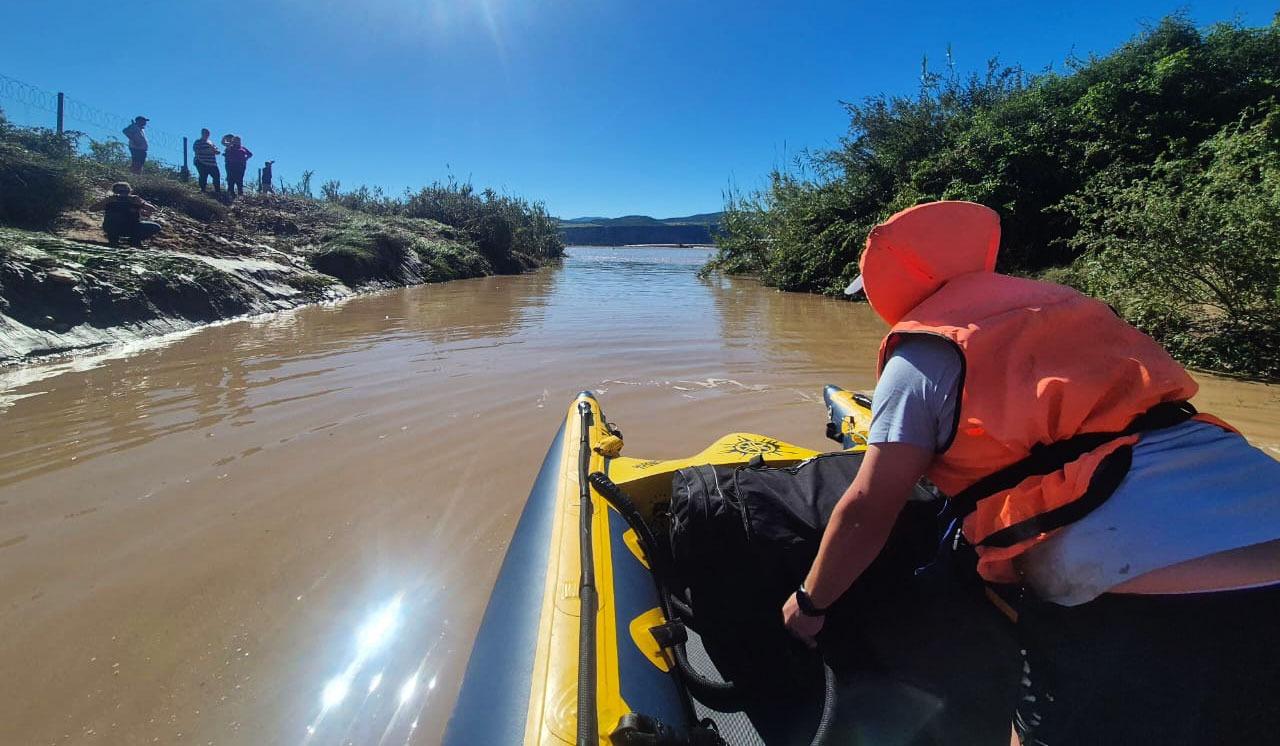
 When his fellow farmers were cut off by floodwaters in the Gamtoos River Valley, Patensie citrus producer Jaco Malan loaded his rubber duck with supplies and transported goods to farmers in need. (Photo: Jaco Malan)
They say not all heroes wear capes — some wear orange lifejackets and pilot rubber ducks. Braving the surging floodwaters of the Gamtoos River, Patensie farmer Jaco Malan proved exactly that when he answered the call for help on Saturday morning.
With neighbouring citrus producers completely isolated by the rising surge, Malan launched his boat into the debris-strewn waters, ferrying essential supplies to those cut off by the flooding.
His efforts came as the Kouga Municipality is still reeling from torrential rainfall that saw the worst flood in living memory sweep through one of South Africa’s citrus production hubs, destroying export crops and leaving dozens of families seeking shelter after their homes were submerged.
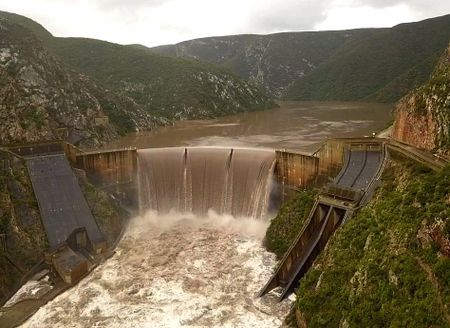
At its peak, the Kouga Dam reached 119.2% capacity, overflowing at more than 2.2 million litres per second. The Gamtoos River, downstream of the dam, burst its banks, and three days down the line, some areas are still waiting for the flood to subside so they can begin to tally the sum of their losses.
/file/attachments/orphans/KougaFloods5_763761.jpeg "The Kouga Dam rose from 32% capacity to 110% in 24 hours. The last measurement stood at 119% as water spilled over the dam's edge at 2.2 million litres per second. (Photo: Werner du Preez)")
“The biggest flood before this was in the 1970s, but if you ask the older residents around here, they will tell you the past week has been the worst,” said Malan.
Parts of the valley were without electricity on Tuesday when the torrential downpours, accompanied by damaging winds, began, and there is no indication when power will be fully restored. It’s been reported that powerlines were swept away and repairs will only be possible when the floodwaters have subsided.
Many farmers have been unable to access large portions of their farms as sludge-covered orchards must dry out and roads have to be rebuilt.
Though the floods took a heavy toll on Malan’s citrus and pepper crops, he views his losses as minor compared to the devastation facing his neighbours, many of whom saw their entire harvests wiped out at the peak of the citrus season.
He said irrigation was halted weeks ago in preparation for the harvest, allowing orchards and fruit enough time to dry for ideal picking, packaging and export conditions.
“Some of my variants just came off the trees, and I am about two weeks into my lemon harvest. I was meant to start picking my novas and clementines on Monday [11 May]. Any rain on our orchards would have been problematic, but no one could have anticipated anything like this.
“I have not been able to calculate my total losses, but I am in a better position than many other producers. Some people lost everything.”
/file/attachments/orphans/Jaco-Floods-2_374373.jpg "When his fellow farmers were cut off by floodwaters in the Gamtoos River Valley, Patensie citrus producer Jaco Malan loaded his rubber duck with supplies and transported much-needed goods to farmers in need. (Photo: Jaco Malan)")
On Friday, calls started coming through from farmers between Patensie and Hankey who were cut off from both towns and in desperate need of supplies.
Perilous conditions
Malan said that on Friday, a combination of strong flood currents, uprooted trees and floating debris in the river made it too perilous to ferry supplies to the isolated families.
“By Saturday morning, things started looking a bit better. I launched my rubber duck on the banks of the river, and we backed a truck into the water so that we could start loading some of the essential supplies.”
Beyond necessities like milk, bread and eggs, the most vital cargo was fuel, which allowed stranded farmers to keep generators running, ensuring that refrigerators, freezers and other essential equipment remained operational while the power grid was down.
Malan laughed that another “crucial supply” he transported was brandy, which helped to ward off the cold and lift the spirits of his neighbours.
“On Saturday, we did five trips, and a couple more on Sunday. We will have to see what the new week brings and if more people need help with supplies. I’m just happy to be in a position to help,” said Malan.
/file/attachments/orphans/Jaco-Floods-4_880201.jpg "An AI-generated graphic pays tribute to Jaco Malan and his efforts to transport supplies to farmers who were cut off from civilisation due to floods in the Kouga Municipality. (Graphic: Supplied)")
While the water levels have dropped in some places along the valley, the region is still expecting run-off from the Langkloof that saw as much as 900mm of rain in places last week. The flood levels are not expected to surge, but flooding could persist for several days before receding to the point where roads are accessible.
The Kouga Municipality confirmed on Sunday that the region’s three main dams — Kouga, Impofu and Churchill — were still overflowing, and the inflow from their catchment areas was expected to continue for the next few days.
Several roads near the Gamtoos River, as well as low water bridges near Oyster Bay, were still inaccessible over the weekend.
By Sunday, electricity had been restored to most of the municipality, and teams were working throughout the region to clear roads of debris as water levels receded.
“There is a lot of work that needs to be done now,” said Kouga Mayor Hattingh Bornman.
“While all the dams are still overflowing, we do not expect water levels to rise again. Our teams are assessing roads, electricity and other infrastructure that were damaged, and we expect those repairs to take place over the next few weeks.”
/file/attachments/orphans/KougaFloods4_639011.jpeg "Citrus farms on the outskirts of Patensie were isolated by the floodwaters. (Photo: Johan van der Watt)")
Bornman said he expected a special council meeting to be called soon so that Kouga can be declared a disaster area, granting it access to provincial and national funding to assist with restoration efforts.
He warned residents that more rain was forecast for the region in the coming week. While it will be nowhere near the downpour of last week, areas that are flooded need to be closely monitored. DM
Comments
Scroll down to load comments...