




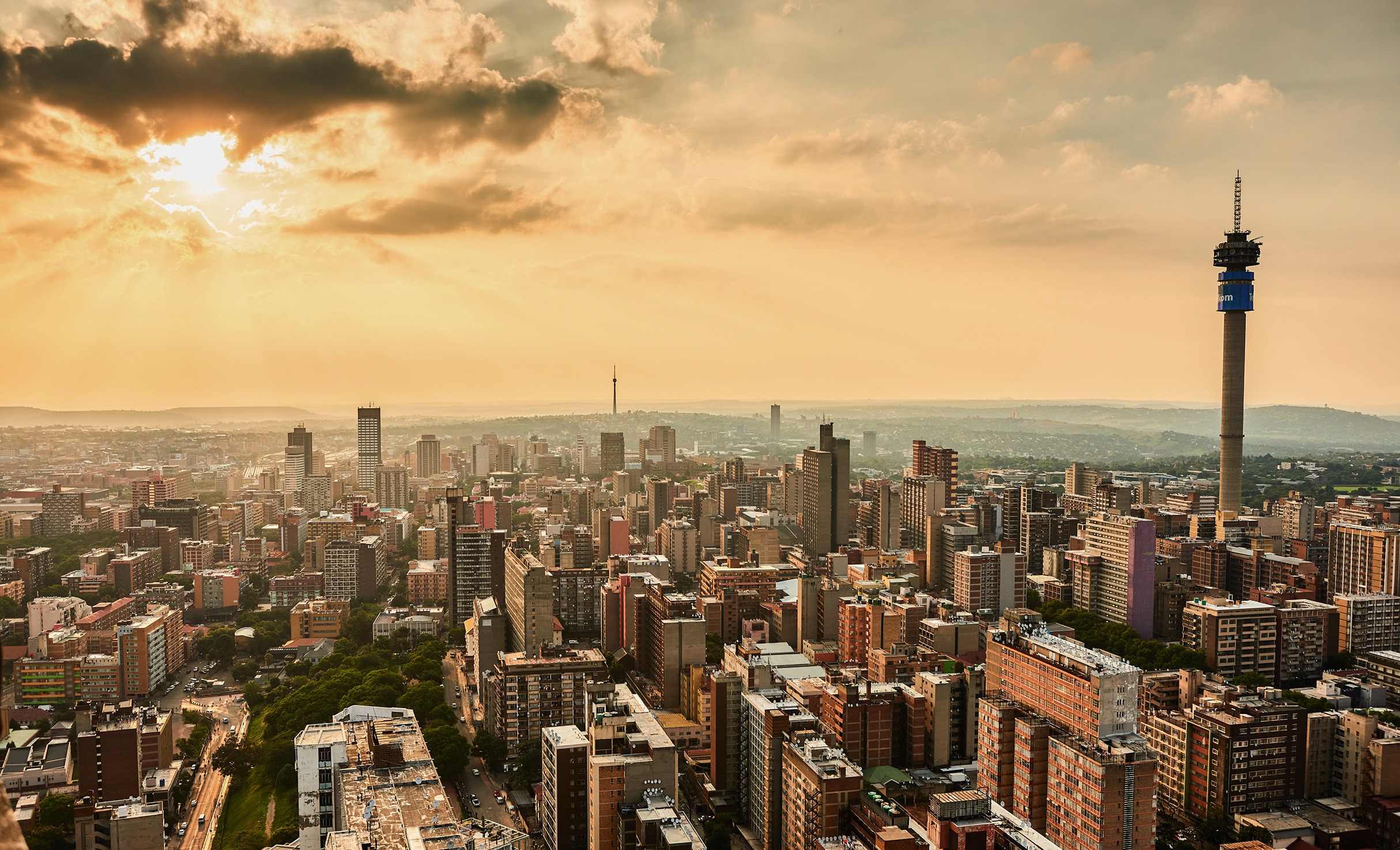
 While Mayor Dada Morero is technically accurate that the City is not in formal, legal bankruptcy administration yet, his assurances are a mask on a highly distressed balance sheet.. (Photo: Waldo Swiegers / Bloomberg via Getty Images)
You need to read through only 85+ documents (including the related recent State of the City and budget speeches and media statements) to figure out that Executive Mayor Sello Enoch “Dada” Morero is correct in his assertion that the City of Johannesburg is “definitely not bankrupt”.
However, a detailed review of the City’s medium-term budgets, Auditor-General reports and Municipal Public Accounts Committee (MPAC) findings reveals severe structural deficits that unfortunately contradict that optimistic reassurance.
If you had to identify an original sin that sent that the budgets into a tailspin, it happened before the current Morero era (which started on 16 August 2024; he was also mayor for 25 days in October 2022).
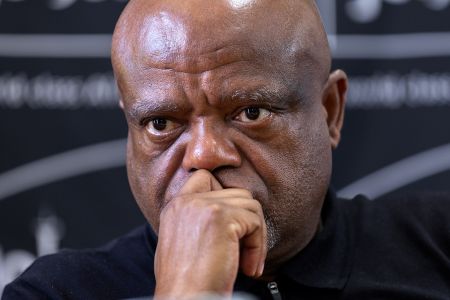
There was an abuse of the abuse of the Supply Chain Management Regulation 36, which allows the City to bypass competitive bidding for “emergencies” or “impracticability”, somewhere between the Thapelo Amad (27 January–24 April 2023) and Kabelo Gwamanda (5 May 2023–16 August 2024) tenures.
In the 2023/24 financial year alone, core departments used Regulation 36 to procure R4.9-billion worth of goods and services, up from R20-million in the previous year. The Auditor-General reported that a substantial portion of this was owing to poor planning rather than actual emergencies, directly fuelling the City’s multibillion-rand irregular expenditure crisis.
A self-destructive balancing act
To balance the budget on paper, the City has consistently chosen to fund repairs and maintenance below the National Treasury benchmark of 8% (regularly hovering between 5% and 7%).
And it is this decision to cannibalise infrastructure that has been disastrous and given opposition politicians a clear opening to strike the Morero administration where it hurts most: service delivery.
To put it into context, in the 2023/24 financial year, Joburg lost an ironic R4.9-billion just on electricity largely caused by failing, unmaintained networks.
This was made up of R1.48-billion in technical losses (electricity lost in the network because of failing infrastructure and useless heat dissipation) and R3.44-billion in non-technical losses (theft, bypassed meters, illegal connections and faulty transformers).
The water side of the utility crisis is about half as bad. In that same 2023/24 financial year (the latest audit finances available on public record), the City recorded an additional R2.9-billion in water losses – R2.08 billion in physical water losses (literal leaks from bursting pipes and unmaintained network infrastructure) and R812-million in commercial losses (metering errors and illegal connections).
Some concession
To his credit, Morero acknowledged that the maintenance budget is at 7% of expenditure instead of the ideal 8% (Treasury financial benchmarks require municipalities to allocate a minimum of 8% of the total book value of their property, plant and equipment specifically towards repairs and maintenance) but promised that “we will push for 8% in the new financial year”.
If only the City’s own internal budget deviation reports didn’t explicitly contradict this promise…
Budget documents state:
“To align with the City’s allocated R&M budget of 7.1% of PPE, which was calibrated by the approved Medium-Term Budget... There is no budget allocation in the approved budget for 8% of PPE.”
His responses on the issues of Joburg’s bonds suspension by the JSE, which he called a “regulatory compliance matter” related to late financial statements and not an indication of insolvency, also open his administration up to scrutiny.
A competent executive will take one look at the balance sheets and realise that Joburg’s liquidity ratios are at perilous levels.
Wait, what does this mean for non-executives?
Liquidity ratio: This compares the City’s hard cash and bank balances to the bills currently sitting on its desk. If this number is too low, the City might struggle to pay suppliers or contractors.
Cash/cost coverage: This tells us how many months the City could keep the lights on and the water running if all its income suddenly stopped. It’s like checking if your personal emergency savings can cover three months of rent.
Adjusted Ratio: This one is important – the City often claims people owe it billions (current assets), but much of that is bad debt from residents who haven’t paid in years. The adjusted ratio ignores that fake money and only looks at cash the City is actually likely to collect.
The National Treasury benchmark for the current ratio (ability to meet creditor payments) is 1.5–2:1, but Joburg’s audited outcome sits at 0.6:1 and is projected at 0.8:1.
More alarmingly, the City’s cash/cost coverage ratio sits between 0.5 and 0.8 months, meaning the City holds less than a month of cash reserves to survive a shock… far below the accepted norm of one to three months.
To mask this liquidity crisis, the City is relying heavily on short-term debt. There is a request for approval in the 2024/2025 budget for a combination of short-term bank facilities and commercial paper up to R5-billion simply to “mend any short-term cash flow mismatches that may arise”.
At the entity level, the crisis is even deeper. For instance, the Metro Trading Company reported debt against revenue of 598% and a creditors payment period of 750 days, leading MPAC to question if the entity is factually insolvent.

Waiting in vain
While Mayor Morero is technically accurate that the City is not in formal, legal bankruptcy administration yet, his assurances are a mask on a highly distressed balance sheet.
This evidence is probably why Finance Minister Enoch Godongwana warned that the proposed wage agreement would sink the City that is already carrying employee-related costs as its largest single expense, consuming between 26% and 28.2% of the operating budget.
Even the MPAC raised serious red flags that while employee costs had historically been contained to a 6% annual increase, they suddenly spiked by 9.2% in the recent financial year, signalling significant pressure on financial sustainability that cannot support unbudgeted, multibillion-rand wage hikes.
Daily Maverick sent questions to Morero’s personal number asking for clarity and will do a full follow-up should he share some insights. Until then eGoli residents can only sit with the reality of the current fiscal position. DM
Comments
Scroll down to load comments...