




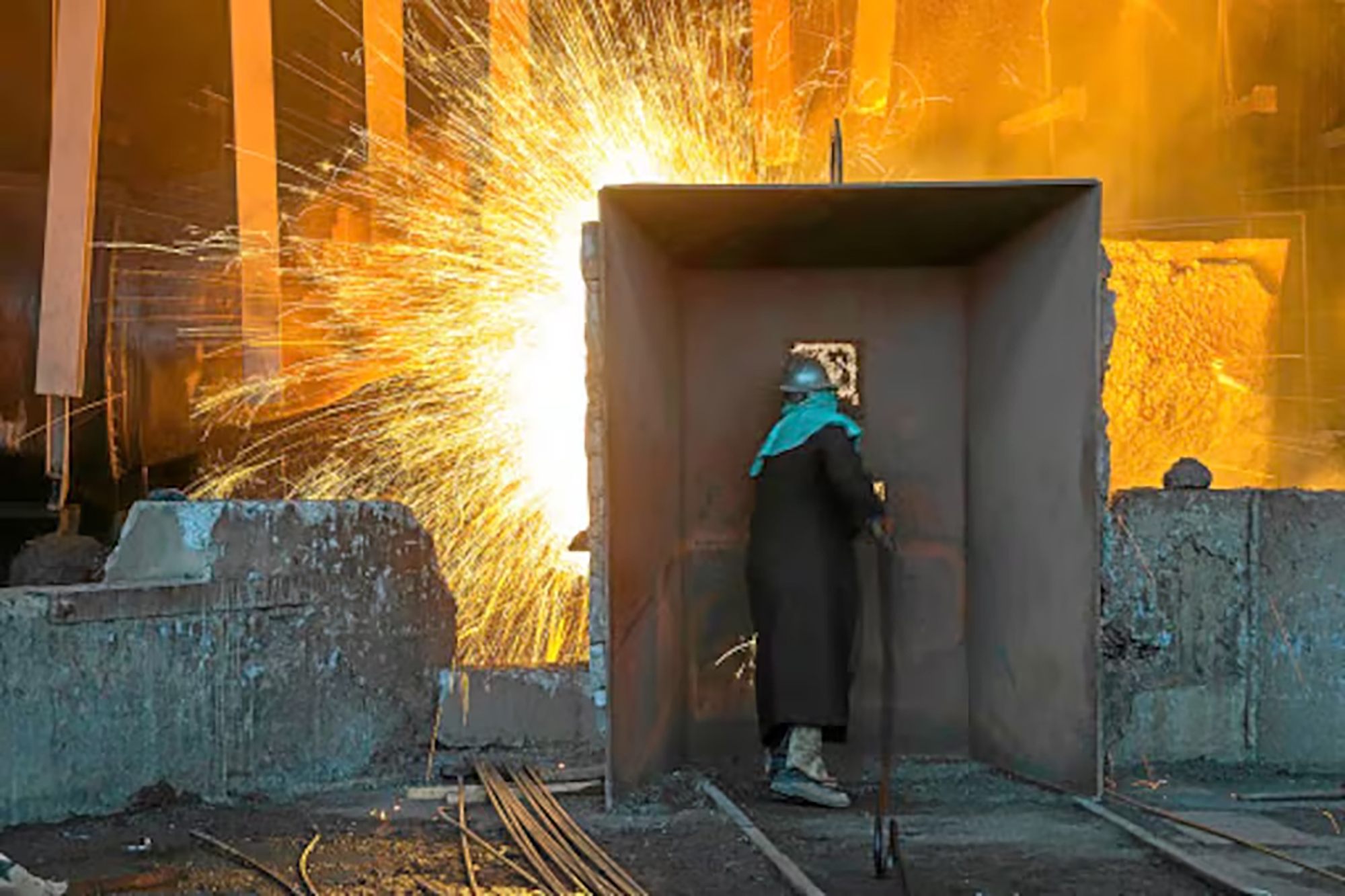
 The jobs of thousands of ferrochrome smelter workers are on the line as Glencore and Samancor await Nersa’s decision on a new electricity tariff. (Photo: Supplied)
 While the threat of job losses still looms over Glencore and Samancor’s ferrochrome smelters, internal communications suggest that management is hopeful for a positive outcome as South Africa’s energy regulator, Nersa, prepares to rule on new electricity tariffs for the companies.
On 29 April, Glencore Ferroalloys’ CEO, Japie Fullard, wrote, “Nersa has advised that a public participation process will be held on 25 May 2026 on the proposed tariff, and its final decision will be published by 15 June 2026. After discussions with Nersa, we requested them to conclude the submission by the end of May 2026, as this is critical for our start-up process.”
Samancor Chrome’s industrial relations manager, Aveer Chandraprakash, had no timelines to share, other than that the consultation date will be after Nersa’s decision.
“We wish to confirm that the next consultation meeting with the CCMA [Council for Conciliation, Mediation and Arbitration] will be scheduled following receipt of Nersa’s feedback and the subsequent board meeting,” Chandraprakash wrote to staff on 7 May. “Current indications suggest this feedback may be received sooner than originally anticipated, and a meeting date will be confirmed promptly with all stakeholders thereafter.”
Times of uncertainty
Section 189 retrenchment consultations are still ongoing at Glencore.
“We further wish to notify you that in order to align with this regulatory process, our Section 189 process will be extended to the 1st of June 2026,” Fullard wrote. “It’s important to note that we cannot uplift the Section 189 process until the exact outcome of the Nersa submission is confirmed and all conditions precedent in the amended electricity supply agreement have been satisfied.”
For those keeping score, this will be the third time in a 12-month cycle that Nersa is signing off on renegotiated terms with these two companies — the original, six-year negotiated pricing agreement (NPA) deal was signed in October 2023.
That NPA allowed for six Samancor and four Glencore ferrochrome smelters.
These agreements also included a strict take-or-pay (TOP) clause, mandating that the smelters consume a minimum of 80GWh annually or maintain a load factor greater than 70%. Under this rule, smelters were required to pay for at least 70% of their normal quarterly consumption, protecting Eskom from revenue shortfalls.
Then the market price for ferrochrome fell off a cliff, and those TOP rules were causing hardship, which led to Nersa approving a six-month waiver of the TOP clause, effective from August 2025 to 31 January 2026, to prevent permanent load loss and job reductions.
Stuck in a moment
Which brings us to the current deal on the regulatory table. While Nersa approved a drop to 87.74c/kWh for the duration of 2026, Samancor and Glencore argued that this rate would still not ensure operational viability without additional relief.
As a result, the new deal lowers the tariff even further to 62c/kWh.
But what of the TOPs? Eskom has requested a 12-month extension of the TOP waiver (running retrospectively from 1 February 2026 to 31 January 2027). Crucially, this extension is designed around a smelter TOP option, breaking from the original NPA’s rigid 80 GWh/70% consumption mandate by allowing the companies to keep their overarching NPAs unchanged while temporarily suspending production entirely at uneconomical plants without facing financial penalties.
But, as established in previous reporting, some money for electricity is far better than no money for Eskom — and it’s an even better deal for the some 12,000 workers who face unemployment should the regulator not approve the deal. DM