




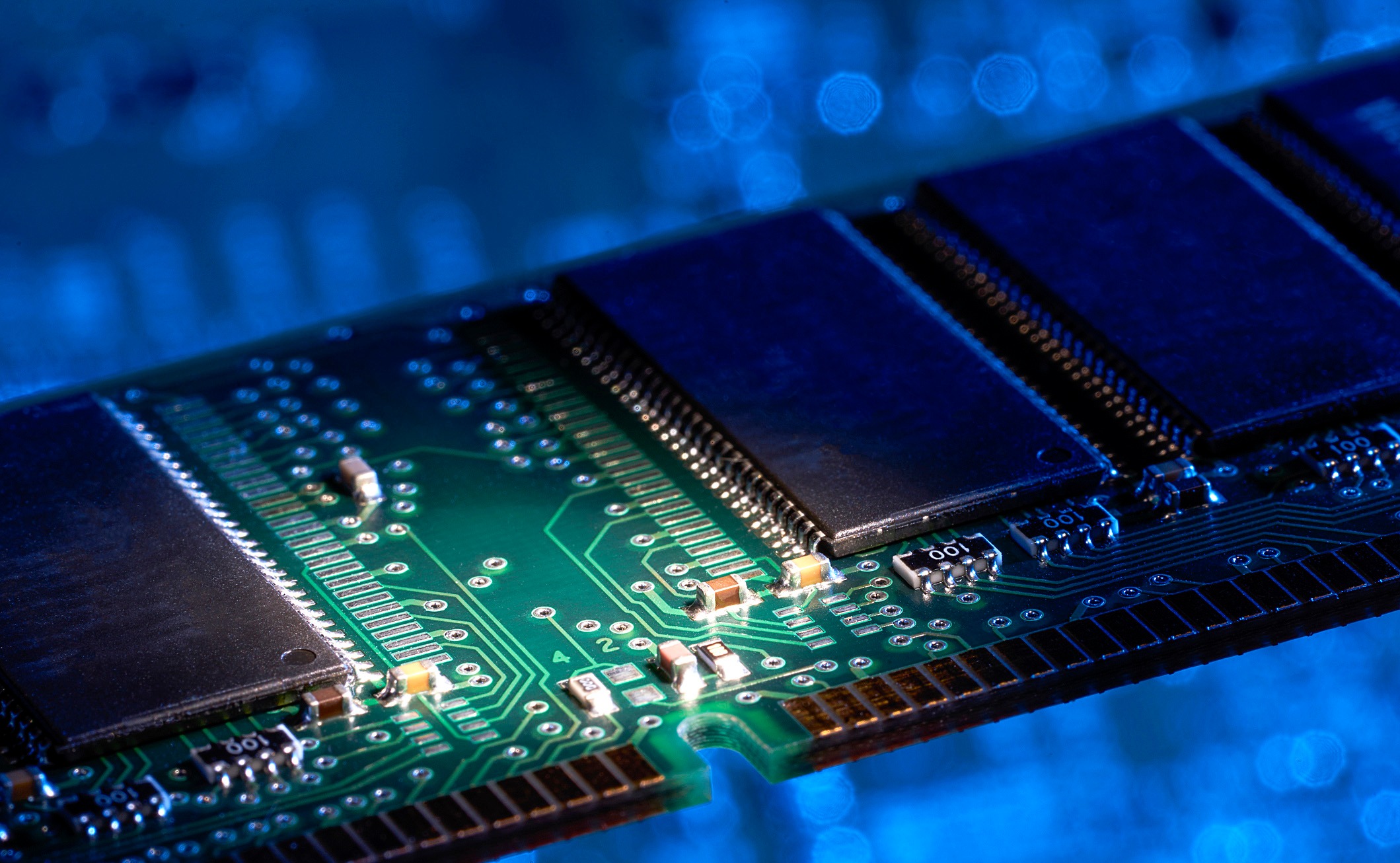
 The Korean stock market hit an all-time high because Samsung and SK Hynix are making all the money from the AI boom and the memory crunch. It's similar to what the JSE did when gold popped through $5,000 in January. (Image: iStock)
 Any history book would tell you that plunging your country into its deepest political crisis in 40 years should send financial markets into a tailspin. Instead, the South Korean stock market did the opposite. It went on a historic, face-melting ripper.
As Suhail Suleman, a portfolio manager at Coronation Fund Managers, explains:
“From the moment of Yoon’s ill-fated declaration to the time of writing, the Kospi – Korea’s benchmark equity index – has surged 114%, making it easily the best-performing major index in the world over the period.”
Wait, how does a country survive a democratic near-death experience and be rewarded with the world’s hottest stock market?
The answer is a fascinating warning for anyone who has money invested in equities right now: extreme market concentration.
The illusion of width
The Kospi’s record-breaking run is less a reflection of a booming Asian tiger economy and more a gross dependency on a single thematic trade.
“At the heart of Korea’s rally are its two most valuable companies: Samsung Electronics and SK Hynix,” explains Suleman in a recent market briefing. “These two firms have become indispensable to the artificial intelligence revolution.”
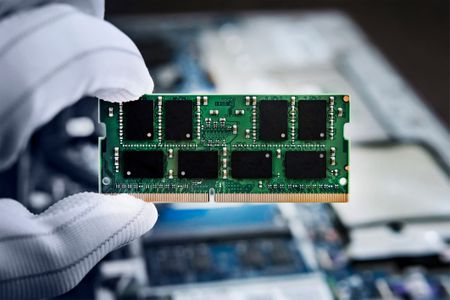
These two semiconductor giants produce the high bandwidth memory (HBM) chips the world desperately needs to power AI data centres. The AI boom has shifted the memory chip market from a surplus to a severe shortage. Because of this, Samsung and SK Hynix are making all of the money, and their stock prices have subsequently exploded.
Here’s the catch: these two companies now account for roughly half the weight of the MSCI Korea index. If you include their preferred shares and holding companies, the effective exposure approaches 60%.
The Korean market isn’t a broad reflection of the Korean economy any more; it’s a proxy ETF for the global AI hype cycle.
Do you get déjà vu ?
If a market dominated by one or two giant stock picks sounds familiar, it should. South Africa practically invented the genre.
For years, the JSE was so heavily skewed by a single tech conglomerate (Naspers, and later its European spin-off and Chinese tech magnate Prosus and Tencent) that the health of our entire local market often just came down to whether Chinese teenagers were playing enough mobile games or chatting on WeChat.
It was such a headache for local fund managers that the JSE had to introduce capped indices just to give a realistic picture of what the rest of SA Inc was doing.
Even today, our market is heavily tethered to the cyclical mining sector. When commodity (gold) prices run, the JSE All Share Index (Alsi, to its friends) looks like a hero.
And it’s not just an Amapiano or K-pop rhythm, US markets dance to their own beat. The S&P 500 has been hitting record highs, but take away the Magnificent Seven mega-cap tech stocks (specifically Nvidia), and the broader US market looks remarkably average.
This concentration risk is the ultimate cheat code for reading the financial news. When an index is built on a single pillar, you don’t need to track 500 companies; you just need to watch the macro-events that affect that specific pillar.
If you understand market concentration, you don’t just think about what it will cost to fill up your car. You play the tape forward:
Suddenly, a war in the Middle East pushing up oil means your local South African retirement annuity takes a knock by Friday.
The same logic applies to Korea’s current AI-driven euphoria. The vulnerability is cyclical. As Suleman warns:
“Any pullback in capital expenditure by the US hyperscalers would quickly translate into weaker demand for HBM... once supply normalises, pricing tends to revert sharply.”
With Samsung and SK Hynix throwing a combined $40-billion at capital expenditure in 2026, supply will eventually catch up. And when that AI spending slows down, the 60%-weighted top half of the Korean market will come crashing back to earth.
Release valve
There is, however, one crucial difference between Korea’s tech boom and the US tech rally. While the S&P 500’s rally is almost purely earnings-driven, South Korea has been busy doing the boring, unsexy work of structural reform.
Following its political crisis, the Korean government accelerated its “Value Up” programme. For decades, the market traded at a deep discount because powerful family conglomerates (chaebols) hoarded capital and ignored minority shareholders.
New reforms are forcing independent directors on to boards, capping controlling shareholder voting rights and protecting minority investors.
So, while great semiconductor cycles have great bursting probability, Korea is quietly fixing its foundations. “For stocks outside the chip complex, where governance and capital allocation are quietly improving, the re-rating may prove more lasting than the market currently credits,” says Suleman.
If the next market rally is pulled up by a single category while the rest of the index candles are melting, that crazy stock pick will burn itself out. DM