




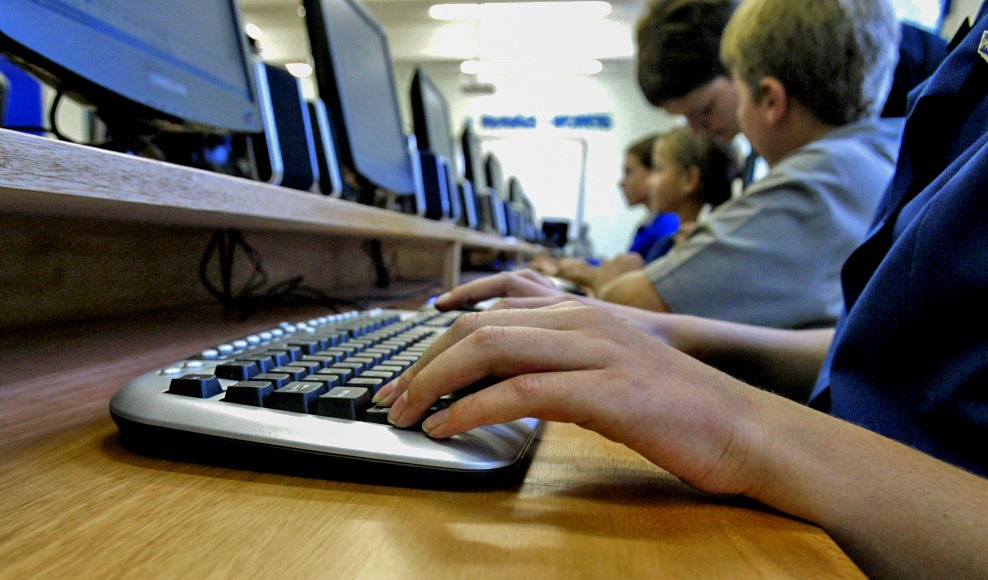
 A total of 545,938 ICT devices were procured for learners in SA over the 2022 to 2024 financial years. (Photo: Marupu Nkhumise / Gallo Images)
In a September 2025 parliamentary portfolio committee briefing, the departments of basic education and communications and digital technologies said that a total of 545,938 information and communication technology (ICT) devices were procured for learners in SA over the 2022 to 2024 financial years. In the same period, 30,818 devices were procured for teachers, and 10,588 classrooms were equipped with ICT resources for teaching and learning.
But because the South African government cannot afford the estimated R30.6-billion required to supply a device to every learner, the overwhelming majority of the public education market operates on a bring your own device (BYOD) model. For many schools — and cash-strapped parents — the device of choice is the Google Chromebook.
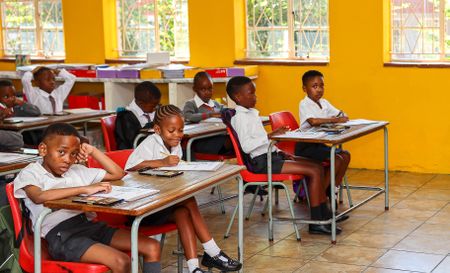
The machine is lauded for its simplicity and cloud-based ecosystem, but behind this seemingly accessible solution lies a tightly controlled licensing structure that is artificially driving up costs.
Education rides on Chrome
Werner Joubert, country head at Asus South Africa, pointed Daily Maverick to the strict, top-down approach that limits who can supply these essential ecosystems.
“Google globally has given certain rights, or certain countries rights, to basically have the product available,” Joubert explains. “In South Africa, there’s only a handful of Chrome partners that are authorised to do the actual licensing, specifically in the education system.”
Because schools require the Chrome Education Upgrade platform to manage these devices, they are forced to buy through this closed partner network, effectively creating a localised monopoly.
In his assessment, buyers “have to purchase from them, or you don’t purchase them. They still have to do the certification, and it becomes a costly exercise.”
This monopolistic friction, Joubert argues, “goes against what we want to achieve about making education affordable”.
Desperate to bypass these inflated local costs, many independent schools and parents have fallen victim to the grey market. Bulk shipments of cheap, refurbished Chromebooks are imported from overseas, only for schools to discover these devices suffer from forced re-enrolment locks where the dumped devices are cryptographically tethered to the US or European school districts that originally owned them.
The result? Thousands of unusable, bricked devices and zero local warranty support.
Daily Maverick reached out to Google Africa over several days for response and clarity, but the tech giant has yet to respond.
The burden of tech adoption
The financial burden shifted onto parents through the BYOD model has created a feeding frenzy for consumer electronics retailers.
Lacking the technical expertise to differentiate between enterprise-grade educational hardware and cheap consumer retail products, parents are routinely exploited. Retailers frequently shift ageing stock as cheap consumer laptops on the student market. While the initial price tag looks appealing, these devices lack the long-term support — Microsoft ended support for Windows 10 in October 2025, leaving many schools with suddenly outdated machines following the Windows 11 hardware requirements — or the durability to survive a school environment, resulting in a massively inflated total cost of ownership driven by breakages and out-of-warranty repairs.
Retailers also partner with schools and use the BYOD mandate to upsell. It is not uncommon for parents to be convinced that their child requires an expensive, high-spec gaming PC for basic high school coursework.
There is now an alternative to the duopoly. Apple has made a highly aggressive play for the education market with the introduction of the MacBook Neo. South Africa, unfortunately, does not benefit from the big discounts in direct Apple markets, but the R12,000 price point for a full metal chassis Mac marks a radical shift in a sector where these machines were previously viewed as exclusionary, premium hardware.
Chris Dodd, managing director at iStore, was transparent about the strategy to capture the high school demographic. “I think a lot of kids at school, from like Grade 10, start to use computers, so it makes perfect sense," he told Daily Maverick about his own beliefs about the Apple strategy.
This dramatic lowering of the barrier to entry allows iStore to target a completely new geographical and economic demographic.
“This new pricing tier will allow us to extend into geographic areas that we would not normally have been,” said Dodd.
Armed with varied financing options and trade-in programmes, Dodd explains that iStore has been attracting “from a R3,000 to a R50,000 customer ... and that allows us to then get into [new markets]; we’ve opened up stores in East London and Soweto.”
No sweat in the competition
Interestingly, traditional competitors aren’t necessarily threatened by the Neo’s arrival; some view it as a necessary market correction. ‘I think it’s fantastic,” says Joubert. “Apple has always been seen as, you know, a very expensive device that is not affordable to anyone, and I think their strategy is correct.”
Joubert views Apple’s disruption as a healthy challenge to the status quo: “The same thing is happening in the IT industry, where your traditional sort of brands used to hold a monopoly. People are saying, hang on, we can get better devices out there.”
As for the retail competition, Dodd remains unbothered by a crowded market. “A rising tide floats all boats, you know,” he says. “The more people get exposed to Apple, the more opportunity we have.”
After weeks of denying Daily Maverick’s questions about it, iStore Education — the company’s school discount and service programme — added the MacBook Neo to the partner school purchase programme (alongside the iPad) with a R3,000 discount incentive for trading in current PCs.
But in this battle for hardware supremacy, a critical element is being left behind: the teacher.
Educational apps, platforms and devices are frequently developed by tech companies with zero educator consultation. The result is millions of rands spent on smart classrooms and devices that force teachers to manage technology rather than facilitate learning.
Rod Smith, Cambridge University Press and Assessment group managing director for international education, views this hardware-first approach as a systemic failure.
He warns against the cognitive dangers of poorly implemented tech, mentioning research to Daily Maverick that shows “88% of those teachers are saying that students’ attention span is noticeably shorter than it was ... and is getting shorter.”
A deeper integration
When technology is dropped into a classroom without foundational pedagogical training, learners — according to Smith — engage in “cognitive offloading”, using the device to think for them. As a result, he warns, they “don’t have the deep learning that is actually going to really enable you to benefit ultimately from the use of that technology”.
Instead of competing in the tech race, the traditional textbook publisher will guide it. “We’re talking to the big tech giants, and actually, they want to talk to us about it from an educational perspective.”
Smith welcomes the fact that the conversation is slowly shifting “into a more evidence-based, proper discussion around technology's impact, rather than just being led by the technology.”
However, he cautions that until hardware deployment is matched with robust teacher training, the digital divide will only worsen. “Unless you've got that kind of joined-up government strategy with your strategy for teachers and for learners within your curriculum, you’re not going to make a big difference.”
South Africa’s digital education dilemma will not be solved by simply purchasing cheaper laptops or upgrading operating systems. Until the focus shifts from the vendor profit margin to the teacher’s lesson delivery, the technology in our classrooms will remain little more than highly expensive distractions. DM
Comments
Scroll down to load comments...