



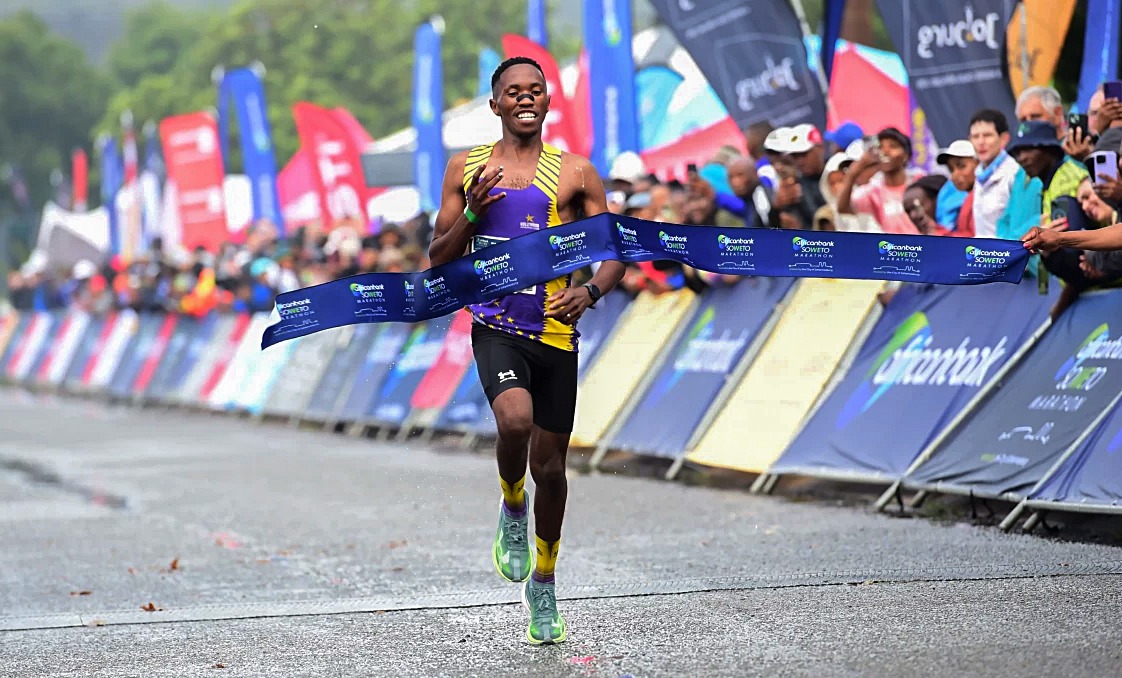
 Joseph Seutloali from Lesotho won the Soweto Marathon on 29 November 2025, entitling him to prize money of R250,000. However, more than five months after the race, he is still waiting to be paid. (Photo: SABC Sport / Wikipedia)
 Central Gauteng Athletics (CGA) has cautioned that any government intervention in the Soweto Marathon must be handled carefully, stating that a “takeover” of the race by a government structure could place South African athletics at odds with international governance rules.
This comes after Gayton McKenzie, the minister of sport, arts and culture, told Sunday World that his department was “taking over” the Soweto Marathon, and would pay the winners the prize money they are owed and pursue criminal charges against the organisers of the race.
On 24 April, Daily Maverick reported that five months after the 2025 Soweto Marathon took place, none of the podium finishers had received their prize money.
McKenzie told Sunday World the department had taken three decisions.
“As a department, we are taking over the Soweto Marathon,” he said. “Secondly, we are going to pay the winners; this is our country, and athletics is our sport. We are also going to open criminal cases against the organisers who disappeared and stole that money. We cannot have athletes run and they cannot get paid. I am sorting out everything.”
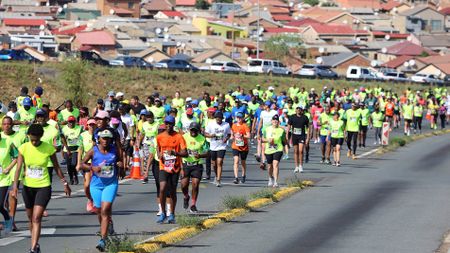
/file/attachments/orphans/TL_1942825_989645.jpg "Participants running towards the FNB Stadium during the 2022 Soweto Marathon. (Photo: Papi Morake / Gallo Images)")
However, CGA’s general manager, Mandla Radebe, said neither the minister nor the department has formally engaged with the federation on these developments.
“While CGA acknowledges and welcomes any efforts aimed at ensuring that athletes receive their outstanding prize money, we must express caution regarding the language and implications of a ‘takeover’ by a government structure,” said Radebe.
“Athletics operates within a global regulatory framework governed by World Athletics, which requires that the sport remains independent and free from political interference.
“Statements of this nature, if not carefully managed, may have unintended consequences and could place the sport at risk of non-compliance with international standards.”
Consequently, any intervention must be lawful and align with established governance frameworks, which should include proper consultation with all the relevant stakeholders, such as the CGA, said Radebe.
McKenzie’s department did not respond to Daily Maverick’s questions regarding when athletes would be paid or how the “takeover” would function. Efforts to reach the Soweto Marathon Non-Profit Company (NPC) regarding mismanagement claims were also unsuccessful.
Unfolding the payout saga
On 29 November 2025, the Soweto Marathon, also known as the “People’s Race”, took place with a staggering 18,000 runners participating.
To date, the podium finishers have still not received their prize money. This includes the winner of the men’s event, Joseph Seutloali, who is owed R250,000. Gerda Steyn, who finished third in the women’s race, and Onalenna Khonkhobe, who came third in the men’s race, also confirmed they have not received payment.
/file/attachments/2990/TL_2547063_465724.jpg "Gerda Steyn, seen here winning the women’s event in the Two Oceans Ultra Marathon in Cape Town on 11 April, has still not received her prize money for finishing third in the Soweto Marathon on 29 November 2025. (Photo: Grant Pitcher / Gallo Images)")
The headline sponsor, African Bank, confirmed via Facebook on 14 April that it had “fulfilled all contractual obligations, including full payment of the rights fees.... The administration of the race, which includes the distribution of prize payments, falls within the responsibility of the event organisers.”
The race organisers, the Soweto Marathon NPC, said the payment of prize money was delayed because they were waiting for official doping results before processing the payments.
But that explanation has been challenged.
The South African Institute for Drug-Free Sport said the results had been given to the organisers in mid-January.
And according to CGA, athletes should be paid either within 14 days of the race or once the doping results are finalised. That means the payments should have been made months ago.
The athletes and coaches said communication from organisers had dried up, with Steyn taking to Metro FM in April to say the lack of communication was “deeply disappointing”.
Khonkhobe’s coach, Pio Mpolokeng, told Daily Maverick that repeated attempts to get answers had gone nowhere and that organisers had stopped taking calls.
As a result of its non-compliance, CGA has de-sanctioned the race and taken it off its calendar.
“As previously communicated, CGA took the decision to remove the Soweto Marathon from its calendar as part of a governance reset,” said Radebe. “This was a necessary step to ensure that the federation does not endorse an event where athletes remain unpaid and where governance concerns persist.”
/file/attachments/orphans/TL_1942907_778633.jpg "Runners in the 10km event of the 2022 Soweto Marathon. (Photo: Papi Morake / Gallo Images)")
The Soweto Marathon has significant historical significance as it passes through the heart of South Africa’s liberation struggle, which is why it requires government intervention, said McKenzie.
“We cannot lose the Soweto Marathon; it is historic, and it is a race for our people in the townships, and that’s why I am stepping in,” said McKenzie. “We are going to the NPA [National Prosecuting Authority] to open cases of fraud against them. We want them banned completely from getting involved in sports management in the future. That’s where we start.”
While it remains unclear where the department will source the funds for athlete payments, Radebe emphasised, “Any external assistance to settle these obligations does not absolve the organisers of accountability, and CGA will continue its efforts to ensure that athletes are paid in full.”
Fights over race control
The fallout comes after months of instability and infighting over who controls the Soweto Marathon.
The dispute involves three primary stakeholders: the Soweto Marathon Trust (SMT), which claims historical custodianship of the race; Central Gauteng Athletics (CGA), the provincial body responsible for sanctioning regional events; and the Soweto Marathon NPC, a newly formed entity appointed to organise and run the 2025 race after gaining support from nine out of 11 Soweto athletics clubs.
The Citizen has reported that the non-executive board of directors of the NPC was made up of “qualified professionals”, including chartered accountants and attorneys, with Jabu Mbuli as its spokesperson.
The conflict began when the CGA replaced the SMT with the NPC as the race organiser, igniting a bitter power struggle defined by protracted court battles and governance disputes.
Although the race eventually went ahead under the NPC, the ongoing prize money crisis has raised serious questions about how the event was approved and managed.
“CGA remains committed to working constructively with all stakeholders to restore the integrity, credibility and sustainability of the Soweto Marathon, while ensuring that the interests of athletes remain paramount,” said Radebe. DM