



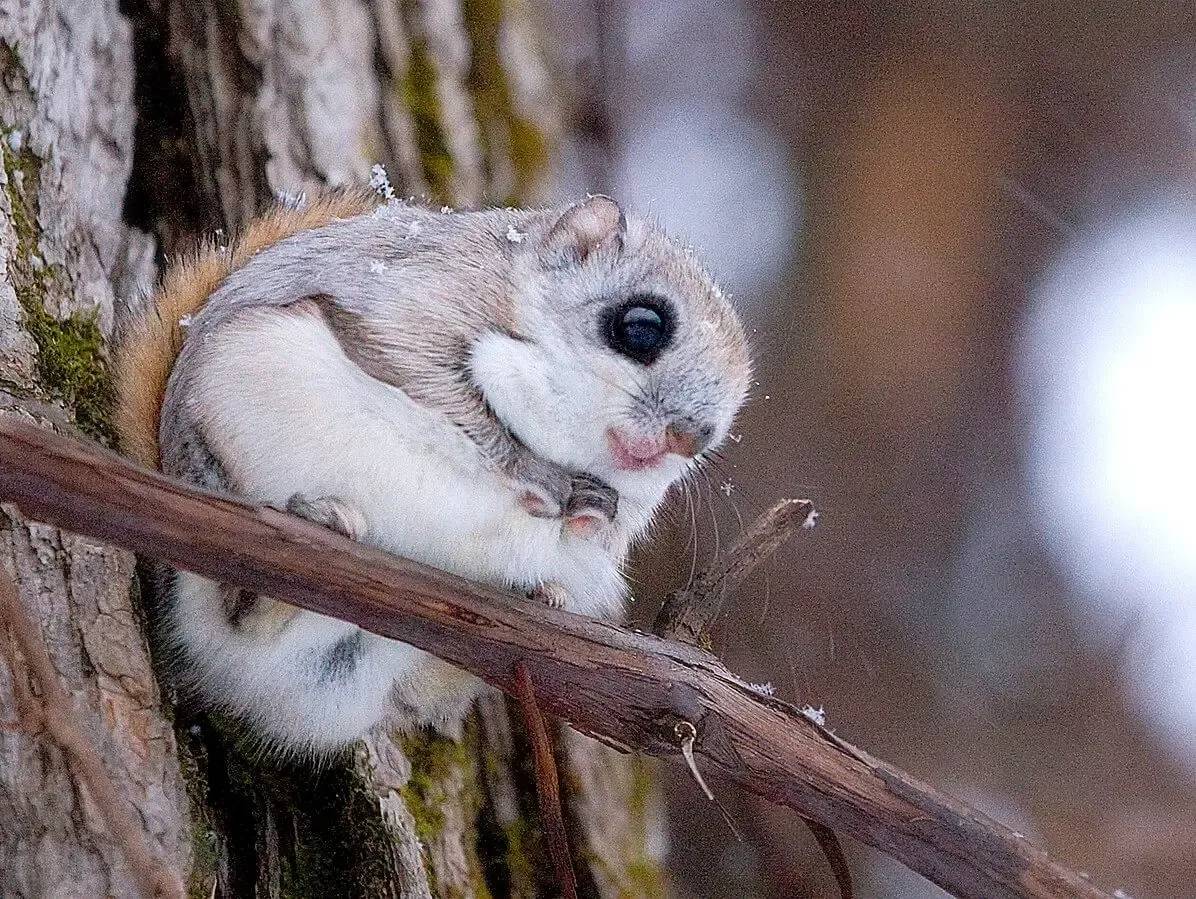
 Siberian flying squirrels are seldom seen. The most common sign of their presence is their droppings, which resemble orange-yellow rice grains and are often found beneath or on top of their nests. (Photo: Animalia)
At some point, a flying squirrel near Sibanye-Stillwater’s lithium project in Finland had a bowel movement, and though its excrement hit no fan, it fanned out in unexpected ways.
No one has spotted the critter in the woods around Keliber – Europe’s first lithium mine – and that is no surprise, as the animals, which glide rather than truly fly, are nocturnal and seldom seen.
But the telltale droppings were detected. As a result, Sibanye had to reconfigure an aspect of its initial plans for the project.
“No one has actually seen the animals there, but the droppings show their presence. So we have to take that into account in the planning,” Sibanye chief executive Richard Stewart told Daily Maverick.
During a recent visit to the site, Sibanye officials involved in the project said that the tailings dam had to be moved about 100m from the originally planned location to create a buffer for the elusive squirrels, which, among the EU member states, are found only in Finland and Estonia.
In Finland, the species is classified as endangered – a red flag in a country that is culturally a deep shade of green.
The species, it must be said, is generally found in old-growth forest, and the mostly coniferous canopy that rings the mine is clearly second or third growth.
/file/attachments/orphans/IMG_3558_928796.jpeg "Sibanye’s Keliber lithium mine in Finland. (Photo: Ed Stoddard)")
Perhaps one just relieved itself as it cruised through more suitable patches of habitat. Or it may be that there is a small breeding population nearby. Regardless, a signal of their presence requires certain measures to be taken under Finland’s strict conservation codes.
This echoes the wrangle that Gold Fields had with another rodent in the Chilean Andes. The JSE-listed gold producer’s efforts to translocate a colony of about two dozen chinchillas from the immediate vicinity of its Salares Norte gold mine have been extensively covered by this correspondent since the mine’s launch in 2020.
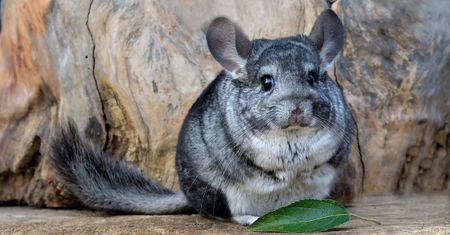
At times farcical, the project continues and is advancing the scientific knowledge of the species. But its costs have run into millions of dollars from an initial estimate of $400,000, and as many as 80 staff have been devoted to it.
Sibanye – ironically a Gold Fields’ spinoff – will almost certainly not face such costs and headaches with its lithium project in the Finnish bush.
“According to the environmental impact assessments, the biodiversity impacts of the Keliber lithium project are expected to be low to moderate at most,” Sibanye says.
This all serves to underscore some broader points. In an age when environmental, social and governance concerns are all the rage and mining projects are subjected to increasing scrutiny, publicly listed miners are jumping through hoops to accommodate affected wildlife.
Templates for the future
Amid a global scramble for the green metals needed to power the clean energy transition, the efforts of Gold Fields and Sibanye in the Andes and the Finnish forest serve as templates for future operations in the sector that may encroach on the habitat of endangered species.
Without metals such as lithium – a key component of the batteries required for clean electrification – there is no transition from fossil fuels.
The green energy drive, it must be noted, is not only rooted in climate concerns. The US-Israel war on Iran has thrown the dangers of fossil fuel dependence into sharp relief, while in South Africa, load shedding and surging power costs triggered the pivot to renewables.
But the overarching factor has been the climate crisis and its unfolding environmental impact. It is against this backdrop that mining itself has become increasingly green. Or at least that is the case with publicly listed companies, which must answer to a wide range of stakeholders.
And so the fate of wildlife around mining operations has surged to the top of corporate and public radar screens.
Frozen frogs
/file/attachments/orphans/2560px-rana-arvalis-in-lill-jansskogen-15_340046.jpeg "The moor frog. (Photo: Animalia)")
Sibanye has had to be mindful of at least three other animal species in the area, including the moor frog, famed for its ability to freeze, thaw and keep on hopping. New ponds have been built near the mine to provide the frogs with a safe breeding and nesting habitat – but to date, none has taken up residence. The day after our visit, a bear was sighted near one of the ponds.
Artificial nests have also been constructed for golden eagles outside the mining area, with planned feeding during the winter. Golden eagles have been seen in the area, though presumably they are not hunting moor frogs or flying squirrels.
This critter quartet is completed by otters. Although not a regulatory requirement, Sibanye erected wooden shelves beneath a bridge on the road it built to the mine to provide the animals with an option so they would not have to cross the road.
Otters cross roads, but as aquatic mammals, they can also just swim in the river beneath the bridge. The shelves are precautionary – Sibanye does not want an otter road kill on its mining road, which is used by 65-tonne trucks.
Monitored by cameras, no otters have yet been detected using the shelves.
Aside from fauna, mining companies must also be sensitive on the flora front. Indeed, in the US state of Nevada, Sibanye’s planned $490-million investment in a lithium project was uprooted by a rare weed – Tiehm’s buckwheat.
It caused delays in environmental permitting and a costly reconfiguration to the project, while campaigns were launched to stop the mine because the plant is endemic to the area. Faced with rising costs and a backlash from conservationists, Sibanye last year pulled the plug on its planned investment in the project.
Sustainability and wildlife for mining companies are now material issues that can undermine an operation and investments.
The industry has also faced allegations of “greenwashing”, and in many cases, this is no doubt true. But the levels of scrutiny and regulations are intensifying, with notable exceptions, such as the Trump administration in the US.
It’s a tough balancing act. We need green metals to reduce our consumption of fossil fuels in a literal race against time – and other rare animals and plants are sure to crop up around new mining sites.
Down the road, tough choices may need to be made. DM
This story first appeared in our weekly DM168 newspaper, available countrywide for R35.
/file/attachments/2991/DM-3004_286371.jpg)
Comments
Scroll down to load comments...