



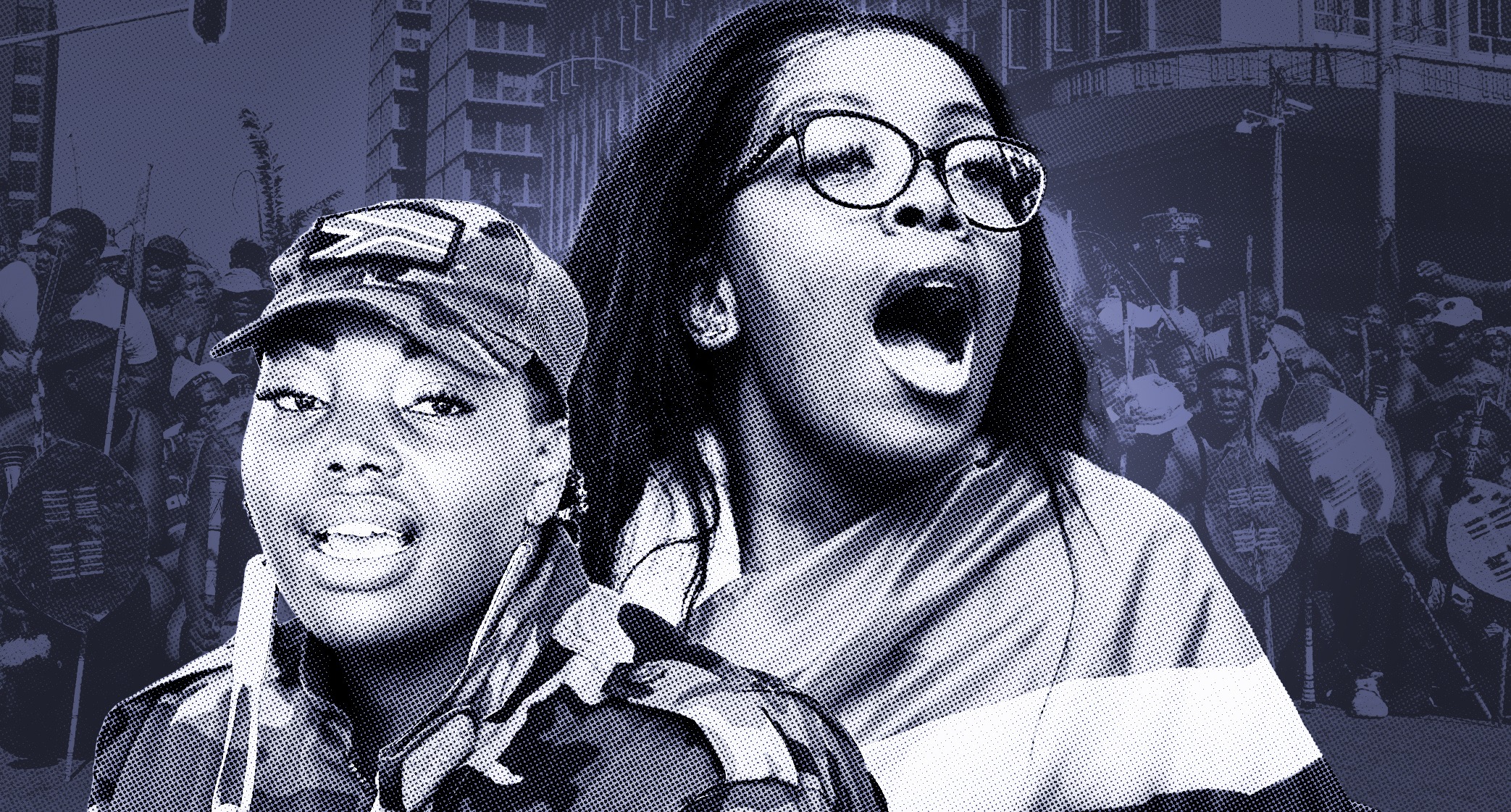
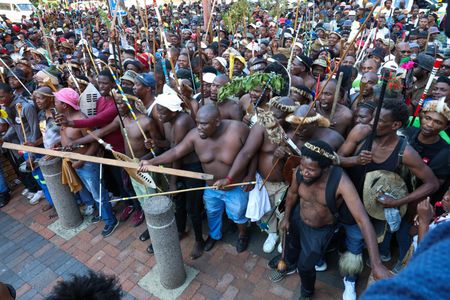
 Illustrative image | Background: Marchers make their way to Mary Fitzgerald Square on 29 April 2026 to protest against illegal immigration. (Photo: Gallo Images / Luba Lesolle) | Zandile Dabula of Operation Dudula (left). (Photo: Gallo Images / Fani Mahuntsi) | Jacinta Ngobese-Zuma at a March and March protest in Johannesburg on 29 April 2026 against illegal immigration. (Photo: Gallo Images / Luba Lesolle)
 /file/dailymaverick/wp-content/uploads/2025/10/label-analysis-2.jpg)
City by city, South Africa’s two leading anti-foreigner figures – media-facing activists Jacinta Ngobese-Zuma and Zandile Ndlovu – organise and lead marches against foreigners, encountering no obstacles.
This week, March and March, a shadowy anti-foreigner movement led by Jacinta Ngobese-Zuma, which emerged in 2025, marched in Tshwane and Johannesburg using the rhetoric of anti-migrant hate. It is in cahoots with Operation Dudula, the movement fronted by Zandile Ndlovu that was stopped in its tracks by a high court order halting a violent campaign in November 2025, as Daily Maverick’s Lerato Mutsila reported.
The charismatic Ngobese-Zuma was a former anchor at Vuma FM in Durban, and her contract was not renewed in 2025. She then started a movement that sprouted in KwaZulu-Natal and has grown like wildfire. It has held marches across the country, notably against the meaningless and self-proclaimed coronation of an Igbo king in KuGompo (formerly East London).
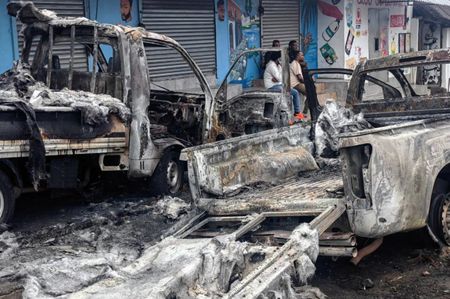
Wall-to-wall, largely unquestioning media coverage has legitimised Ngobese-Zuma and Ndlovu as civil society activists. Numerous studies show this is how hatred of foreigners is legitimised and normalised. (For example, see this interview, where she faces no critical questions about her January citation for public violence after the organisation protested against migrant children attending the Addington Primary School.)
The two can be defined as populist political entrepreneurs who leverage social media and the social harm of widespread unemployment and inequality to drive campaigns that build their followings. This can later be parsed into political leadership positions and a high life. It’s a pattern well established in the literature and practices of populist politics, which often revolves around the vulnerabilities of poor migrants.
/file/attachments/2991/20260429_141352_950763.jpg "March and March leader Jacinta Ngobese-Zuma addresses supporters in Johannesburg on Wednesday. (Photo: Bheki C. Simelane)")
UN warning
The marches and heightened anti-foreigner sentiment drew a warning from UN Secretary-General António Guterres. Speaking on SA’s Freedom Day on Monday, 27 April, a UN statement said: “…the Secretary‑General is deeply concerned by reports of xenophobic attacks and acts of harassment and intimidation against migrants and foreign nationals in parts of South Africa, including in KwaZulu‑Natal and Eastern Cape…
“He strongly condemns these criminal acts perpetrated by individuals inciting violence and exploiting socioeconomic conditions. Violence, vigilantism and all forms of incitement to hatred have no place in an inclusive, democratic society governed by the rule of law and respect for human rights.”
Guterres also reminded South Africa of the solidarity extended to its people under apartheid and said law enforcement should act against violence.
“The Secretary‑General recalls that South Africa’s struggle against apartheid was sustained through international and African solidarity, and that the country’s social and economic development has long been shaped by the coexistence and contributions of people from South Africa, the African continent and beyond.
“He notes the clear public messages by South African authorities reaffirming that no individual or group has the right to take the law into their own hands and that those responsible for criminal acts will be investigated and held accountable in accordance with the law. The investigations must be prompt, thorough, independent and impartial.”
The marches this week are a reported build-up to a call for a national shutdown on 4 May.
/file/attachments/orphans/ED_606606_373059.jpg "Marchers during the protest against illegal immigration during a march to Mary Fitzgerald Square on April 29, 2026 in Johannesburg, South Africa. March and March is demanding tighter immigration controls, including stricter visa regulations, a review of asylum policies and action against businesses employing undocumented foreign nationals. (Photo: Gallo Images/Luba Lesolle)")
Besides March and March and Operation Dudula, other organisations are mushrooming on a similar anti-migrant ticket. While the organisations claim to lobby only against undocumented migrants and illegal migration, in their practise and rhetoric, this distinction is not clear.
The BBC reported this week that migrants had been warned by the Ghanaian diplomatic mission and Nigerian associations to close their shops. South African businesses with large operations across the continent, like MTN, Standard Bank and many others, risk retaliatory action because the attacks are becoming a global story emerging from South Africa due to their unmitigated violent rhetoric and often violent actions.
On Freedom Day, President Cyril Ramaphosa said South Africa was not a country of hate, and he cautioned against illegal action against migrants while acknowledging that many people were unhappy at the pressures of illegal migration.
Rights and restrictions
These are the key points from the judgment which stopped Operation Dudula’s violent actions. The judgment set a precedent that is often not enforced (read the full judgment here):
- Only immigration officers or police officers can ask someone to show their passport or ID to prove their right to be in South Africa.
- Private individuals, including groups like Operation Dudula, have no legal power to do this.
- Operation Dudula leader Zandile Dabula and deputy chairperson Dan Radebe are banned from specific actions.
- They cannot demand passports or IDs from private people.
- They cannot intimidate, harass or assault anyone identified as a foreign national.
- They cannot make public statements or posts that promote hate based on nationality, ethnicity or social origin.
- They cannot block access to healthcare or prevent foreign nationals from using clinics, hospitals or other services.
- They cannot interfere with schools or harass learners, teachers or parents.
- They cannot unlawfully evict foreign nationals from their homes.
- They cannot remove foreign nationals from trading stalls or interfere with their work in shops or businesses.
- They cannot encourage others to do any of the above, either in person, online or at public gatherings. DM