



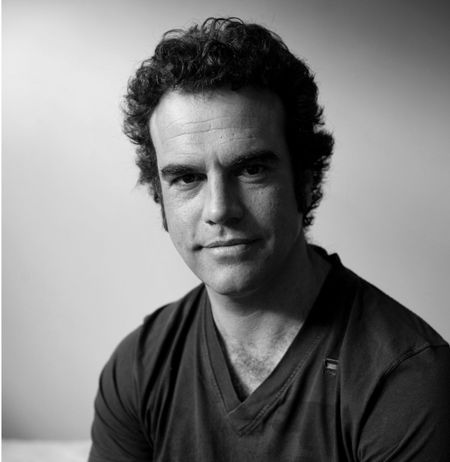
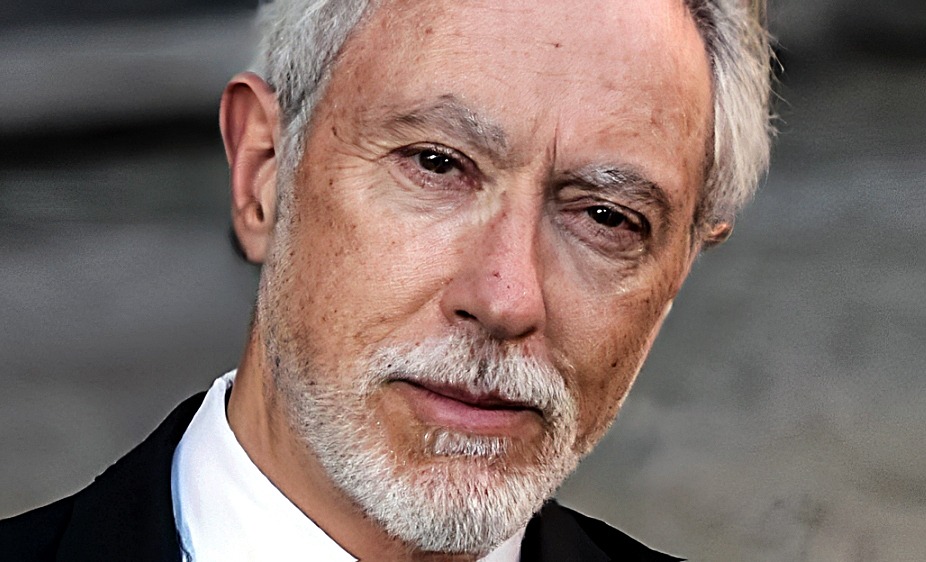
 JM Coetzee. (Photo: South Africa History Online / Wikipedia)
 “We have art so that we shall not die of the truth.”
In 1987, when he won the Jerusalem Prize, Israel’s most prestigious literary award, these words were included in John Maxwell Coetzee’s acceptance speech.
The South African novelist, who 16 years later would win the Nobel Prize in Literature, also had the following to say to his Israeli audience:
“The deformed and stunted relations between human beings that were created under colonialism and exacerbated under what is loosely called apartheid have their psychic representation in a deformed and stunted inner life.”
Back then, as a white 47-year-old male — the exact type of human being, in other words, for whom his country’s legislated racism had been written and conceived — Coetzee did not exclude himself from this malaise of arrested development. South African literature was a “literature in bondage,” he observed, which even in its “highest moments” was “shot through … with feelings of homelessness and yearnings for a nameless liberation”.
It was against this indelible literary background, therefore, that on 28 April 2026, as reported by the Israeli news site Ynet News, Coetzee refused an invitation from Julia Fermentto-Tzaisler, the director of the 14th International Writers Festival at Mishkenot Sha’ananim in Jerusalem, scheduled for 25—28 May.
Given the incomparable devastation wrought by Coetzee’s prose, it was perhaps revealing that Ynet News did not quote the refusal letter directly. Still, even when relayed by Fermentto-Tzaisler, the brutal precision of the master was apparent.
Coetzee, according to the festival director, said he was refusing the invitation because “over the past two years the State of Israel has been conducting a campaign of genocide in Gaza that is disproportionate to the ‘murderous provocations’ that took place on October 7 — a genocide that received enthusiastic support from most of the Israeli public.”
He added, noted Fermentto-Tzaisler, that for this reason no part of Israeli society — “including the intellectual and artistic communities” — could claim it did not share in the guilt for the atrocities in Gaza. Coetzee concluded, she informed the reporter, with the observation that the process of cleansing Israel’s name would take many years, “if it is interested in that at all”.
Clearly, for both Israelis and members of the Zionist Jewish diaspora, this was a lot more than another throwaway tweet from a pro-Palestinian Hollywood celebrity. What it was, whether they liked it or not, was a comment on their actions from one of the world’s greatest living authors, an assessment that reverberated on several cascading levels.
First, there was the double-hit on Jerusalem and the themes of apartheid and colonialism, a critique that held steady across 39 years. Then, there was the broader pattern of disruption at established literary festivals, a trend that now added the Israeli capital to despoiled events, from Cape Town to Adelaide (Coetzee, whose home was once within walking distance of the former, had appeared at the “rebel” version of the latter). Finally, since it was composed of the perennial subjects of his award-winning masterpieces, there was the Coetzee oeuvre itself.
From Waiting for the Barbarians to Life & Times of Michael K and Disgrace, Coetzee’s gaze had been unflinching and consistent — each one of these modern classics was fundamentally about complicity and collective guilt; each one, in sentences venerated for their tensile strength, delved deep into the culpability of bystanders in state violence.
No wonder, then, that Fermentto-Tzaisler, the shunned festival director, had no choice but to submit.
In a personal letter to Coetzee, she wrote: “You left me in despair. We do not know each other, but I do not believe despair was ever your way.” DM