




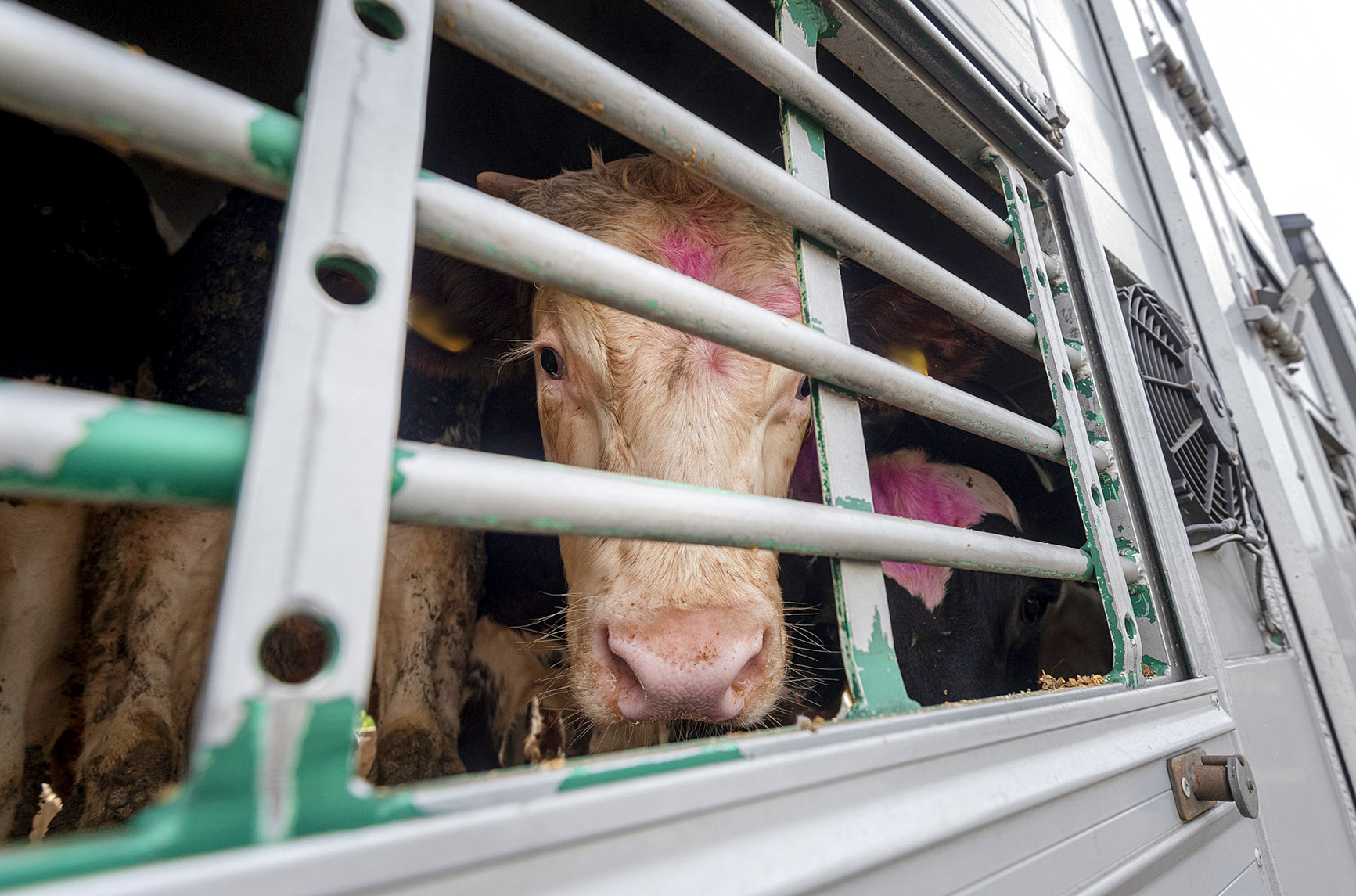
 The Gauteng high court is grappling with ongoing missed deadlines in a foot-and-mouth disease litigation case. (Photo: Four Paws / Wikipedia)
For the second time before Judge CJ van der Westhuizen, the Gauteng Division of the High Court in Pretoria found itself adjudicating not the merits of the foot-and-mouth disease litigation, but legislative admin-related deadlines that have not been met.
The applicants, agricultural interest organisations; Sakeliga, Suider-Afrika Agri Inisiatief (Saai), and Free State Agriculture, launched the original urgent application in February 2026, seeking to end what they describe as the state’s unlawful blockade on private FMD vaccination procurement and administration.
A trail of missed deadlines
When the matter was first before Van der Westhuizen on 24 March, the Department of Agriculture produced a supplementary affidavit at the last minute, revealing a draft Section 10 scheme that would provide for private vaccination under the direction of private veterinarians. The court ordered the scheme to be promulgated by 17 April, with 28 April set as the next hearing date.
On 10 April, the department published the draft scheme for public comment in Government Gazette No. 54476 under the name the Routine Vaccination Scheme for Foot and Mouth Disease (RVS-FMD). Comments closed on 17 April. In a media statement on 15 April, the Department of Agriculture publicly stated the final scheme was “envisaged for publication on 24 April 2026”.
It was not published on 24 April.
According to Director-General Mooketsa Ramasodi, the scheme was not published because of the large number of comments received by the closing date.
“These comments were substantive and due consideration must be accorded to these comments in line with the necessary provisions within the Constitution of the Republic of South Africa,” he said.
/file/attachments/orphans/ED_554695_631395.jpg "Department of Agriculture Director-General Mooketsa Ramasodi. (Photo: Gallo Images / Darren Stewart)")
When the matter resumed on 28 April, new counsel appeared for the state respondents and immediately sought a standing-down to have some time to obtain settlement instructions from the respondents. When recalled, counsel indicated the department would finalise the scheme by the end of May.
Reading from the department’s 15 April media statement, the judge pressed counsel to explain how the department could have publicly committed to a 24 April publication date and then simply let it pass.
In his eventual ruling, Van der Westhuizen observed that the FMD outbreak “is a matter that was announced by government to be of national importance and a national emergency”, and that the respondents appeared to “no longer consider it to be of such importance”.
He granted the extension “reluctantly”, in his own words, ordering the scheme to be published no later than 5 May. The first, second, and third respondents – the Minister of Agriculture, the Director-General of the Department of Agriculture, and the Director of the Directorate of Animal Health of the Department of Agriculture – were ordered to pay the wasted costs of Tuesday’s hearing on a punitive attorney-and-client scale, including the costs of two counsels.
The Department of Agriculture told Daily Maverick that it was “studying the order and will duly comment thereafter”.
/file/attachments/orphans/ED_587094_552469.jpg "Minister of Agriculture John Steenhuisen. (Photo: Gallo Images / Sharon Seretlo)<br>")
A scheme, but is it a solution?
Counsel for the applicants argued that the postponement should be refused outright and that the merits of the scheme should be heard. The core of their position is that the scheme, whether in draft or final form, will not change the existing legal position that the applicants rely on.
Saai echoed this in a statement after the hearing, expressing disappointment that the court’s deadlines had not been respected and that further postponement was sought.
“Even if the extension is only for one week, the weekly spread of the disease is so serious that dozens of farmers’ businesses could collapse,” the statement read. The organisation said its heart went out to farmers for whom any solution had already come too late, and who had to watch their businesses grind to a halt while waiting for the state to import, distribute and administer the vaccine.
Saai also questioned whether the missed deadlines reflected something deeper.
“If officials don’t even respect explicit court orders, how would they have the capacity and ability to effectively manage a complex counter-strategy against FMD?” they said. “This is the most important reason why farmers must be allowed to look after their own herds.”
Sakeliga said the minister’s “continued fumbling with a voluntary section 10 scheme is no answer to the relief sought,” and that the litigation would continue toward the 11 May argument date, regardless of whether a scheme was published.
What happens next
The Department of Agriculture has been ramping up its own vaccination drive. In a statement issued on 22 April, Minister John Steenhuisen announced the arrival of two million doses of FMD vaccines from Dollvet in Turkey, the first tranche of a six-million-dose order. Since February 2026, the department says it has received four million doses in total and vaccinated 2.1 million animals nationally. An additional five million doses from Biogénesis Bagó in Argentina have been ordered through Onderstepoort Biological Products, pending South African Health Products Regulatory Authority (Sahpra) approval.
But for the agricultural organisations in court, the state’s vaccination drive has never been the central issue – it is whether farmers can access and administer vaccines privately, in parallel, without waiting for a government allocation. DM
Comments
Scroll down to load comments...