




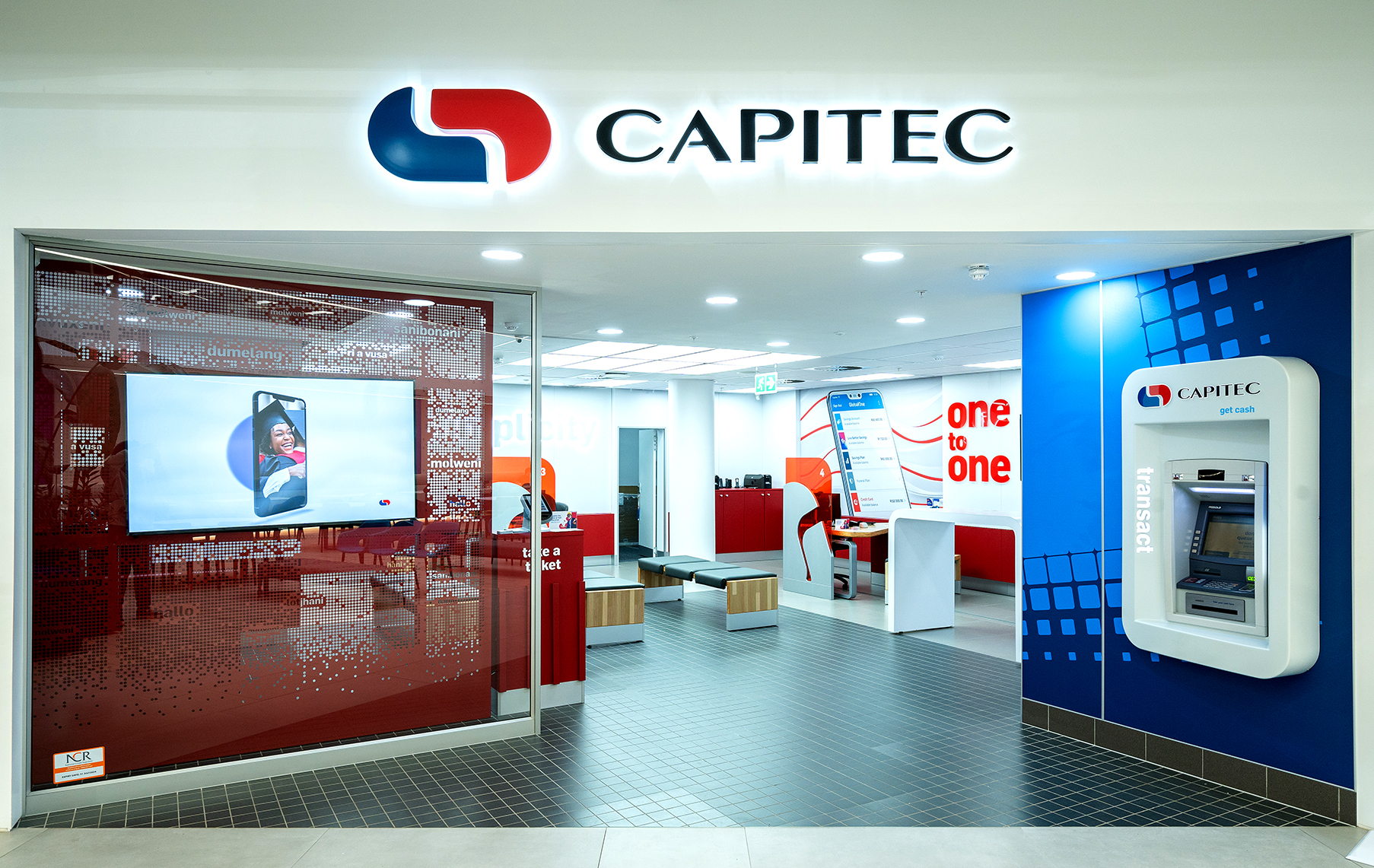
 Capitec’s stock is soaring, boasting nearly 30% growth in the past year as it reshapes the banking landscape with its innovative services. (Photo: Capitec)
The market is simply the outcome of humans buying and selling shares. And if there’s one thing that humans are good at, it’s injecting emotion into the process.
Sure, there are now many algorithms out there that are trading based on rules rather than sentiment. But even then, the human condition overpowers these systems time and time again. If that wasn’t the case, then we wouldn’t have bubbles and market crashes!
One of the strongest human emotions is love. The market regularly falls in love with the so-called “market darlings” – stocks that can do no wrong. They eventually become priced for perfection, which means that nothing less than perfection will do.
While the going is good, the share price keeps going up. Growth investors celebrate accordingly. But if anything goes wrong, things can get nasty pretty quickly.
This week, we look at three market darlings. Only one of them is still popular with its mother-in-law, while the other two have been banished from family gatherings.
A perfect storm at Afrimat
In the mining and resources sector, the Afrimat management team has a reputation that stands head and shoulders above the rest. For years, they allocated capital intelligently and executed deals that diversified the business without breaking it. At some point, something was bound to go wrong.
The catalyst for pain has been nothing short of a perfect storm. Afrimat rolled the dice on the substantial acquisition of Lafarge, believing that they could turn the South African business around and enjoy an upswing in local infrastructure spend. It was always going to be a risky deal, but then along came the bad luck of a rug pull in the ferrochrome sector.
Afrimat provides essential raw materials to our local ferrochrome smelters. But if the smelters aren’t operating due to unaffordable electricity costs, then Afrimat sits with a serious problem. For months now, the ferrochrome sector has been in crisis talks with Eskom to try to negotiate a special tariff that will allow the smelters to operate. The impact of that is clear to see in Afrimat’s income statement, with the group suffering a net loss in the second half of the year.
The share price has shed 23% of its value this year. Over 12 months, the drop is even uglier – down 40%. Currently trading at prices last seen in 2019, the jury is out on whether the market will look through the noise and back this management team once more.
Valuation pressure at Clicks
Clicks is a very good business. Of every R4 being spent at pharmacies in SA, R1 is being spent at Clicks. It’s an impressive story, but one that creates a very difficult foundation for further growth due to the sheer scale of the group.
For years, local investors have shaken their heads at the price that the market has been willing to pay for Clicks. Famous for attracting international investors, Clicks has been at eyewatering earnings multiples for as long as anyone can remember. Sooner or later, earnings growth was going to slow down to a point where the price came off.
The timing of these corrections is very difficult to call with any accuracy. Sometimes there’s an obvious catalyst that drives a sudden drop. In other cases, there’s a slow decline as buyers gently disappear from the market.
Clicks is trading at 52-week lows and has lost 20% this year. The rate of decline accelerated recently, but it’s worth noting that the drop over 12 months is 32%. This tells us that the negative momentum has been there for a while.
With heightened levels of competition in the retail sector, and other shiny things on the JSE fighting for the attention of investors, Clicks has been struggling to keep investors excited about the story. The heat is now really on, as Headline Earnings Per Share growth for the year ending August 2026 is only expected to be between 4% and 9% – a pedestrian performance relative to the valuation.
Again, this isn’t because there is anything wrong with the underlying business at Clicks. It’s just a function of the mismatch between the valuation and the growth rate at the business. Success in investing is always a function of what you bought and what you paid for it.
Everyone loves Capitec
This brings us neatly to a company that the market is quite happy to own at a demanding valuation.
Capitec is easily SA’s best democratic business story, having genuinely changed the local banking landscape for the better. They are so much more than just a bank these days, with substantial earnings coming through from insurance and value-added services.
The share price is up nearly 30% in the past 12 months. It’s even up 5% year-to-date, which puts it well ahead of many local companies. It’s worth mentioning that Standard Bank is ahead of Capitec over both those periods, but that’s with the much higher underlying risk of extensive exposure to Africa. One of the most impressive things about Capitec is that they’ve achieved incredible growth without having to meaningfully venture beyond our borders.
The latest results are excellent across just about every metric you can think of. But they needed to be, as the market is pricing this stock for perfection.
With Return on Equity of 31%, it’s debatable whether this company should even be valued like other banks i.e. with reference to book value. Such is the nature of the business that it has arguably transcended Price/Book and landed squarely in the Price/Earnings camp. Put simply, they’ve introduced so many clever ways to make money that the business is now structurally different to legacy banks in SA. Standard Bank, the best of the rest, is trading on a Price/Earnings multiple of 10x. Capitec is trading above 33x!
Unlike at Clicks, there are good reasons to believe that Capitec’s growth curve can remain strong for a long time to come. As we’ve learnt from Afrimat though, things can go wrong in unexpected ways. Such is the beauty of investing – the risks are so different depending on which company you look at. And sometimes, the valuation is the biggest risk of all! DM
Comments
Scroll down to load comments...