



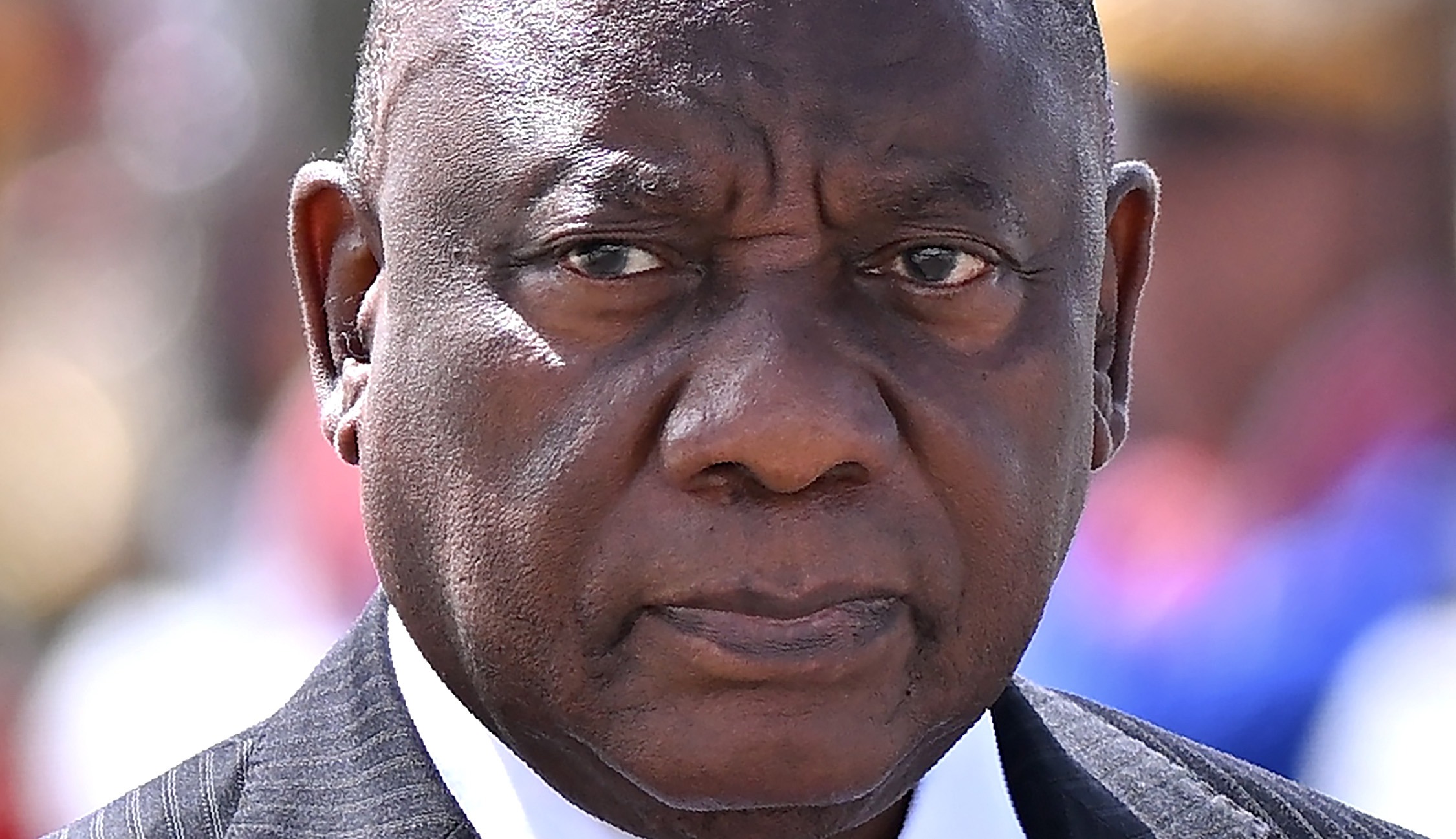
 South Africa President Cyril Ramaphosa inspects the Brazilian presidential guard of honour during a welcome ceremony at the Planalto Palace in Brasilia, Brazil, on 9 March 2026, while on a two-day state visit. (Photo: EPA / Andre Borges)
 President Cyril Ramaphosa has hailed the establishment of the International Panel on Inequality as a landmark achievement of South Africa’s G20 Presidency, warning that global inequality has become a structural emergency threatening to halt human progress. Speaking at the Wits School of Governance on Friday, 24 April 2026, Ramaphosa said that because extreme inequality wasted the potential of billions, it acted as a global brake on economic and social development that no single nation could fix in isolation.
Ramaphosa delivered the keynote address on the global inequality emergency and progress on establishing an International Panel on Inequality.
The panel was proposed in a report authored by an Extraordinary Committee of Experts, chaired by Nobel Prize winner Joseph Stiglitz and featuring a global cohort of academics, including UNAids’ Winnie Byanyima and Wits University’s Imraan Valodia.
Their report painted a stark picture of the global economic divide, revealing that between 2000 and 2024, the richest 1% of the population captured 41% of all new wealth, while the poorer half of humanity secured a mere 1%.
This disparity has galvanised a groundswell of diplomatic support; since last year’s G20 Summit in Johannesburg, the leaders of Spain, Norway, and Brazil have joined Ramaphosa in championing the initiative alongside European Council President Antonio Costa. In February, the African Union unanimously passed a motion supporting the panel.
A ‘collective architecture’ for global reform
Ramaphosa characterised the body’s establishment as the most consequential legacy of SA’s 2025 G20 Presidency. Modelled after the Intergovernmental Panel on Climate Change, it aims to provide an authoritative, science-based platform to guide global policy.
Ramaphosa said the report provided evidence that extreme inequality threatened democratic freedoms, economic growth and general wellbeing.
He said that inequality was not merely a localised hardship, but a systemic handicap that entrenched poverty across generations. He noted that a person’s starting point in life too often dictated their access to nutrition, schooling and the networks required for upward mobility. He warned that the world could not advance while vast swathes of humankind were denied fundamental requirements such as food, water and security.
“The Extraordinary Committee was correct when it said that the world is facing an inequality emergency. The International Panel on Inequality represents a concrete opportunity to confront this emergency,” said Ramaphosa.
He added that the panel provided a unique platform for global cooperation and emphasised that no single country could defeat inequality in isolation. The crisis demanded “coordinated multilateral action” anchored in solidarity. To achieve this, he called for a “collective architecture of reform” that combined rigorous monitoring with the kind of practical insights needed to guide everyone from state leaders and international agencies to academics and grassroots activists.
Ramaphosa said the panel would provide the rigorous analysis and credible evidence required to turn global sentiment into concrete actions that reduced inequality within and between countries.
“Once established, once equipped and supported, this international panel will be one of the most effective instruments the global community has to direct efforts to substantially reduce inequality,” he said.
Rewriting the rules of governance
However, Ramaphosa noted that the panel could only take us so far. He challenged world leaders to move beyond analysis toward urgent, coordinated multilateral action.
Domestically, he called on nations to invest in health and education for the most vulnerable while implementing progressive taxation and regulations to constrain excessive corporate power.
On a global scale, the president called for a fundamental transformation of financial governance, urging international institutions to redirect resources toward the specific needs of developing nations. He stressed that existing climate commitments to countries bearing the brunt of global warming must be both honoured and expanded.
For global inequality to be truly dismantled, Ramaphosa maintained that developing economies require the “space, means, and capability” to pursue just energy transitions that aligned with their own national development priorities.
Ramaphosa noted that just as inequality fuelled conflict, ongoing violence further deepened the divide between the rich and the poor. He urged the global community to prioritise resolving current conflicts and establishing credible prevention mechanisms for the future. Central to this effort, he argued, was restoring the UN Charter to its rightful place and reforming institutions like the UN Security Council to ensure they served as “reliable guarantors of peace”.
Ramaphosa concluded that while the panel was established amid deepening global disparity, it was born out of a “grave concern” for the quality of life of billions and the urgent need to protect the prospects of human progress.
“Yet, although the challenges are great, we see a rising tide of activism and a renewed determination across the world to confront and overcome this crisis of inequality,” he said.
Voices from the committee
Meeting at Wits on Friday, the Founding Committee discussed the composition and mandate of the panel.
Imraan Valodia, Professor of Economics and Pro Vice-Chancellor: Climate, Sustainability and Inequality at Wits University, noted that while individual nations had the scope to address inequality at the national level, international cooperation had become a strategic necessity.
“While there is a wealth of academic literature about inequality, there is not a single central body that assesses the global state of inequality. Indeed, many estimates seem to have severely underestimated the level of inequality in our societies. Without proper scrutiny, inequality has spiralled out of control, and it’s time to get a hold of it,” said Valodia.
Winnie Byanyima, UN Under-Secretary-General and Executive Director of UNAids, framed the initiative as a rare moment of diplomatic unity. She noted that at a time when global cooperation was at its lowest point in decades, the partnership between South Africa, Brazil, Spain, and Norway proved that governments could still collaborate to address systemic crises.
“We are living through an inequality emergency, one that is driving health crises, deepening climate vulnerability, and trapping millions in cycles of poverty. With SA’s President Ramaphosa in the lead, we are choosing to act,” she said. DM