



 Image: reve.ai
 On Thursday and Friday last week two global news announcements dropped, one from the US and one from China. They seem to be only peripherally related. But they are not. They point to a deeply unsettling and growing threat, at least to the US. They are semaphores signalling that China may gradually be winning the AI arms race.
On 23 April, the White House Office of Science and Technology Policy issued a memo accusing Chinese entities of running what it called “deliberate, industrial-scale campaigns” to steal the crown jewels of American artificial intelligence.
And then, on 24 April, the Chinese frontier AI company DeepSeek released their long-awaited V4, its newest flagship, in two versions: a Pro model with 1.6 trillion parameters and a Flash variant at 284 billion parameters. According to DeepSeek’s own benchmarks, V4-Pro leads all open-source rivals in world knowledge and supports a one-million-token “context window”, meaning it can process an entire codebase or multiple book-length documents in a single prompt (as I write this, analysts are still poring over its capabilities).
Let’s first talk about the “theft” claims and let’s be precise about what is actually being alleged. The technique at the centre of this furore is called “distillation” – querying a more powerful model millions of times to build datasets that teach a smaller model to mimic its behaviour. It is not IP core theft. No one has broken into a server room, copied weights or stolen source code.
Distillation uses the public-facing application programming interface or “API” – the same front door available to every developer on the planet. And here is the inconvenient truth that the White House memo carefully sidesteps – everyone does it. American companies distil each other’s models routinely. OpenAI’s own o1 series drew on output from earlier Anthropic and Google models for parts of its training pipeline.
Chinese companies doing this at scale is not categorically different from what happens daily inside Silicon Valley. The memo acknowledges that the models produced this way “do not replicate the full performance of the original” – which rather undercuts the theft narrative.
Crucially, it does not grant access to the underlying architecture, training data or weights of the original model – the true “crown jewels”. Distillation extracts behaviour, not essence. It is the difference between reverse-engineering a dish by tasting it and stealing the recipe book and the kitchen. What it really amounts to is learning by observing – an apprenticeship by any other name.
Which brings us to last Friday’s DeepSeek V4 announcement. For those who don’t remember, a tremor happened back in January 2025, DeepSeek (who almost no one in the West had heard of at the time) announced an AI model called DeepSeek R1, and the shockwaves reverberated everywhere. Here was a homegrown Chinese AI, every bit as capable as ChatGPT, using local chips and Chinese-invented hardware and software architecture. It was also open source and far less expensive to train and operate.
Nvidia’s share price dropped 18% in a single session, erasing more than half a trillion dollars in market value. Marc Andreessen called it “AI’s Sputnik moment”. The metaphor was apt – a moment of sudden, visceral realisation that the other side had crossed a threshold no one believed they were close to.
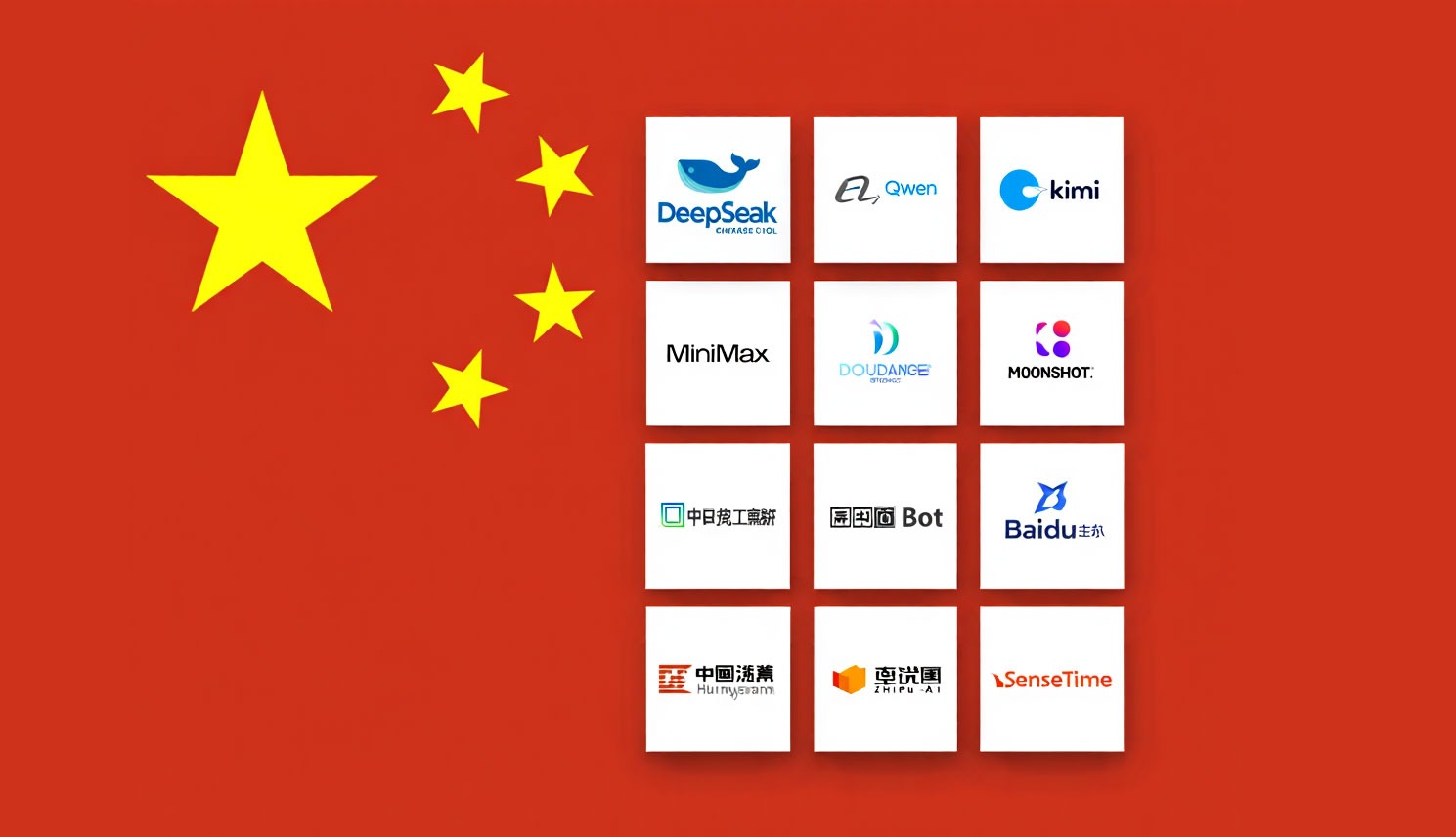
Friday’s announcement is an even bigger deal, not only because of the power of the new V4 model but because several other Chinese companies are all releasing their new versions this year, all designed to unseat DeepSeek. All of them are (or will be) as good, if not better than the latest ChatGPT or Claude or Gemini (at least by some benchmarks). I can pretty much guarantee that unless you are a tech nerd, you will not have heard of most of them. Here is a list of the top 10, besides DeepSeek:
- Alibaba/Qwen: One of China’s most important open-model families;
- Moonshot AI/Kimi: Long-context, agentic and coding-focused models;
- ByteDance/Doubao: Huge consumer reach and model deployment;
- Baidu/ERNIE: Early Chinese LLM leader, strong enterprise push;
- Tencent/Hunyuan: Embedded across social, gaming and cloud;
- Zhipu AI/GLM: Tsinghua-linked frontier model company;
- MiniMax: Strong multimodal and consumer AI products;
- iFlytek: Speech, education and applied AI powerhouse;
- SenseTime: Computer vision giant pivoting into generative AI; and
- 01.AI/Yi: Open source and commercial focus.
It goes without saying that these models are as comfortable in English as they are in Chinese.
How many US AI leaders, influencers and entrepreneurs can you name? Even for those not in the weeds, you will probably think of Sam Altman, Sergey Brin/Larry Page, Elon Musk, Mark Zuckerberg. Perhaps even Dario Amodei (Anthropic) or Demis Hassabis (DeepMind).
Now how many Chinese can you name? Have you heard of Liang Wenfeng, Luo Fuli, Yang Zhilin? Neither had I. The Western press has little interest in them. But in China they (and several others) are celebrities.
The West is guilty of wilful ignorance about China’s AI ascendance. Consider what this looks like in practice. It looks like export controls on Nvidia chips that have, in practice, accelerated China’s investment in domestic alternatives like Huawei’s Ascend architecture. It looks like a visa regime that is driving away the Chinese-born researchers who powered US AI leadership for two decades – 38% of American AI researchers are of Chinese origin, according to Stanford’s data. It looks like an AI policy debate that is almost entirely about OpenAI, Anthropic and Google, while a dozen Chinese labs ship competitive models that most Western technologists have never heard of.
Go deeper and it gets even worse. The statistics compiled in the Stanford AI Index 2026 are not comfortable reading if you are in Washington or Silicon Valley. China now produces 23.2% of all global AI research publications – more than the US, UK and EU combined in volume. Its citation share stands at 20.6%, compared with 12.6% for the US. In the top 100 most-cited AI papers of 2024, China contributed 41 papers, up from 33 in 2021. Chinese entities filed 69.7% of all AI patents worldwide. China graduates three times as many computer scientists annually as the US and produces nearly double the science and engineering PhDs.
The number of AI researchers choosing to enter the US, meanwhile, has dropped 89% over seven years and 80% in the past year alone – a direct consequence of H-1B visa restrictions under the Trump administration. The talent that built Silicon Valley’s lead is, in meaningful numbers, no longer coming.
Lest this sounds like an overreaction, let me simply end here: given the exponential self-improvement potential of AI in every human endeavour, the country that wins AI, wins everything. I do not want China to win. I want the US to win. The US was winning this race widely and now they are perhaps just a hair’s breadth ahead, but their history of arrogant exceptionalism has them reacting to the runner about to pass them by accusing them of cheating. DM
Steven Boykey Sidley is a professor of practice at JBS, University of Johannesburg, a partner at Bridge Capital and a columnist-at-large at Daily Maverick. His new book, It’s Mine: How the Crypto Industry is Redefining Ownership, is published by Maverick451 in South Africa and the Legend Times Group in the UK/EU, available now.