




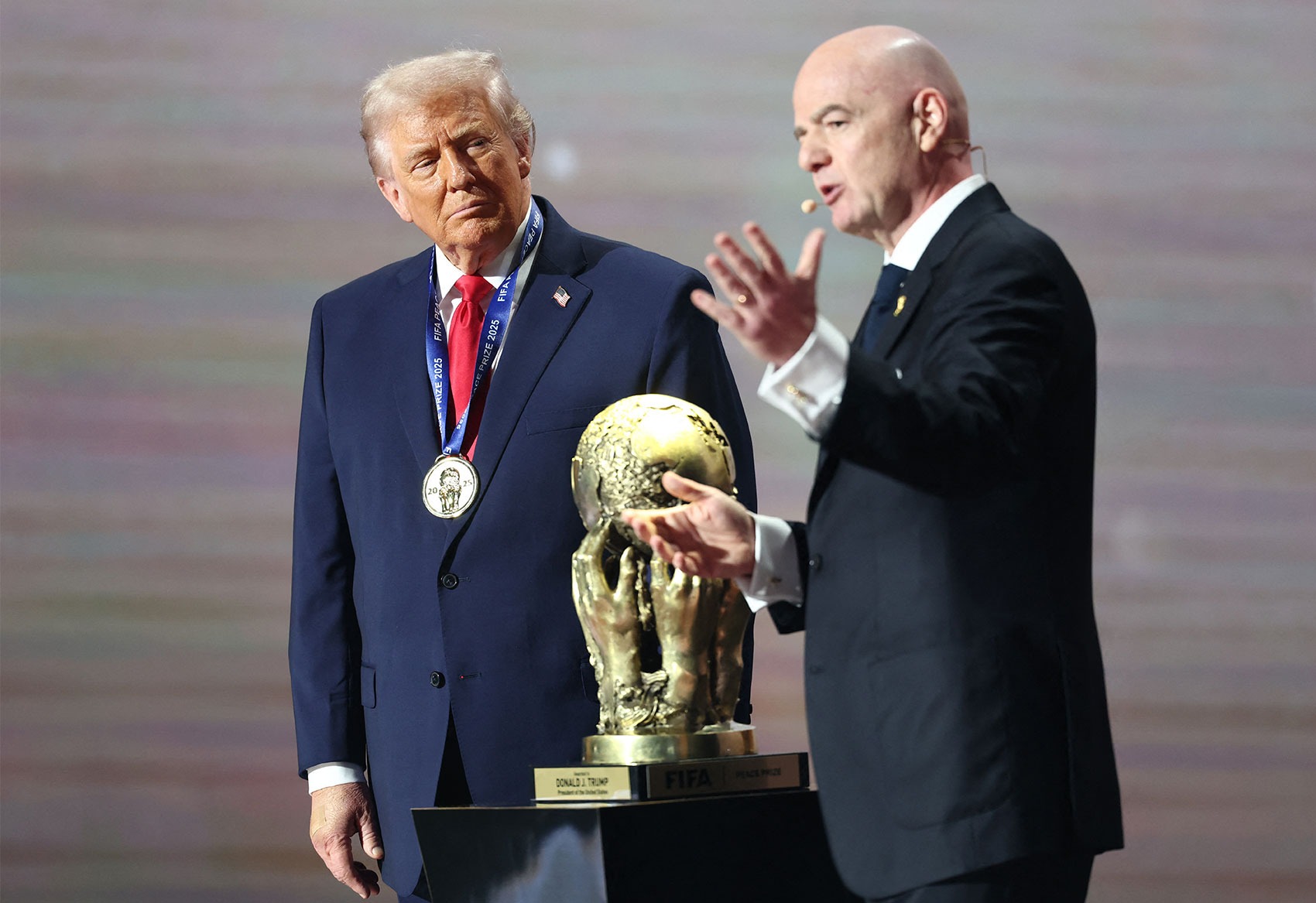
 The 2026 Fifa World Cup is set to be the most expensive for soccer lovers around the world. This mainly due to Fifa’s use of dynamic pricing, which is popular and sees the prices of events increase and decrease according to demand. (Photo: REUTERS / Kevin Lamarque)
 If the question is: How much does a ticket for the 2026 soccer World Cup cost, then the answer is simple. It depends. Thanks to the dynamic pricing model which Fifa adopted for the quadrennial global soccer spectacle.
What is dynamic pricing? The model is popular in North America during their own major sports events, as well as other forms of entertainment (such as concerts). Essentially, the principle of this strategy is that prices of events will increase or decrease, based on demand. Even the Super Bowl operates on this method.
With the men’s World Cup being the crown jewel of Fifa’s events roster and the global governing body’s main moneymaker, the organisation has defended this approach to the 2026 event, which will be the first in history to be hosted across three countries — Mexico, the US and Canada. It will also include 48 teams for the first time ever, up from 32 in the most recent editions.
So not only do fans have to contend with unpredictable ticket prices, but travelling costs if they are to follow their teams throughout the tournament. For example, South Africa, playing in their first World Cup since 2010, will be based in Pachuca, Mexico. But play their matches in three different cities: Mexico City and Guadalupe (both in Mexico, but hundreds of kilometres apart), and in Atlanta, Georgia.
/file/attachments/orphans/TL_2498928_899451.jpg "With expensive prices of the tickets for the World Cup, African nations such as South Africa are unlikely to have much support at the 2026 Fifa World Cup. (Photo: Daniel Hlongwane / Gallo Images)")
That’s a lot of financial strain for a South African supporter wishing to be at each of those three Group A matches, where Bafana Bafana are placed alongside Mexico, South Korea and Czechia.
Fifa’s defence
Nevertheless, Fifa has vehemently defended its pricing method. President Gianni Infantino, speaking during a session at Semafor’s World Economy Summit in New York, doubled down despite criticism of World Cup ticket prices. He emphasised that Fifa is a non-profit organisation.
“The main, and so far the only, revenue-generating event for Fifa is the World Cup,” Infantino said. “The World Cup takes place over one month every four years. So we generate money in one month. The 47 months [we have to wait] until the next World Cup, we spend that money.”
“Because we generate billions in a World Cup, people don’t know Fifa is a non-profit organisation,” the Swiss soccer administrator added.
“Which means all the revenue we generate, we invest in the organisation of the game, in 211 countries all over the world. Three quarters of which probably would not be able to have organised football without the grants we could give them. So we always try to find the right balance,” Infantino added.
/file/attachments/orphans/UP1EICI1ID2NG_260176.jpg "Fifa president says the high prices of the 2026 World Cup will benefit everyone in football, not just the participating nations. (Photo: REUTERS / Kai Pfaffenbach)")
Fifa has continuously pointed out that the biggest beneficiaries of a successful men’s World Cup are grassroots soccer and the women’s game. This, they say, is because they generate enough money to pour back into sectors with a successful World Cup. With the ever-increasing prices of the 2026 World Cup, the windfall for both fields of global soccer should be historical.
World Cup prices keep rising
In keeping with their dynamic pricing approach, at the beginning of April, Fifa increased their prices. The most expensive World Cup ticket went from the post-draw price of $8,600 (about R142,000) in December, to about $10,900 (approximately R181,000). By comparison, the most expensive ticket for a World Cup final ticket in Qatar four years ago was about $1,600 (R27,000).
In March, Football Supporters Europe (FSE) and Euroconsumers filed a formal complaint with the European Commission against Fifa regarding the prices, saying they are too high and are unaffordable. The fact that they are not fixed adds to this frustration.
/file/attachments/orphans/2262474197_899291.jpg "Fifa recently announced that five million tickets have been sold so far for the 2026 World Cup, which will take place in the US, Mexico and Canda from 11 June. (Photo: Chip Somodevilla / Getty Images)")
While there were four main ticket categories for Americas-hosted 2026 World Cup, Fifa did introduce a cheaper ticket tier in December. This, the federation said, would accommodate the most staunch supporters of each country. Fifa added the allocation and distribution of these limited tickets would be the responsibility of the 48 qualified nations. This did little to appease the general public with Fifa’s pricing.
A match featuring legends Lionel Messi or Cristiano Ronaldo, for instance, could trigger a surge in ticket prices across tiers at the 48-team tournament.
Speculative scarcity and surges
In the rare event of an Argentina versus Portugal World Cup final, ticket prices would reach astronomical levels. Especially because there is a formal, Fifa-affiliated, resale platform where ticket-holders can pawn their tickets. The federation gains 15% of the funds exchanged, from both the buyer and the seller, in that transaction. For a total of 30% income from such exchanges.
The FSE and Euroconsumers’ legal arguments are based on six major areas of concern: sky-high prices, advertising for extremely rare $60 dollar tickets, uncontrolled surge pricing, lack of transparency on what fans are getting for their money, pressure sales tactics, and Fifa getting paid twice via its in-house resale platform.
“For several months now we have urged Fifa to do right by fans and reconsider its aggressive and exploitative ticketing policies. Fifa’s failure to engage in meaningful consultation with stakeholders yet again has left us with no option but to join forces with Euroconsumers in filing this complaint with the European Commission,” said Ronan Evain, executive director at FSE.
“Fifa points to their unconfirmed sales figures as validation of their unfair ticket practices, while the reality is they leave loyal fans with two choices: pay up or lose out,” Evain added.
/file/attachments/orphans/UP1ELC51HS55Y_583354.jpg "Fifa is not perturbed by criticism of its ticket sales approach for the 2026 soccer World Cup in North America. (Photo: REUTERS / Stephanie Scarbrough)")
On 21 April, Fifa announced that five million tickets have been sold for the tournament to date. The record for attendance at a single World is three-and-a-half million people, coincidentally at the US-hosted World Cup in 1994. But with resale factor considered, it could be just that people are buying tickets early so they can possibly resell them at higher amounts as the tournament progresses.
Marco Scialdone, head of litigation at Euroconsumers, said: “Football is a universal passion, but Fifa is treating it like a private luxury by exploiting its absolute monopoly over World Cup ticketing.”
“By imposing opaque pricing, dark patterns to pressure buyers and exorbitant resale fees, Fifa is placing an unfair financial burden on millions of European fans.”
With even European soccer lovers fighting so doggedly against the prices of the soccer showpiece, now just weeks away, Africans seemingly have much less opportunity to be in North America.
This despite Africans having a historic number of 10 teams at this edition of the expanded World Cup. DM