



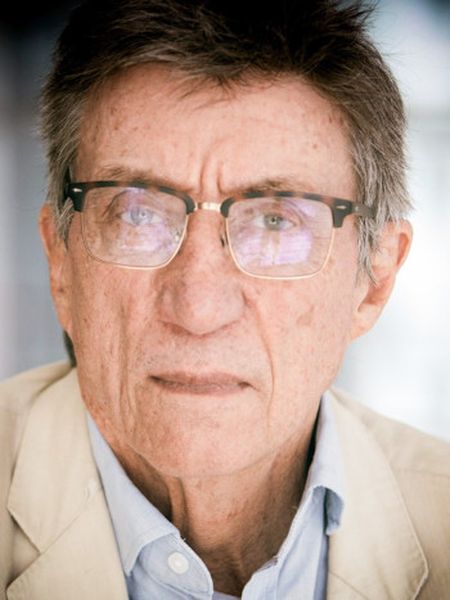
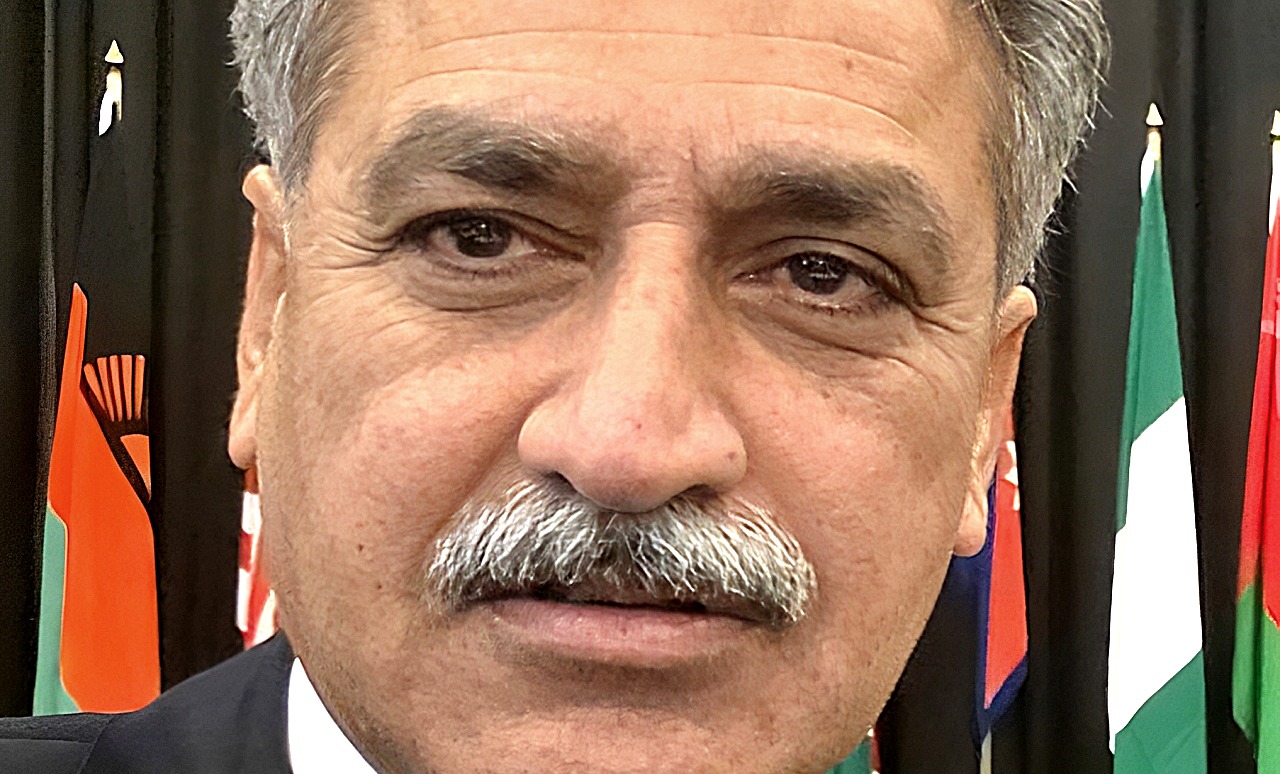
 Pakistan’s high commissioner to South Africa, Malik Muhammad Farooq. (Photo: Supplied / Credit Pakistan High Commission)
 While questions have been raised about whether the Iranian government is divided over the merits of negotiating with the US to end the war, Pakistan, which is mediating the peace talks, believes the Iranian negotiators do have the backing of their supreme leader.
This is according to Pakistan’s high commissioner to South Africa, Malik Muhammad Farooq, who told Daily Maverick that Pakistan was confident that Iran would send its negotiators to Islamabad for a second round of talks.
The talks were postponed indefinitely this week as the US and Iran both enforced blockades on the Strait of Hormuz.
A two-week deadline for a ceasefire expired on Wednesday. US President Donald Trump had threatened to resume bombing Iran if it did not meet US demands which reportedly relate mostly to its nuclear programme.
But Pakistan’s Prime Minister Shehbaz Sharif persuaded Trump on Tuesday to extend the ceasefire until Iran had submitted a peace proposal “and discussions are concluded”. Trump said on 21 April that Pakistan had urged the US not to resume attacks while Iranian leaders work to produce a “unified proposal”.
This suggested that the Iranian government was divided, reinforcing perceptions of a power struggle between the moderate speaker of parliament, Mohammad Bagher Ghalibaf, who is leading the negotiations with the US, and Islamic Revolutionary Guards Corps (IRGC) commander, Major General Ahmad Vahidi, a hardliner.
/file/attachments/orphans/GettyImages-2271046999_815356.jpg "Iran's top negotiator and parliament speaker, Mohammad Bagher Ghalibaf, meets the head of Pakistan’s army, Field Marshal Syed Asim Munir (not pictured), in Tehran on 16 April 2026. The Pakistani delegation met their Iranian counterparts as Pakistan facilitates peace talks between the US and Iran. (Photo: Hamed Malekpour / Iranian Parliament Communication Office / Handout via Getty Images)")
/file/attachments/orphans/GettyImages-2176465763_272849.jpg "Major General Ahmad Vahidi, Islamic Revolutionary Guards Corps commander, addresses Iranian students during a demonstration against the death of Hezbollah leader Hassan Nasrallah in Tehran on 3 October 2024 in Tehran. (Photo: Majid Saeedi / Getty Images)")
Peace talks
Daily Maverick asked Farooq if Pakistan believed that Ghalibaf and Iranian Foreign Minister Abbas Araghchi, who is also part of the negotiation team, had the full Iranian government behind them.
“This is something which is beyond me to answer, but we believe that they have the support of the supreme leader along with the people of Iran.”
He was referring to Mojtaba Khamenei, son of Ayatollah Ali Khamenei, who was assassinated by the US in a missile strike on 28 February, the first day of its attack on Iran. But it is unclear if Mojtaba is in charge of the government or even if he is in a fit physical state to be so, with reports suggesting he was injured in the strike that killed his father.
Farooq said he could not comment on that. He also said he could not comment on the negotiating positions of the two sides or how close they were to an agreement.
We also asked Farooq whether the US or Iran had the upper hand, with Iran blocking the Strait of Hormuz on the one side while the US imposed a blockade on the Gulf of Oman on the other.
“It’s not about saying that who has the upper hand or who has the lower hand. Conflict, you know, be it any form, is not good, not only for the region. And as I said, the Strait of Hormuz is very critical; 25% to 30% of the oil and gas supplies pass through that.”
Pakistan’s aim was to persuade both parties that lasting peace was in their own interests and those of the region and the overall global community.
Asked whether he expected Iran to retaliate for the US firing on and seizing an Iranian cargo ship at the weekend, he said: “If this kind of situation continues, it might escalate.”
Since then the IRGC announced it had seized two cargo ships on Wednesday near the strait. But the Trump administration, surprisingly, played down the seizures because the ships were neither American nor Israeli. This suggested Trump is eager to avoid a return to war.
/file/attachments/orphans/GettyImages-2271172778_885376.jpg "US President Donald Trump speaks to the press during an event outside the Oval Office on 13 April 2026. (Photo: Win McNamee / Getty Images)")
The attacks on ships by both sides have nevertheless raised widespread doubts about the prospects of an early resumption of peace talks.
Farooq would also not be drawn on the possible danger of a return to war if the second round of talks either did not take place or failed to reach an agreement, like the first round in Islamabad on 11 and 12 April.
He would only say that just getting Iran and the US to the first round of talks had been an achievement which had been widely acknowledged around the world. This was their first such meeting after a gap of 47 years since the Iranian Revolution of 1979.
He said Pakistan was thankful to Iran and the US for placing their trust in Pakistan, and to the international community, including South Africa, for supporting the cause of peace. He said it had been an overall joint effort, with the Gulf region, particularly Saudi Arabia, Kuwait, Qatar and the United Arab Emirates, playing a key role along with others including China and the European Union.
“So we are looking forward to another round. And we are really hopeful.”
Diplomatic muscle
Many international observers were surprised that Pakistan took the lead in facilitating the peace talks since it did not seem to have a strong history of playing that role. How did it get involved? Was it requested?
“Pakistan is a responsible country. And we have always been an advocate of peace,” Farooq replied, noting that since its independence in 1947, it had made an effort to facilitate the independence of Tunisia, Algeria and Morocco.
“And Pakistan… brought the US and China together in the 1970s. And we have also been in the peace process of Afghanistan.”
/file/attachments/orphans/GettyImages-2240463923_867126.jpg "Pakistani Prime Minister Shehbaz Sharif speaks next to US President Donald Trump during a world leaders’ summit on ending the Gaza war, in Sharm El-Sheikh, Egypt, on 13 October 2025. (Photo: Suzanne Plunkett - Pool / Getty Images)")
And, Farooq said, Pakistan had a strategic partnership with the US – a very long relationship – while Iran was its neighbour, sharing a long border of nearly 1,000km as well as strong cultural ties.
“And that was the thing, actually, which brought the two countries together, because the thing which was missing was actually the element of trust, and that, there, Pakistan acted as a bridge.”
He added that the “constructive diplomatic engagement” of the Iran peace talks had been recognised not only by Iran and the US, but by the entire diplomatic community.
“And so it’s not that anybody asked us, because as I said, Pakistan has always been an advocate of peace.” DM