




 Orwell 2+2=5 layers contemporary geopolitics with Orwell’s fictional and personal writing. (Photo: Neon)
 Seventy-seven years ago, George Orwell’s Nineteen Eighty-Four was published. An ominous warning against totalitarianism, the novel became an uncanny prophetic text, bringing into the English language neologisms that would go on to shape how authoritarian control is perceived and addressed.
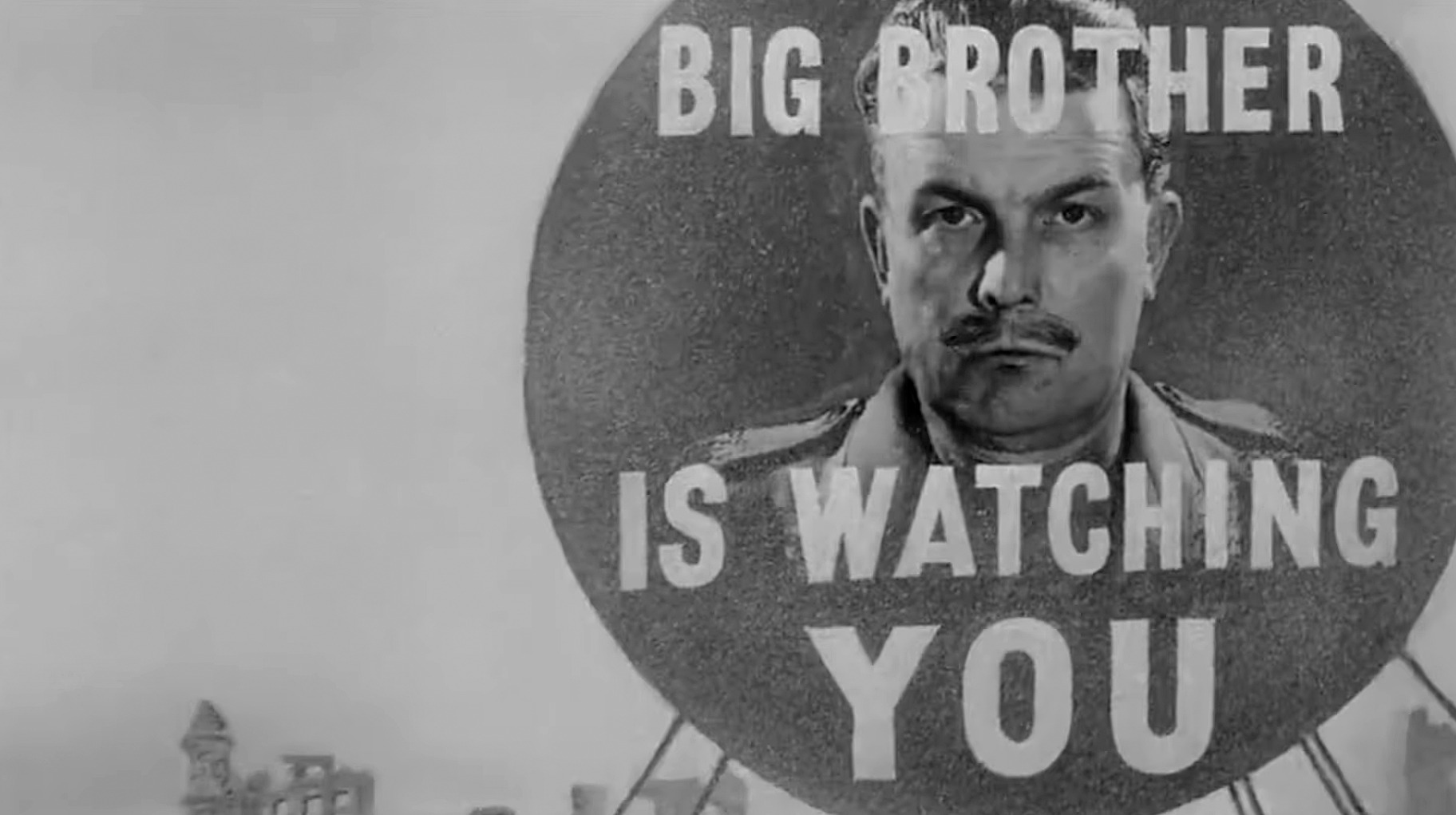
Big Brother: the all-knowing, all-powerful leader to whom a population is programmatically obedient. Newspeak: the propagandistic language created by a governing party, altering reality through words. Doublethink: the simultaneous belief in contradictory ideas.
“No book is genuinely free from political bias,” Orwell writes in his essay Why I Write. “The opinion that art should have nothing to do with politics is itself a political attitude.”
Excerpts like this from Orwell’s essays, fiction, letters and diaries form the narrative foundation of the documentary Orwell: 2+2=5. Producer Alex Gibney was given unrestricted access to Orwell’s full archive, but would do nothing with the material unless it was in the directorial hands of Academy Award-winning documentarian Raoul Peck.
Orwell: 2+2=5 is a sweeping survey of totalitarian rule in our modern-day society and is based on Orwell’s personal writings penned during his completion of Nineteen Eighty-Four, which happened to coincide with the author’s suffering from what would become a fatal case of tuberculosis.
Rooted in Orwell’s work, the documentary not only affirms Orwell’s astute awareness and articulation of the finer workings of totalitarianism, but also makes it unmistakably evident how that system is playing out across the globe before our very eyes.
“It’s not a film about Trump,” Peck tells the International Documentary Association in an interview. “It’s a film about how authoritarianism can happen everywhere and how it is happening now in the US and elsewhere.”
A sentiment echoing Orwell’s own words, narrated in the film by Damian Lewis: “To be corrupted by totalitarianism, one does not have to live in a totalitarian country.”
Montaged clips from film adaptations of Nineteen Eighty-Four, and occasionally Animal Farm, are paralleled with real-life political footage in the film.
Enforced exercise drills, surveillance from big tech companies and dictatorial speeches from whichever power-hungry world leader came to your mind first construct eerie mirror images between dystopian fiction and dystopian reality.
In this sense, the documentary is not necessarily groundbreaking in its thesis. Especially for viewers who are already engaged with these social and political discourses, Orwell: 2+2=5 would seem to be rehashing familiar ground.
However, the film does not appear to be promising to make observations of a revelatory nature.
The documentary is, instead, in the business of precisely what the name of its medium denotes: to document. And where it stands out in this regard is in its speaking to the undeniable existence and influence of artificial intelligence (AI) in a post-truth society.
“It would probably not be beyond human ingenuity to write books by machinery,” recites the film’s narrator from Orwell’s 1946 The Prevention of Literature. “But a sort of mechanising process can already be seen at work in the film and radio, in publicity and propaganda, and in the lower reaches of journalism.”
The documentary’s own use of AI to poke fun at the absurdity of certain politicians, while demonstrating the ability to manipulate facts, is explicitly stated. But whether this justifies the film’s use of AI in its scepticism about the use of this generative technology is up to each viewer to decide.
/file/attachments/orphans/Orwell225depictsNineteen-EightyFoursfictionalslogansinamall_Neon_208801.jpg "Orwell 2+2=5 depicts Nineteen-Eighty Four’s fictional slogans in a mall. (Photo: Neon)")
Working with only Orwell’s archival writing for the script, accompanied by the compilation of footage, the documentary is limited in how deeply it’s able to interrogate its central argument – resisting an excavation beyond the surface of its subject matter.
Because of this, the film can be easily criticised for telling viewers what they may already know about the state of global politics.
What Orwell: 2+2=5 does accomplish, however, is a fairly comprehensive record of a political moment in time, capturing George Orwell’s reasoning that “from the totalitarian point of view, history is something to be created rather than learned”.
From the banning and burning of books to the linguistic manufacturing of falsehoods, Orwell: 2+2=5 becomes a time capsule of today’s geopolitical landscape, contributing to a record that witnesses how history operates in cycles steered by oppression and the abuse of power.
As Peck says: “I want you to be able to watch this film in 10 years, 20 years, in 30 years, as if you’re watching a testimony of time.” DM