




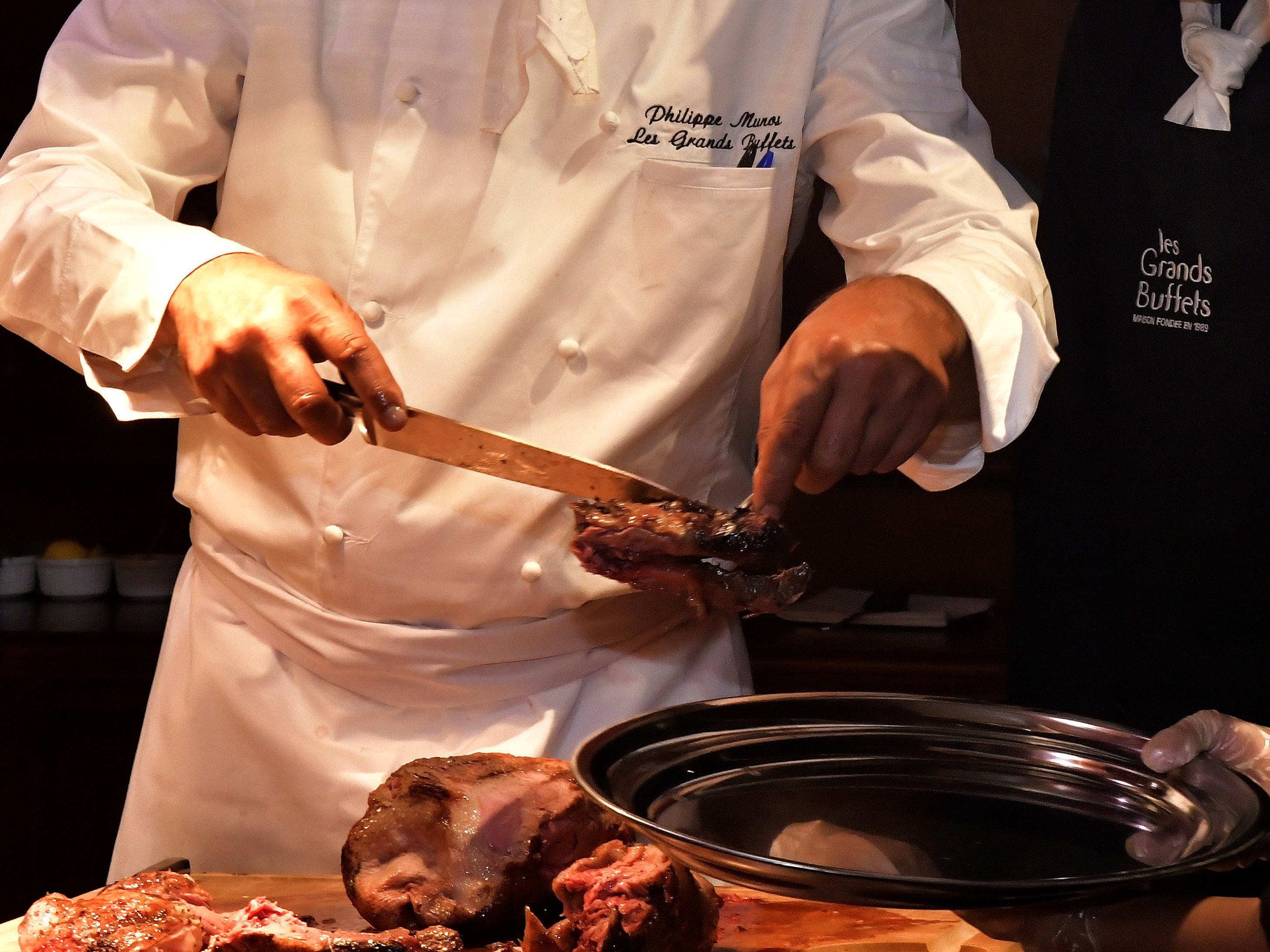
 A chef hard at work at Les Grands Buffets. (Photo: Eric Catarina / Getty Images)
 Tasting a famous traditional meal for the first time can thrill me as much as reading a classic novel for the first time. You know, those dishes you always hear about and yearn to eat if you’re serious about food? I like to compare them to the books I’ve been meaning to read for as long as I can remember, because I love reading even more than I love food.
About two years ago, I got the chance to taste the legendary pressed duck or canard au sang (duck with blood), as the French had called it before international diners became queasy about blood and the insides of animals. (If you’re vegetarian, I’ll forgive you if you skip the description of its preparation a little lower down.)
Nowadays the most famous version in La Tour d’Argent, the renowned Paris restaurant on the banks of the Seine, is named Caneton Frédéric Delair — after the chef who started serving it here in the 19th century. Delair also had the brilliant marketing idea of numbering each duckling, and the diners who received a card with the bird’s serial number now count well over a million.
Of course I dreamed of eating the dish in this historic restaurant, more than 400 years old and reportedly the first place in France where forks were used, a new-fangled habit adopted from Italy to prevent diners from dropping food onto the enormous ruffs they wore around the neck.
But I could never afford La Tour d’Argent, where this bloody duckling costs around €200 per person. So I was delighted to hear that you could enjoy the same dish in Narbonne’s Les Grands Buffets, as part of this restaurant’s incredible eat-as-much-as-you-can buffet for around €60.
Yes, for less than a third of the bill at La Tour d’Argent I could not only experience this classic dish (which involves roasting a whole duck and then extracting the blood and juices from the carcass in a special press to make a sauce served with the deliciously tender duck breasts), but I could also stuff myself with oysters, crayfish, foie gras, truffles, all sorts of meat and fowl, not to mention the biggest selection of cheese in the world, and a variety of desserts to make anyone drool.
Drool and groan in frustration, that is, because by the time you reach the desserts, you are probably so sated that you can barely have a bite more of anything.
Because of Les Grands Buffets’ unique concept, dedicated to the great chef Auguste Escoffier, busloads of tourists from all over the world arrive daily to try out the highlights of traditional French cuisine at an affordable price. (We had to book our table about eight months before the meal.)
The setting is less than picturesque, in the industrial area on the outskirts of Narbonne, and the parking area resembles that of a giant supermarket, and you still have to queue for your reserved table like when you visit a museum with pre-booked tickets for a specific time slot. But once you’re inside one of the elegant dining rooms, an extraordinary culinary experience awaits you, and you can stretch out the meal for as long as you like.
/file/attachments/2991/EatingoystersandthefamousbloodyduckofLesGrandsBuffets_MaritavanderVyver_628823.jpg "Eating oysters and the famous bloody duck of Les Grands Buffets. (Photo: Marita van der Vyver)")
I could write a whole essay about my meal there, but for now I’m sticking to the bloody duck, which was everything I’d been dreaming about for so long. And that brings me to the book I was reading that night in a modest guest house in the centre of Narbonne: Thackeray’s Vanity Fair, published in 1848.
I knew this was the book that gave the glamorous American monthly magazine its name, but as with so many other classic novels, I’d never found the time to read it – until we decided to plan a road trip around our bloody duck in Narbonne.
In for a penny, I thought. If I was going to taste this classic dish at last, I might as well tackle a classic book too. I spent a few leisurely days of travel in the company of the cunning Becky Sharp and the goody-two-shoes Amelia Sedley, thoroughly enjoying the satirical style of the unreliable narrator. If I had any regrets, it was simply that I hadn’t read Vanity Fair earlier in my life. Much the same way I felt about eating the legendary duck dish.
Earlier this year I was treated to another traditional French meal that was so absolutely fabulous I had to devote an entire essay to it (From pot-au-feu to other earthly pleasures). In the same post I also referred to the power of a classic book I was finally reading after being too scared to open it for many years: Primo Levi’s If This Is a Man, published in 1947.
It seems to be a recurring theme. Last week, shortly after I’d finished Somerset Maugham’s Of Human Bondage (1915), yet another classic I’d been wanting to read for years, I got an unexpected opportunity to taste yet another traditional dish that I’d been curious about ever since we moved to the Dordogne region where it originated.
La mique is a cereal-based meal, something like a big round bread poached in a vegetable broth or bouillon, instead of baked in an oven. Like most traditional dishes it wasn’t “invented” by a brilliant cook; it grew out of simple available ingredients and the uncanny ability to make do with what you have. ’n Boer maak ’n plan, we say in my mother tongue, and French peasants have been making plans with food for centuries.
/file/attachments/2991/Maritasmiquemealatalocalrestaurant_MaritavanderVyver_949293.jpg "Marita's mique meal at a local restaurant. (Photo: Marita van der Vyver)")
In the Middle Ages many Périgord villages had huge communal ovens in which villagers baked their own bread. Since the communal oven was only fired up at specific times, families would sometimes run out of bread, and because they didn’t have ovens in their modest homes, they started cooking a form of bread in a bouillon. They called it mique, probably derived from the Occitan word mica, which refers to the soft inside of bread, that lovely white part inside the crisp crust of a freshly baked baguette.
As with pot au feu, the bouillon is served separately as a soup, after which the bread-like star of the show is usually served with petit salé (salted pork), forming a hearty peasant meal on a cold winter’s night. Although it was already spring when we noticed a local restaurant advertising a mique meal on flyers found all over the village, we promptly booked a table, hoping the food would not be too heavy for the warmer weather.
And then we realised once again that in France spring is an incorrigible flirt, showing a little leg, baring a bit of body, and just as you excitedly start searching for your summer clothes, she slips away, hiding behind clouds and rain.
Our lovely spring weather disappeared, temperatures dropped to below zero, farmers had to heat their orchards and vineyards with all-night fires to prevent the ground from freezing, and we had to search for small bags of wood to light a fire in our fireplace. We’d used up our stock of winter wood, because we always fall for spring’s flirtatious ways. We believe she loves us, she’s here to stay, and then she drops us. This happened last year too, and will probably happen again next year.
But the sudden return of rain and icy winds was perfect for our mique meal of four courses; first the fragrant bouillon to warm us up, then some course home-made paté with bread, followed by the main dish of filling mique with salted pork, and apple tart for dessert. We might not have been able to do justice to such a substantial meal on a warm spring night. Sometimes you don’t get what you want, but you get what you need. DM
Republished from Marita van der Vyver’s Substack. Read more of her Substack pieces here.