




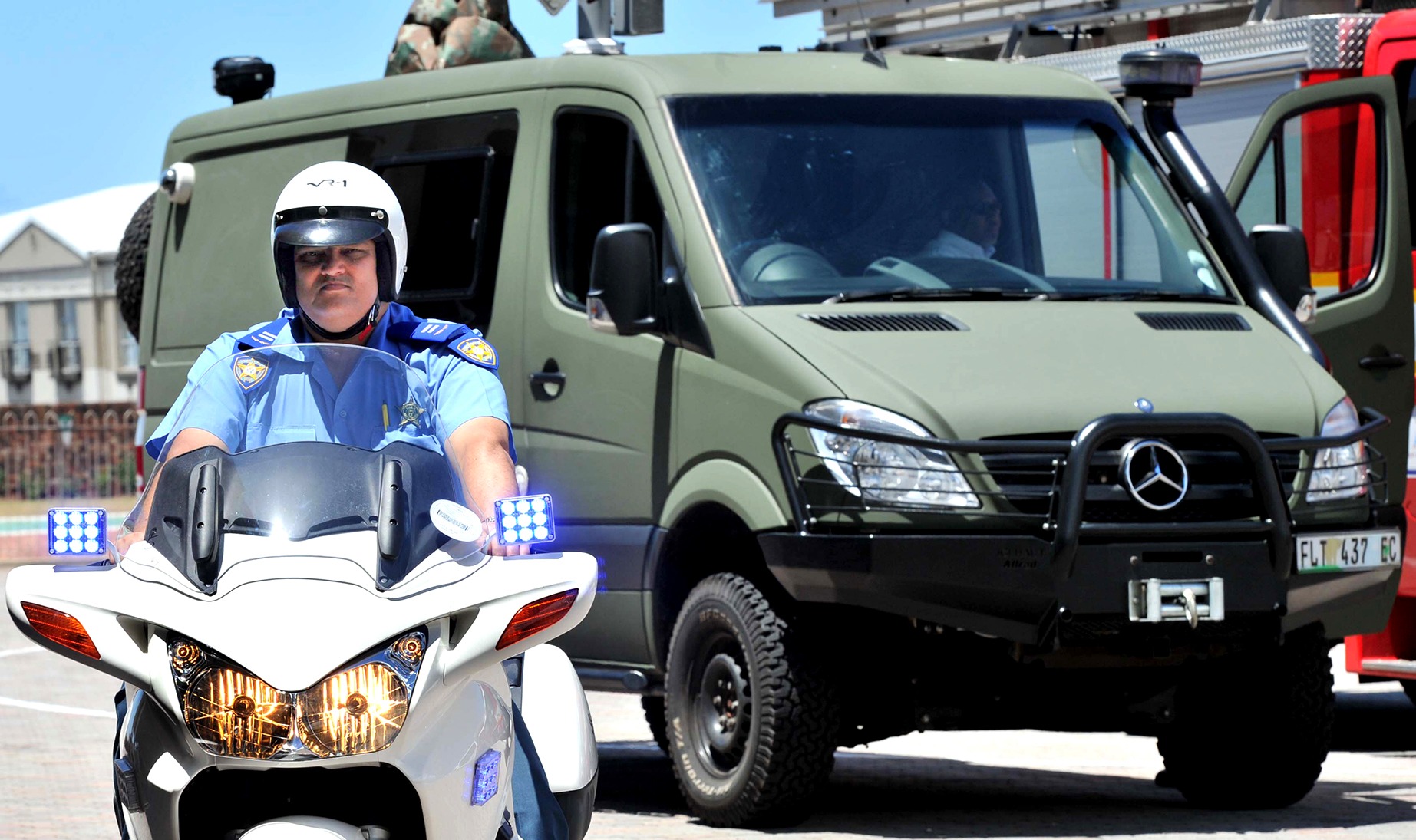
 The Nelson Mandela Bay’s bespoke mobile surveillance vehicle, locally known as ’Loerbroer’, is in the process of being refurbished. (Photo: Deon Ferreira)
 Although Nelson Mandela Bay’s embattled safety and security department continues to face criticism for having spent just 18% of its R72-million capital budget by the end of February, there is, however, growing optimism that a multimillion-rand bespoke surveillance vehicle could soon be back on the road.
It comes as DA councillor John Best warned that the department was running out of time to meaningfully spend its budget.
“We have 18% [of the budget spent] with 70 days left [of the financial year]. In actuality, we have 40 days left because within that last month, you have to sort out payments.
“If you order anything, within a month, there is no way you are going to get it within 30 days. If we look at commitments, we’re at 39%, which is dismal. It is very, very poor. I am glad to hear you have engaged the city manager and chief financial officer (CFO). It’s a bit late,” Best said.
“I want to plead with safety and security that its sub-directorates need to sit down, have a look and see where we are not going to spend the funds, and immediately you should have an additional adjustments budget that looks at the easy wins. The easy wins are motor vehicles,” he said.
Meanwhile, ANC councillor Mphumzi Momo agreed with Best that the budget should be spent on cars, because, as he put it, “Our cars are in very bad condition. At least we can utilise that amount”.
Acting executive director for safety and security Shadrack Sibiya said engagements with senior municipal leadership had helped improve spending levels, but admitted more work was needed.
Crime concerns intensify pressure
Concerns from councillors over the underspending come amid persistent violent crime across the metro – including in parts of the Northern Areas – while much of the city’s crime-fighting technology remains out of operation.
DA councillor Marshall von Buchenroder said delays to get the gunshot detection technology working in areas like Helenvale, Rosedale, and Motherwell were exacerbating the situation.
The gun shot detection technology, a vital tool for real-time gunshot alerts in Helenvale, has been offline since December 2023.
“On a daily basis in the Northern Areas, people are dying because of gunshots. How long are we still going to tolerate the delays in this process, while it could be saving lives in our city,” he said.
The technology – previously credited with improving police response times and aiding arrests – has been stalled due to contractual disputes with a service provider.
Calls to restore idle technology
Councillors also renewed calls for the return of the metro’s mobile surveillance vehicle (MSV), known as the “Loerbroer”, which has been out of operation for years.
The city bought the MSV in 2010, before the Fifa World Cup, for R6-million. The vehicle was intended to enhance safety during the tournament and for continued use afterwards, including safeguarding municipal infrastructure.
DA councillor Gustav Rautenbach – who dubbed the MSV the Loerbroer – said the vehicle had previously played a critical role in monitoring crime hotspots.
“We are facing a serious problem: the equipment we need and have to assist us is currently out of order. We really need to jack up our technology,” he said.
“A life cannot be replaced by money, and we need to start to be very serious.”
Rautenbach urged the municipality to take decisive action, including cancelling non-performing contracts such as the current gunshot detection contract, and fast-tracking new tenders.
“The residents cannot be held [to] ransom. I plead – take decisive steps. Get the Loerbroer back and get the gunshot detection technology back on track,” he said.
Optimism as bespoke surveillance vehicle
repairs nears completion
However, not all is lost. Metro police commissioner advocate Andrew Moses confirmed that a recommendation to cancel the current gunshot detection contract was already with the city manager.
“We recommended that we cancel the contract so that we can retender. So we are waiting on that approval,” he said.
At the same time, Moses provided an update on the long-idle mobile surveillance vehicle, confirming it had returned from Pretoria, where it had been for the past few months for repairs.
The second phase of repairs includes interior upgrades, new lithium batteries and additional camera systems, although a key thermal camera component is still awaited from Germany, said Moses.
“Our projected date for finalisation is 30 May,” Moses said, adding that weekly progress meetings were under way.
/file/dailymaverick/wp-content/uploads/2021/06/Spotter-5.jpg "Metro Police Commissioner advocate Andrew Moses shows a phone with an example of the message that ShotSpotter sends after shots have been fired. (Photo: Deon Ferreira)")
Moses said phase three of getting the MSV operational includes training of the operators, which has already been committed to by the service provider.
The training, Moses said, would be transversal and would include members from metro police as well as traffic services and security personnel, so that when the vehicle was operationally ready, it could be used in all the departments’ various operations.
Red flags over service provider
On the gunshot detection technology, Sibiya raised concerns about the conduct of the current service provider, describing several “red flags” during the contract period.
“The fact that they wanted to be paid for doing nothing was [a] red flag for us,” he said.
He said the provider had also pushed to expand the coverage area beyond what had been agreed, citing budget constraints.
The municipality has now requested approval to formally cancel the contract and begin a new procurement process.
“We are happy now that we have actually requested the office of the city manager to sign the cancellation,” Sibiya said. DM