




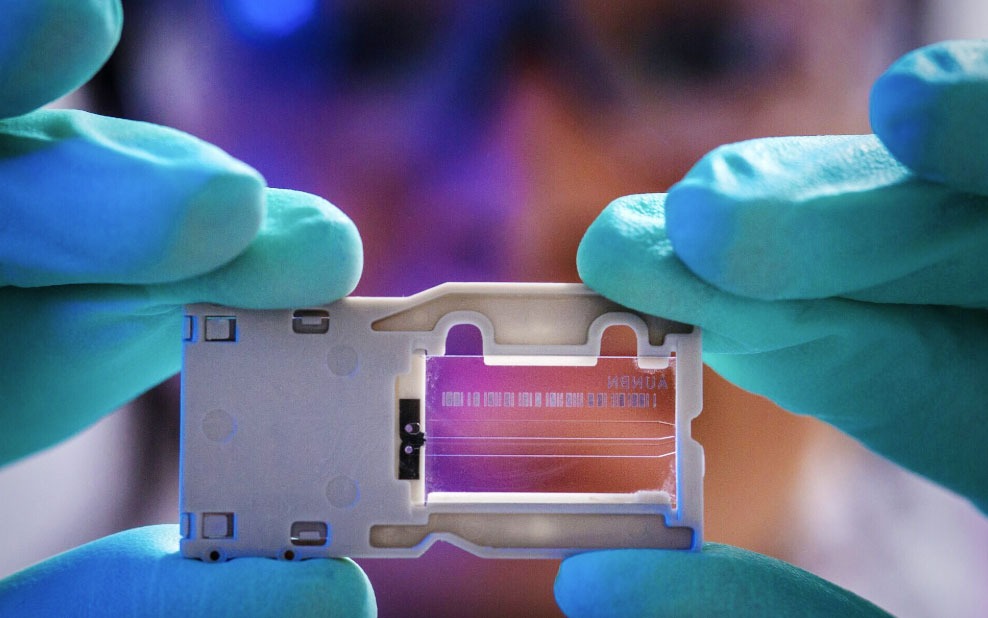
 Health research in South Africa faced an unprecedented crisis owing to funding cuts from the US government. (Photo: Unsplash)
South Africa has long punched above its weight in global health research. Particularly in HIV and tuberculosis (TB), local research has contributed to the development of new tests, treatments and healthcare strategies that are being used around the world.
The country’s strong health research capacity, health infrastructure and regulatory environment, as well as its high burden of TB and HIV disease, have made it an attractive destination for global health research investment.
South Africa has historically received more direct funding from the US National Institutes of Health (NIH), which is the main public funder of health research in the US, than any other country, apart from the US itself. This is both in terms of the number of grants received and the total amount invested.
Consequently, South African research groups were heavily exposed to US funding cuts implemented over the past 16 months.
Cuts to research funding
Disruptions in the funding flows for health research from the US government began in January 2025, when the Trump administration announced a 90-day pause in all international aid spending. While most health research is not funded as aid, some projects in South Africa were funded this way and affected by the cuts.
Then, in February 2025, the administration announced that it would specifically cut financial support to South Africa, as a show of opposition to local policies. Some of the opposition was based on disinformation about the country.
Three months later, in May 2025, the NIH announced that foreign research groups, working in partnership with US-based grantees, could no longer receive funding as sub-awardees for new and renewing grants. Foreign partners would need to apply independently for “linked” research funding from the NIH.
Over the past year, the implementation of these directives has been chaotic and marked by confusion. But there has also been some softening of the initial directives, allowing for many projects to continue or be reinstated. For example, in June 2025, the NIH communicated that it would provide a temporary pathway to enable funding to continue to flow to foreign sub-awardees for human trials that were already under way.
The SAMRC’s rescue package
Throughout the chaos, the South African Medical Research Council (SAMRC) has tried to limit the damage to the country’s health research ecosystem, Dr Michelle Mulder, the council’s executive director of grants, innovation and product development, told Spotlight.
She explained that South Africa’s health research enterprise is the totality of health research capacity in the country, which is made up of “the infrastructure, the people, the projects, [and] the platforms”. She added: “We’ve built this up over so many years… you can’t let all that just fall apart.”
In August 2025, the SAMRC announced that it had raised about R600-million in rescue funds to support research projects and groups affected by the cuts. This includes about R400-million from National Treasury, R100-million from the Gates Foundation, R100-million from the Wellcome Trust and R14.4-million from the ELMA Foundation.
The SAMRC launched the funding package under the name “Support for the South African National Health Research Enterprise in Response to USA Funding Withdrawals”. In this article we call it just “rescue funding”.
First year of rescue funding
The SAMRC published requests for applications for rescue funding by groups affected by the US funding cuts in July and December 2025. Candice Roux, an SAMRC grants, innovation and product development programme manager, told Spotlight that two funding calls were necessary because of the shifting funding realities faced by research groups.
Some groups that initially lost US funding later had it partially or fully reinstated, while others that had not expected cuts subsequently lost their funding, she said.
“We were trying to work in this environment where everybody was uncertain if their grants actually were cut, if they were not cut, if they were going to be reinstated, and if they were going to be reinstated, whether they would be fully reinstated or not,” Roux said.
“We were running our [request for applications] in the middle of this and people were responding based on the latest information they had at the time,” she added.
According to Roux, the SAMRC received 102 applications for rescue funding in response to its two funding calls. Twenty-eight applications were withdrawn during the application process because the applicants’ US funding had been reinstated. Of the remaining 74 applications, 59 were approved. The 15 applications that did not receive rescue funding were mostly multiyear projects that had not started yet.
“Funded projects covered a broad range of thematic areas: HIV (29%), tuberculosis (40%), newborn and child health (12%), noncommunicable diseases (9%), other infectious diseases and other thematic areas (10%),” Roux explained.
About R115-million of the R600-million in rescue funds secured by the SAMRC was spent in the 2025/26 financial year. The remainder will be spent over the next two financial years, she said.
In addition to the rescue funds raised by the SAMRC, Mulder said that universities and research institutes raised funds to save some research, as well as staff positions threatened by the cuts. “A lot of the institutions came to the party by finding funds just to sustain some of the staff members… and then we funded the project costs,” Roux said.
Long-term sustainability
With the first year of the SAMRC’s three-year rescue funds having been awarded, the SAMRC is now considering how the remaining funds should be spent, while facing ongoing uncertainty about the future of US funding.
Looking ahead, Roux said the SAMRC’s aim is to launch a new grant initiative. She said that in the coming months they will develop a strategy for a flagship grant programme intended to serve as a legacy project.
The SAMRC’s strategy would consider what needed to be supported “to ensure that, even after these rescue efforts, things don’t fall apart and we can maintain the excellent research capacity that we have”.
Quantifying losses
It is difficult to quantify exactly how much funding South Africa received annually from the US for health research before the cuts, or how much has been lost as a result of the cuts. This is because most US funding has historically been received as sub-grants of larger NIH awards and the NIH’s grants database does not detail sub-award funding flows.
While the NIH database does not allow tracking of sub-awards made to the country, it does enable tracking of grants awarded directly to South African research units. In other words, grants for research led entirely by South African research groups.
The NIH’s data indicates that while there has been a decline in direct grants flowing to South Africa since 2024, research groups in the country continue to receive US support. According to the NIH, South African research groups received $34-million (about R580-million) across 73 grants in 2025. This was down from $44-million (about R750-million) across 102 grants in 2024. As of 6 April 2026, $5.9-million (about R100-million) has been awarded to South African research groups across seven research grants for the 2026 financial year. The US financial year runs from January to December.
As the NIH moves forward with implementing its requirements for foreign research partners to apply independently for funding from the NIH, it seems logical that the amount of funding directly awarded to South African research groups will increase in coming years, despite an overall decline in US funding. However, this is not yet evident in the NIH’s spending data.
While the NIH is the main US funder of health research, South African research groups have also historically received funding for health research from USAID and the US Centers for Disease Control and Prevention. DM
Disclosure: The Gates Foundation is mentioned in this article. Spotlight receives funding from the Gates Foundation, but is editorially independent – an independence that the editors guard jealously. Spotlight is a member of the South African Press Council.
This article was first published by Spotlight – health journalism in the public interest. Sign up to the Spotlight newsletter.
/file/dailymaverick/wp-content/uploads/2024/08/image1-1.jpg)
Comments
Scroll down to load comments...