



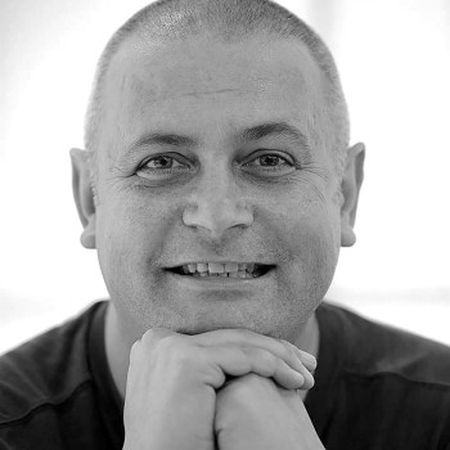
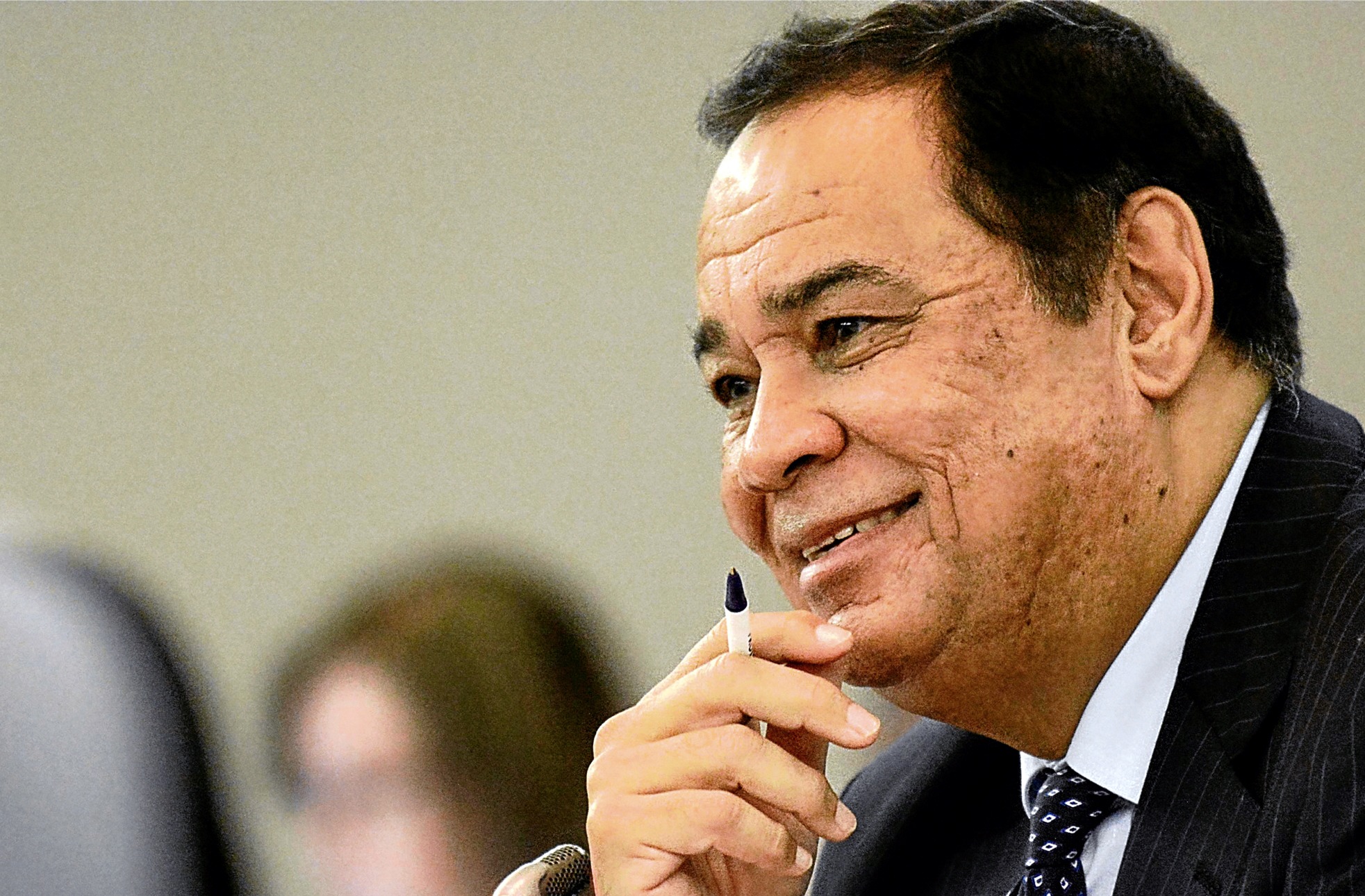
 Judge Achmat Jappie at the Judicial Service Commission interviews on 13 April 2015. (Photo: Gallo Images / Business Day / Trevor Samson)
 Achmat Jappie (70), retired judge president of the KwaZulu-Natal High Court, who became known for his unobtrusive authority, institutional candour and role in holding fellow judges to account, died in a Durban hospital on 22 April 2026 after a short illness.
For nearly three decades on the Bench Jappie was a stabilising presence, a judge whose labour was built through work that was careful, unshowy and exact. In a judiciary sometimes pulled into public noise, he seemed to prefer the margins to the centre. He spoke from the bench in a zen-like manner, expected precision from those who appeared before him, and had little patience for performance disguised as argument. A case, for him, was not a stage.
He came to the Bench in 1998, at a moment when the legal order was still learning its post-apartheid shape. Contemporaries describe him as wary of easy legal certainty, and alert to the way doctrine could harden into injustice when applied without reflection.
His path took him through the Labour Appeal Court, where he developed a reputation for clear reasoning in disputes that often turned on technical detail, and later to acting appointments in the Constitutional Court in 2015. Even there he remained conscious of the limits of judicial power. Later that year he became judge president of the KwaZulu-Natal High Court, a division defined as much by administrative strain as by legal complexity.
/file/attachments/orphans/ED_605171_202595.jpg "Judge Achmat Jappie at the Judicial Service Commission interviews on 13 April 2015. (Photo: Gallo Images / Business Day / Trevor Samson)")
/file/attachments/orphans/110ca8c9eeb5297d917b9c73d25121876502467d_400121.jpg "Former KwaZulu-Natal judge president Achmat Naeem Jappie. (Photo: Facebook)")
At his Judicial Service Commission interview, he described a court system under pressure in unvarnished terms. Files went missing. Infrastructure failed. Communication with Public Works was slow to the point of absence. He noted that windows in the Durban High Court had not been cleaned in 15 years.
/file/dailymaverick/wp-content/uploads/2025/07/GroundUp-ARTsolar-quits.jpeg "The Durban High Court. (Archive photo: Nomfundo Xolo)")
As judge president he moved into the machinery of the court itself. He treated administrative failure as part of the legal problem, not something external to it. He pressed for better resourcing and supported efforts to diversify the Bench. His motto was that the court had to work before it could be improved.
In one matter involving a violent rape committed in a woman’s home, he recorded in detail how her life narrowed in the aftermath, including her decision to leave the house she could no longer inhabit. He was explicit about the harm inflicted on women in such cases, and consistently attentive to their vulnerability in the justice system. The accused was sentenced to 35 years’ imprisonment, a punishment he framed as severe but necessary, grounded in both legal principle and the lived consequences of the crime. Punishment, in his view, was about the boundaries a society is willing to set for itself.
He avoided public engagement in moments of political pressure. When correspondence between his office and prosecutors in Jacob Zuma’s corruption case was drawn into controversy, he declined to respond publicly. The National Prosecuting Authority clarified the matter in his favour.
/file/attachments/orphans/ED_436145_312688.jpg "Judge Achmat Naeem Jappie at the Judicial Conduct Tribunal hearing for Judge Tintswalo Nana Makhubele on 21 February 2023. (Photo: Gallo Images / Papi Morake)")
His most consequential interventions came through judicial conduct tribunals, where he served as chair. In cases involving judges Nkola Motata and Tintswalo Nana Makhubele, he presided over findings of gross misconduct. The latter case, linked to governance failures at Prasa and significant financial irregularities, involved dense records and overlapping responsibilities that blurred the boundaries between judicial office and executive influence.
/file/dailymaverick/wp-content/uploads/2025/01/AV_00002736.jpg "Judge Nkola Motata. (Photo: Veli Nhlapo / Gallo Images / Sowetan )")
/file/attachments/orphans/ED_436127_514978.jpg "Judge Tintswalo Nana Makhubele at her Judicial Conduct Tribunal hearing in Johannesburg on 21 February 2023. (Photo: Gallo Images / Papi Morake)")
Those who worked with him describe someone who noticed things others missed. The senior attorney Ravi Moodley, who appeared before him over many years, recalled a moment in chambers when formal introductions were cut short by recognition. “I know Ravi,” Jappie said.
Moodley says: “He was very much a down-to-earth person. I was at ease in requesting his guidance, which he readily gave. That is who he was.”
Others remembered that he was serious in argument and exacting about preparation, but not without humour. At times it surfaced in loud laughter or in a quiet chuckle. Jappie retired in 2022 after nearly 25 years on the Bench, leaving as he had worked, without ceremony.
He is survived by his wife and three children. DM
/file/attachments/orphans/ED_436125_178074.jpg "Judge Achmat Naeem Jappie at the Judicial Conduct Tribunal hearing for Judge Tintswalo Nana Makhubele in Johannesburg on 21 February 2023. (Photo: Gallo Images / Papi Morake)")