




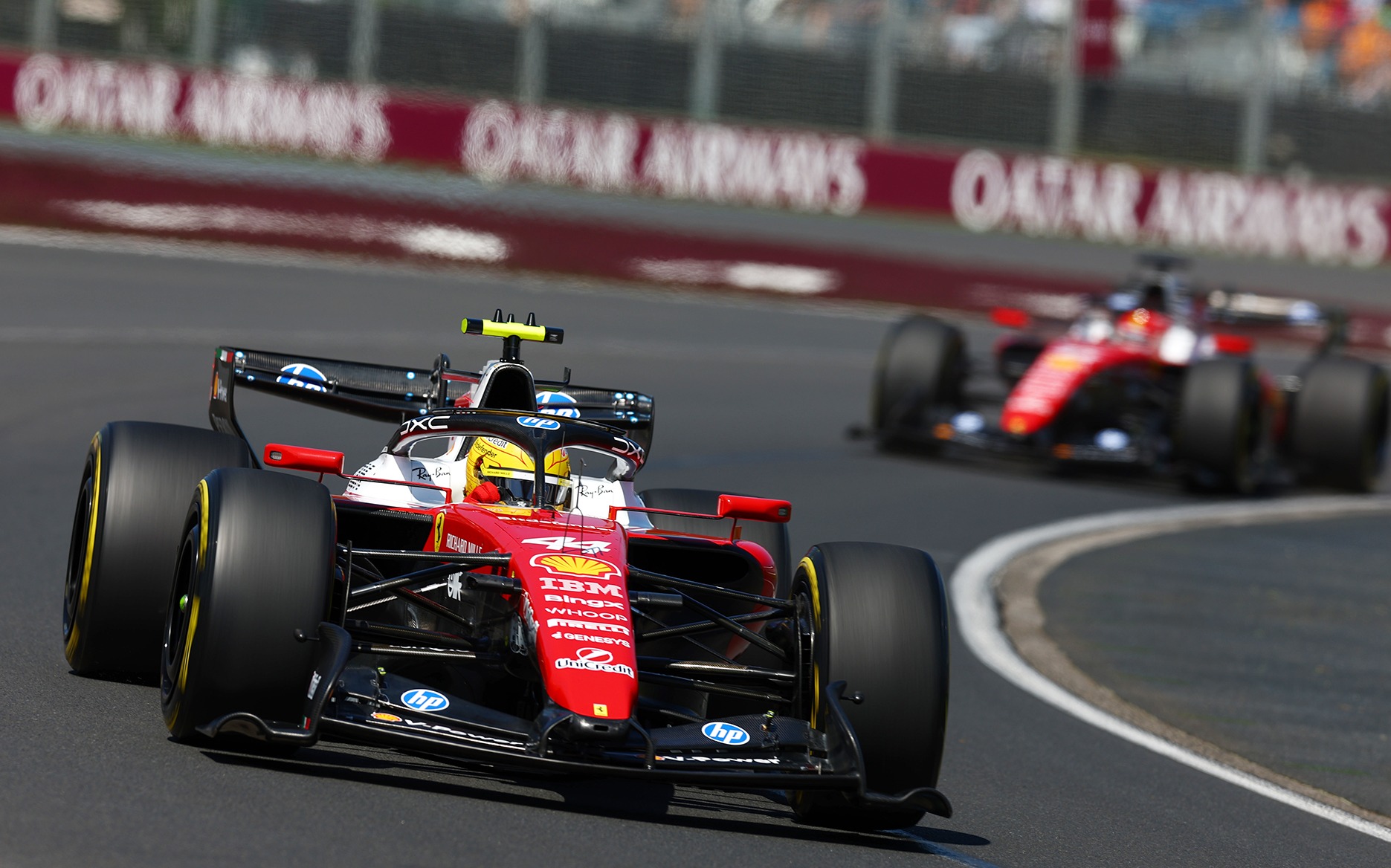
 Following concerns and criticism, Formula One and various other stakeholders have agreed to implement adjustments to the current regulations introduced at the start of the year. (Photo: Joe Portlock / Getty Images)
On Monday, 20 April 2026, Formula One’s (F1) governing body, the FIA, confirmed a number of tweaks to the current regulations that will be implemented from the Miami Grand Prix in May.
In a statement put out by the FIA, various stakeholders, including the FIA, team principals and their chief executives, the power unit manufacturers and F1’s chief executive, Stefano Domenicali, formally agreed to the changes.
The two biggest modifications address the way the engines operate, and are now aimed at allowing drivers to push the limit in qualifying as well as reduce the risk of large speed differentials in races.
An overarching debate following the first three races of the season is the impact of the new power units and engine regulations.
The new power units mark a major shift, with a 50-50 split between electric power and the internal combustion engine.
Under the current regulations, cars are perpetually “energy-starved”, requiring teams and drivers to implement constant, real-time energy management, ultimately dictating lap approach.
The energy management requirements have also brought driver safety to the fore. Haas driver Oliver Bearman had a major crash at the Japan Grand Prix on 29 March because of differing closing speeds.
/file/attachments/orphans/GettyImages-2261421150_438561.jpg "Oliver Bearman of Great Britain and Haas F1 Team. (Photo: Kym Illman / Getty Images)")
Rather than an overhaul, these changes represent an adjustment based on consultations and input and remain subject to approval by the world motorsport council, which should happen before Miami.
“Safety and sporting fairness remain the FIA’s highest priorities,” said FIA President Mohammed Ben Sulayem. “These changes have been introduced to address the issues identified in the opening events and to ensure the continued integrity and quality of the competition.
“All parties have remained fully committed to acting in the best interests of F1. More than ever, the drivers have been at the heart of these discussions, and I would like to thank them for their valuable input throughout this process.”
Flat-out driving returns
Qualifying has been at the centre of frustrations as drivers have been forced to lift and coast – lift off the accelerator before braking for a corner – in an effort to recharge energy.
F1 is inherently about who can drive their car around a circuit the quickest, and with these new rules that is not happening like it used to. Therefore, adjustments have been made to the total amount of permitted recharge on a lap, reducing it from 8MJ to 7MJ.
This means drivers will be able to push more consistently, instead of managing battery every corner.
The change is “aimed at reducing excessive harvesting and encouraging more consistent flat-out driving”, said the FIA in its statement.
/file/attachments/orphans/GettyImages-2265356383_176130.jpg "With the new ‘boost’ and ‘overtake’ modes, cars are running a lot closer for longer than in 2025, encouraging more wheel-to-wheel racing. However, the closing speeds between cars in different deployment states also posed a safety concern that needed to be addressed. (Photo: Lars Baron / Getty Images)")
There has also been an increase in the recharge limit from 250kW to 350kW when super-clipping. Super-clipping allows the car to recover electrical energy even while the driver is at full throttle.
By increasing the recharge rate, the system can now replenish the battery much faster without the driver needing to slow down. As a result, drivers no longer have to lift off early at the end of straights to harvest energy, allowing for flat-out driving.
The number of events where alternative lower energy limits may apply has been increased from eight to 12 races, allowing greater adaptation to circuit characteristics, such as tracks where energy recovery is significantly more difficult.
Dangerous in-race closing speeds
In race conditions, the FIA introduced “boost” and “overtake” modes at the start of the year so that the cars can run a lot closer for longer, encouraging more wheel-to-wheel racing.
However, the closing speeds between cars in different deployment states pose a safety concern and was a contributing factor to Bearman’s crash in Suzuka.
/file/attachments/orphans/GettyImages-2268881319_828284.jpg "Oliver Bearman's crash in the Japan Grand Prix, caused by his pace relative to the car of Franco Colapinto, resulted in a 50G impact with the barrier. Bearman sustained a bruised right knee and was seen limping off the track. (Photo: Kym Illman / Getty Images)")
The Haas driver was travelling at 307km/h when he came up behind the slow-moving Franco Colapinto. Bearman was forced to veer off the track to avoid the Alpine driver.
Bearman was using his boost mode while Colapinto was recovering energy, and the closing speed ultimately reached 50km/h between the two cars.
Bearman simply came up on Colapinto so fast that he had to swerve off the track to avoid hitting him. He piled into the barriers with a 50G impact; his car was in pieces, and while he survived, Bearman was in visible pain as he limped off the track.
This led to a change in the boost limits, which has been capped at +150kW, or the car’s current power level at activation if higher, to keep overtaking possible, but avoid rocket ship closing speeds.
Electrical deployment in races will still hit 350kW in overtaking and acceleration zones out of corners, but will be limited to 250kw at other parts of the lap.
Ultimately, these measures, according to the FIA, are meant to reduce huge speed differences and help prevent a high-speed crash like Bearman’s.
Race starts to be trialled in Miami
Race starts have also looked a little different this year with pre-start warnings, in the form of a blue-light countdown, to allow cars enough time to build up the revs before the actual standard start light procedure.
The result has been inconsistent and fumbled starts, which the FIA seeks to address with these new adjustments.
/file/attachments/orphans/GettyImages-2265364251_892546.jpg "The new format of race starts were initiated this year alongside the 2026 regulation overhaul, introducing a new era of Formula One. (Photo: Lars Baron / Getty Images)")
A new “low power start” detection system has been developed that will be able to detect cars launching too slowly. If this detection happens, the system will automatically trigger the MGU-K deployment, essentially an electrical boost for those slower cars, to help them get off the line safely.
In addition, flashing rear and side lights will be added to alert drivers behind, reducing the risk of collision.
While the other regulations will be officially implemented in Miami, the proposed race start changes will merely be trialled for potential introduction.
Wet weather adjustments
Finally, following driver feedback, the new rules allow an increase in the temperatures of the tyre blankets to improve initial grip and tyre performance in wet conditions.
Maximum levels of electrical deployment will also be reduced, to limit torque and improve car control.
Furthermore, the rear lights systems have been “simplified” to allow for clearer and more consistent visibility, allowing cars time to react in wet weather conditions.
The Bahrain and Saudi Arabian Grands Prix were supposed to take place in April but were cancelled due to the ongoing war between the United States, Israel and Iran.
Thus F1 is set to resume with the Miami Grand Prix from 1-3 May. DM
Comments
Scroll down to load comments...