



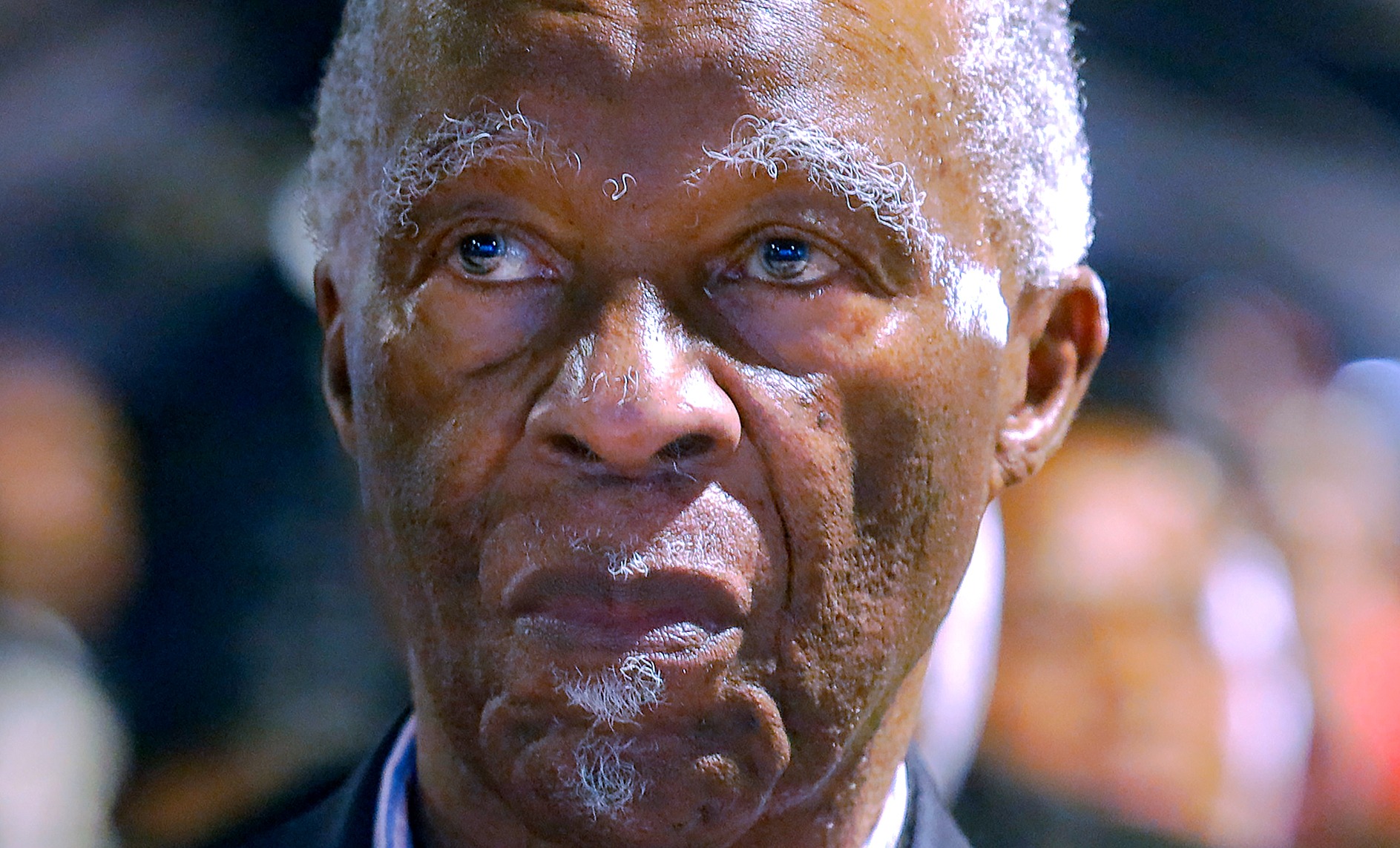
 Former President Thabo Mbeki at the ANC National General Council on 11 December 2025. (Photo: Sharon Seretlo / Gallo Images)
The Amnesty Task Team (ATT) report, a document frequently cited by witnesses at the Khampepe Commission, has finally surfaced. Its emergence is a pivotal moment for testing allegations that political interference systematically stalled Truth and Reconciliation Commission (TRC) prosecutions between 2003 and 2017.
The report was formally introduced as Annexure 28 attached to the submission that the former National Director of Public Prosecutions, Shamila Batohi, made to the inquiry on 15 April.
Established on February 23, 2004, the ATT was an interdepartmental body convened by the government’s Director-General’s Forum following the conclusion of the TRC.
The ATT was chaired by Deon Rudman (Department of Justice) and featured a cross-section of security and legal officials, including:
- Yvonne Mabule and Vincent Mogotloane (National Intelligence Agency);
- Gerhard Nel and Lungisa Dyosi (National Prosecuting Authority);
- Ray Lalla (SAPS); and
- Joy Rathebe (Department of Defence).
The ATT’s primary recommendation was the formation of an advisory body, intended to facilitate former president Thabo Mbeki’s search for a legal “solution” for apartheid-era perpetrators who had failed to disclose their crimes or seek amnesty before the TRC’s mandate ended.
Other considerations were presidential pardons, parole and correctional supervision for those already convicted.
This new body would also consider the “advisability” of criminal proceedings for past offences and make recommendations to the National Director of Public Prosecutions (NDPP) on these.
And it is this proposed overreach into the independence of the NPA which has been highlighted by the former head of the Priority Crimes Litigation Unit (PCLU), advocate Anton Ackermann, in his testimony to the commission.
Ackermann’s evidence to this inquiry has since been corroborated by senior advocate Mthunzi Mhaga, Special Director of Public Prosecutions and head of the Legal Affairs Division within the NPA, who testified on Friday.
Mhaga told the commission he believed that “unverified third-party information” — reportedly traced back to National Police Commissioner Jackie Selebi regarding the Reverend Frank Chikane matter — directly conflicted with the firsthand account Ackermann had received from Chikane himself, who was then serving as a director-general in Mbeki’s Presidency.
/file/dailymaverick/wp-content/uploads/2023/12/sune-christians-bethlehem-Inset-1.jpg "The Rev Frank Chikane at a conference hosted by Stellenbosch University’s Faculty of Theology on 6 June 2012. (Photo: Denzil Maregele / Gallo Images / Foto24)")
National interest
The report details the delicate balancing act sought by the Mbeki administration: upholding the “national interest” by unearthing the truth while simultaneously protecting the rights of victims to be heard, informed and actively included in the resolution of past conflicts.
A primary concern was verifying intelligence regarding “old networks” that still posed a potential or active threat to the country’s fledgling democracy — specifically those who reportedly maintained hidden arms caches.
While the task team’s initial mandate mirrored this presidential framework, two additional paragraphs were later inserted into the terms of reference. This crucial adjustment granted the team the authority to “pursue alternative routes to address the President’s concerns if necessary”.
The ATT was charged with evaluating those individuals who had committed “political offences” but who had not participated in the original TRC amnesty process.
While the team strictly adhered to Mbeki’s stance against general amnesty, they proposed a formal framework for the NPA to consider non-prosecution or pardons for those who provided full disclosure. Their report also suggested a constitutional amendment to protect “new legislation” so that it could pass muster in the Constitutional Court.
A new process
The report noted that the original mechanisms and procedures of the Promotion of National Unity and Reconciliation Act had “run their course” and could no longer be applied. New legislation was required, and these amendments would provide the specific “authority to adopt it”.
The original TRC process had been constitutionally entrenched as a necessary “trade-off” between an individual’s right to seek justice in court and the national imperative for “reconciliation and reparation”, the report noted.
The proposed amendment sought to replicate the legal protection for the “new process”, ensuring that the granting of indemnity would not be later ruled unconstitutional.
In essence, the amendment was designed to shield a proposed new Indemnity Bill from legal challenges that offered a way out for suspects. Where victims had already instituted civil proceedings against perpetrators, the courts would have to suspend these pending the final disposal of the indemnity application.
The report said that Mbeki had noted that many participants in apartheid era-atrocities and human rights violations had stayed away from the TRC because they had been “misled by leadership” or had calculated they wouldn’t be caught, or had expected state protection, which had never materialised.
The report noted the president should be explicitly required to take into account the criteria applied in laws repealed by the Promotion of National Unity and Reconciliation Act of 1995 to ensure the process remained a fair “trade-off between justice and reconciliation”.
Some members of the ATT believed that a further amnesty process, similar to the original TRC, was the only means to adequately address concerns about unearthing the truth. They argued it would create an effective opportunity for full disclosure.
Other members rejected this out of hand, fearing it would undermine and discredit the TRC process and reconciliation efforts. They questioned why offenders who had already refused to participate in the TRC would suddenly decide to cooperate.
Ultimately, the task team did not make a formal recommendation for a further amnesty process, instead leaving that decision to the government. DM
Correction: An earlier version of this story included a picture of senior advocate Mthunzi Mhaga as the main image. The error was introduced in the production process and does not reflect on Advocate Mhaga’s role in the matter. (Updated 21 April 2026)
Comments
Scroll down to load comments...