




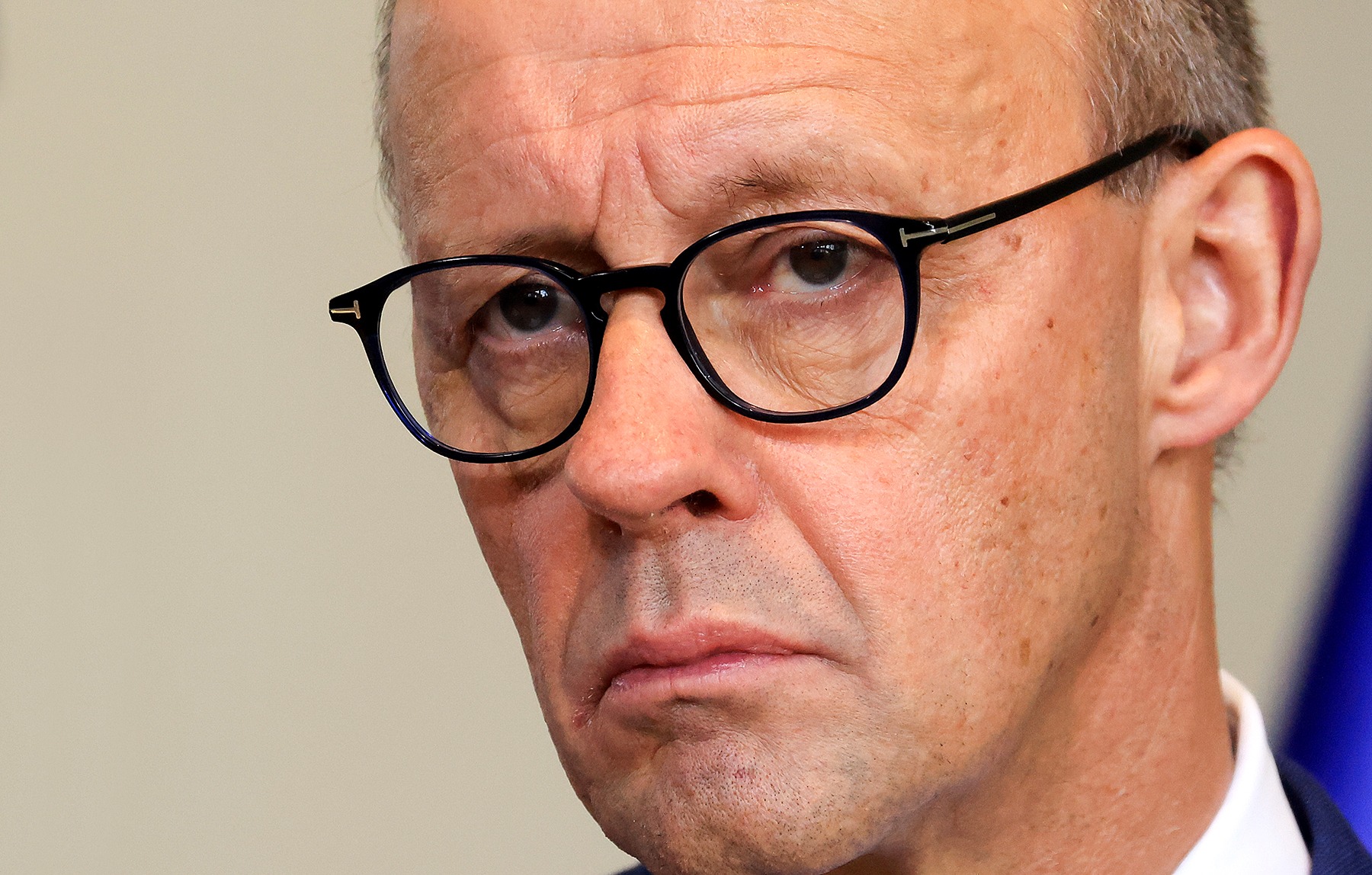
 Friedrich Merz, Germany's chancellor during a joint news conference with Mark Rutte, secretary general of the North Atlantic Treaty Organization (NATO), in Berlin, Germany, on Thursday, Dec. 11, 2025. A coalition of Ukraine's allies will discuss a bid to move swiftly on US President Donald Trump's peace proposal on Thursday as Kyiv's forces carried out their first-ever attack on Russian Caspian Sea oil production. (Photo: Krisztian Bocsi / Bloomberg via Getty Images)
"I will push to ease the regulatory burden in the EU on AI and, where possible, to exempt industrial AI from the current regulatory straightjacket that is too tight for AI within the European Union," Merz said in a speech at the annual industrial fair Hannover Messe.
"AI will contribute to greater efficiency and productivity, optimised use of resources and, above all, reduced costs," he added.
Germany has been eager to catch up with dominant AI players the United States and China in a global race to master a transformational technology and attract high-income jobs.
Last month, Berlin unveiled plans to encourage investments to boost AI data processing capacity at least fourfold by 2030.
(Reporting by Andreas Rinke;Writing by Ludwig Burger; Editing by Lisa Shumaker)
Comments
Scroll down to load comments...