




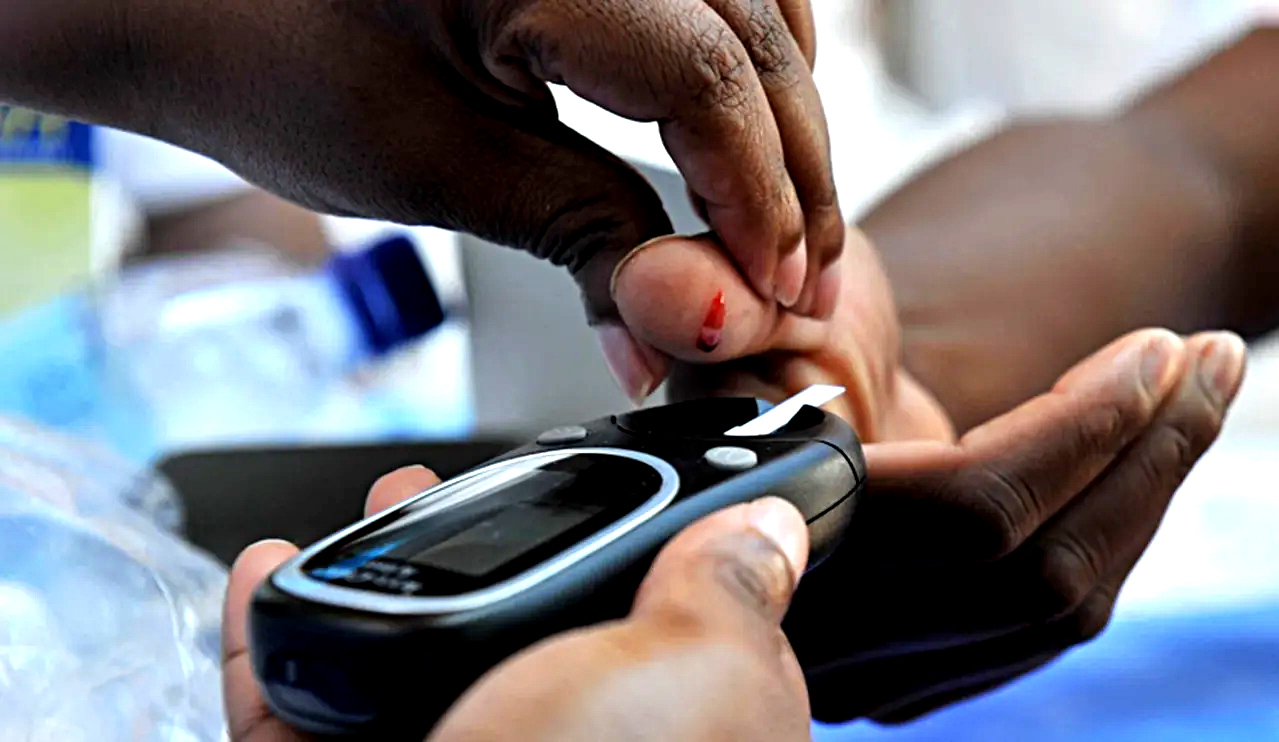
 If all diabetes cases in South Africa were to be diagnosed and treated, the total cost would be R21.8bn, which would increase to R35bn in 2030. (Photo: Supplied)
Amanda Mashego was diagnosed with Type 1 diabetes six years ago. Today, she is a diabetes advocate with a significant social media following, and she still describes managing her condition as a 24-hour job she never applied for and cannot resign from.
Every meal, every emotion, every bout of exercise requires calculation and adjustment. The mental load, she said, is relentless, and almost entirely invisible to the healthcare system meant to support her.
Mashego’s story is one of millions playing out largely unseen. Diabetes has become a leading cause of natural death in South Africa, overtaking tuberculosis in recent years. More than half of those living with the condition remain undiagnosed, according to Zukiswa Zimela, communications manager at the Healthy Living Alliance (Heala) at the media launch of the Johannesburg Declaration for Accelerated Action on Diabetes in South Africa on 15 April 2026.
“This is not just a health issue,” Zimela said. “It’s a national crisis.”
According to Nzama Mbalati, chief executive officer of Heala, 27 people die every day due to diabetes complications. That amounts to roughly 10,000 people a year, he said.
A crisis written in the numbers
Data released in 2023 by Statistics South Africa show that deaths from major non-communicable diseases rose 58.7% over two decades, from just above 103,000 in 1997 to more than 164,000 in 2018. Diabetes deaths alone increased by 36.5% between 2008 and 2018, reaching 26,880, a rate of 62.86 deaths per 100,000 people. The projected cost of the disease to the country is set to reach at least R35-billion by 2030, according to national expenditure modelling cited in the declaration.
It was precisely this escalating toll that brought 24 civil society organisations, among them the Diabetes Alliance, Heala, Doctors Without Borders, the Desmond Tutu Health Foundation and Black Sash, together to issue the Johannesburg Declaration for Accelerated Action on Diabetes in South Africa.
Emerging from the 2025 Diabetes Summit held in Johannesburg in November 2025, it represents one of the most coordinated calls to action on a single disease outside of human immunodeficiency virus (HIV) and tuberculosis, according to Dr Patrick Ngassa Piotie, chairperson of the Diabetes Alliance.
/file/dailymaverick/wp-content/uploads/2025/11/Presentation-168-scaled-1.jpg "Dr Patrick Ngassa Piotie, cofounder of the University of Pretoria Diabetes Research Centre, provided expert evidence on behalf of Heala’s case with the ARB, telling Daily Maverick that ‘strong and direct messaging is an appropriate public health tool to raise awareness’. (Photo: University of Pretoria / Facebook)")
“Diabetes is no longer a silent epidemic,” said Piotie. “It is a full-scale national crisis undermining families, communities and the health system. The current fragmented response is failing South Africans.”
He pointed to the budget as one illustration of where diabetes now sits in the national conversation. The recent budget allocation included R26-billion for HIV and R21-billion for the recruitment of doctors; however, non-communicable diseases (NCDs) received no dedicated ring-fenced funding, despite diabetes being the second leading cause of death in South Africa after tuberculosis.
The invisible burden
According to Mashego, it is important to start with minimum care standards at the clinic level, with a clear education on how to use insulin safely, access to basic nutrition guidance, access to monitoring tools with an explanation of how to use them, and ongoing follow-ups rather than a single consultation.
/file/dailymaverick/wp-content/uploads/2024/08/Amanda-Mashego.jpeg "Amanda Mashego injects herself with insulin. (Photo: Supplied / Spotlight)")
Mashego described the reality many patients faced in public healthcare settings – receiving boxes of insulin with little to no explanation of how to use it safely. “Insulin is a hormone that can either make you live longer or kill you on the spot,” she said, recounting occasions where she herself could not tell how much insulin she needed.
With that, the stigma around the disease, the assumption that diabetes is the result of personal failure, of eating too much, of not trying hard enough, shapes how people are spoken to in clinics, in communities and in the media, said Mashego. The stigma pressures people to prove their condition or conceal it, and can discourage them from seeking care at all, she said.
Mbalati drew a direct parallel to the early years of the HIV epidemic, with the delayed political response, the stigma and the tendency to frame illness as individual failure rather than systemic neglect.
/file/dailymaverick/wp-content/uploads/2025/11/MC-Oped3-Elderly.jpg "The parallels between HIV and diabetes are striking. In parts of South Africa, people ration their treatment, hospitals run out of stock and rural clinics lack diagnostic tools. (Photo: iStock)")
“I think diabetes will dampen the aspirations of this country,” he said. “Whatever we want to achieve, whether it’s the national development plan, whether it’s equity in healthcare through national health insurance; if we don’t deal with diabetes, we’re in a system that is shut down.”
What is being called for
What sets the declaration apart from the plans and strategies that have come before, according to Mbalati, is how precisely it assigns responsibility, naming specific offices and exactly what movement they believe is needed by that group or person.
It calls on President Cyril Ramaphosa to formally declare diabetes a National Public Health Priority Crisis and to establish a high-level multisectoral mechanism housed in the Presidency. It asks the finance minister that revenue from the Health Promotion Levy (HPL), often referred to as the sugar tax levy, be ringfenced for NCD prevention, and that no less than 5% of national health expenditure be dedicated to diabetes by 2030.
The HPL was introduced in 2018, taxing the amount of extra sugar added to sugar-sweetened beverages at 2.1 cents per gram of sugar content that exceeds four grams per 100ml. Mbalati told Daily Maverick that since the introduction, the levy has not been raised accordingly, and has been eroded by inflation to an effective rate of around 8.3%, well below the World Health Organization’s (WHO) recommended minimum of 20%.
/file/attachments/orphans/f75f9d4362d17c6985323035902ad15a_673041.jpg "Heala CEO Nzama Mbalati. (Photo: Heala / Wikipedia)")
The Department of Health is asked to establish a national diabetes registry by 2027, appoint dedicated diabetes programme managers at national and provincial levels and fully integrate diabetes care into primary healthcare on par with how HIV and tuberculosis services are delivered.
Parliament is called on to conduct a formal inquiry into the systemic failures driving diabetes mortality. The private sector is also addressed directly, with calls to reformulate high-sugar and ultra-processed products, implement front-of-pack nutritional labelling and end targeted marketing of unhealthy foods to children.
South Africa has no shortage of health strategies and plans that have not translated into measurable action. According to Mbalati, this declaration could be different because of the breadth of the coalition behind it and the fact that civil society has assigned itself accountability alongside the government.
Civil society organisations have committed to establishing an independent tracking mechanism, building a national grassroots advocacy movement, scaling up peer support and treatment literacy programmes and consolidating a unified evidence-based policy platform. Signatories have also committed to biennial public reviews of progress, with published scorecards made available to the public.
According to Heala, the declaration has been formally submitted to the relevant government parties. Daily Maverick contacted the Presidency, National Treasury and the Department of Health, but had not received responses by the time of publication. This article will be updated when their responses are received. DM
Comments
Scroll down to load comments...