




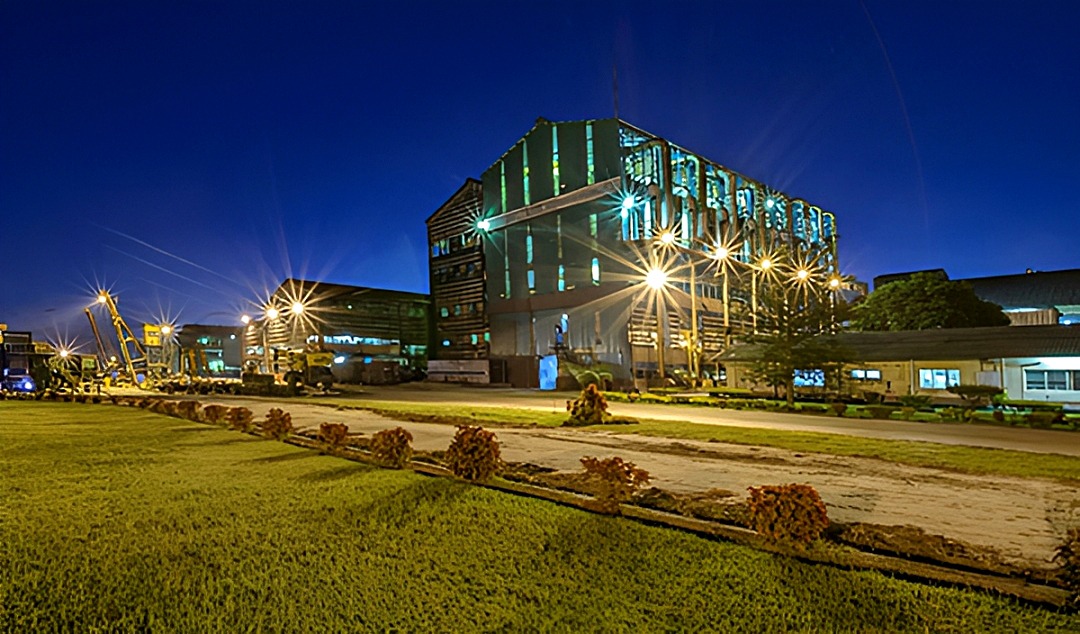
 Tongaat Hulett remains liquidity-constrained, reliant on funding that has been extended to the end of June. (Photo: Supplied.)
Tongaat Hulett’s business rescue has reached the point where the legal fine print is no longer fine. What emerges from the March 2026 status reports is not just a distressed sugar group battling liquidity, but a layered corporate structure now being surfaced in unusually blunt terms by its own business rescue practitioners.
At the centre of that structure is a concept rarely explained outside legal textbooks: the undisclosed principal. In simple terms, it is the legal equivalent of a front – the visible company does the dealing, but the real owner of the transaction sits quietly in the background. In Tongaat’s case, that distinction may reshape how creditors, policymakers and courts understand where the real economic risk sat all along.
The most striking disclosures sit in the reports for Tongaat Hulett Sugar South Africa (THSSA) and Voermol Feeds. THSSA says it operated as an agent for a previously undisclosed principal, Tongaat Hulett Limited (THL). Voermol goes further, saying it acted as an agent for THSSA, which in turn acted for THL – effectively a layered chain terminating at the listed parent now facing possible liquidation.
This suggests the operating companies visible to employees, growers and creditors were not necessarily the ultimate economic principals in their own transactions. Instead, they functioned as intermediaries in a structure that concentrated risk and control at the top.
Why this matters now
That matters because business rescue law assumes a reasonably clear link between where a business operates and where its obligations sit. The Tongaat structure blurs that line. The rescue reports state that THSSA and Voermol are “wholly dependent” on THL and “inextricably linked” to its rescue plan.
In practice, their viability is tethered to THL, limiting the scope for independent rescue or carve-outs. If THL falls into liquidation, these subsidiaries are unlikely to continue as self-contained operating businesses. Instead, they risk being pulled into the same collapse.
By contrast, Tongaat Hulett Developments (THD) sits in a different orbit. Its rescue plan is separate, with asset sales and property realisation continuing independently, albeit still sensitive to the parent’s trajectory.
This creates a split structure: property assets with a clearer standalone pathway, and core sugar and feed operations tightly bound to the parent’s financial and legal fate.
What was known — and what wasn’t
The uncomfortable question is whether this structure was visible before business rescue. The answer is yes, but only partially.
Tongaat’s 2021 financial statements disclosed that Voermol and THSSA operated as agencies for group divisions. But they did not foreground the sharper legal implication now being emphasised – that these entities were acting on behalf of a principal now described, in rescue proceedings, as “previously undisclosed”.
So, while the economic arrangement may have been broadly understood, the legal framing now being asserted raises questions about how clearly creditors and counterparties understood where ultimate risk sat – particularly in a distress scenario.
Who really controls the outcome
THL remains liquidity-constrained, reliant on post-commencement finance that has been extended but not fully secured, and awaiting a court decision on provisional liquidation. On Thursday, 16 April, it was granted a R200-million lifeline from the Industrial Development Corporation, that will carry the company to the end of June.
At the same time, growers are being paid in staggered tranches and mill maintenance is being rationed to preserve operational readiness. This is a system being kept alive on carefully measured drips of cash.
Overlay this with the broader legal battle, and the picture sharpens. As detailed in amaBhungane’s reporting, the fight is no longer just about solvency but about control, disclosure and the conduct of the rescue process itself.
Vision Investments, now the dominant secured creditor, holds about R11.7-billion in debt claims, positioning it to shape outcomes in both rescue and liquidation. Meanwhile, the Industrial Development Corporation, government and rival bidder RGS argue that liquidation would destroy value and that rescue remains possible under different terms.
The group structure reinforces that power dynamic. If the operating subsidiaries are effectively conduits rather than independent businesses, financial control concentrates at the THL level – and with it, the leverage of secured creditors.
Implications for the sugar master plan
The sugar industry master plan, now in its second phase, is built on coordination across the value chain: diversification, local procurement and stable pricing frameworks. But those ambitions rely on anchor players that can invest, contract and operate with a degree of certainty.
Tongaat is one of those anchors.
Phase Two depends on large, functioning players to drive diversification, support local procurement commitments and underpin stable pricing. A company in prolonged business rescue, or worse, liquidation, cannot easily invest in new revenue streams, expand into biofuels or reliably honour long-term supply agreements. That weakens the coordinated approach the plan is trying to build.
Industry pressures are already visible. Acting chairperson of the South African Sugar Association, Rex Talmage, said deep-sea imports had exceeded 197,000 tonnes by the end of February in the 2025/26 season, representing revenue losses of about R1.5-billion.
“These are not abstract figures, they represent the one million livelihoods that depend upon this industry,” he said, arguing that the master plan’s success depended on a properly calibrated tariff framework.
The government, meanwhile, is trying to push the sector in the opposite direction: toward reinvestment and diversification. Speaking at the launch of Phase Two last week, Deputy Minister of Trade, Industry and Competition, Zuko Godlimpi, said the industry needed to “reposition sugarcane from being seen purely as an agricultural product to an engineered one”, including uses that could support future employment and more advanced outputs such as fuel resources. That ambition requires capital, stability and confidence, all of which are undermined by prolonged insolvency uncertainty at a major industry player.
Why this is bigger than Tongaat
The knock-on effects run straight through the value chain. Growers depend on mills to process cane and pay on time; downstream users depend on consistent supply; and the master plan itself depends on trust and coordination.
If Tongaat’s mills face disruption, it could destabilise thousands of growers, strain procurement commitments and erode confidence in the sector’s recovery. This is not just a company story. It is a real-time stress test of whether the master plan can hold when one of its biggest pillars starts to crack.
The human stakes are significant. More than 15,000 small-scale growers, hundreds of commercial farmers and thousands of workers depend on the continuity of operations. If the mills stop, the effects ripple quickly through rural economies.
The real fault line
Tongaat’s crisis is not only about whether a rescue plan failed or a funder overplayed its hand. It is about how a complex corporate structure, tolerable in good times, becomes a fault line in distress.
The late-stage emphasis on “previously undisclosed principals” suggests that the group’s legal architecture is now central to how the outcome is being shaped – and to how risk is ultimately allocated.
For the court, the question is whether there is a reasonable prospect of rescue. For the industry, the more difficult question is who, in the end, actually owns – and carries – the business that keeps the mills running? DM
Comments
Scroll down to load comments...