



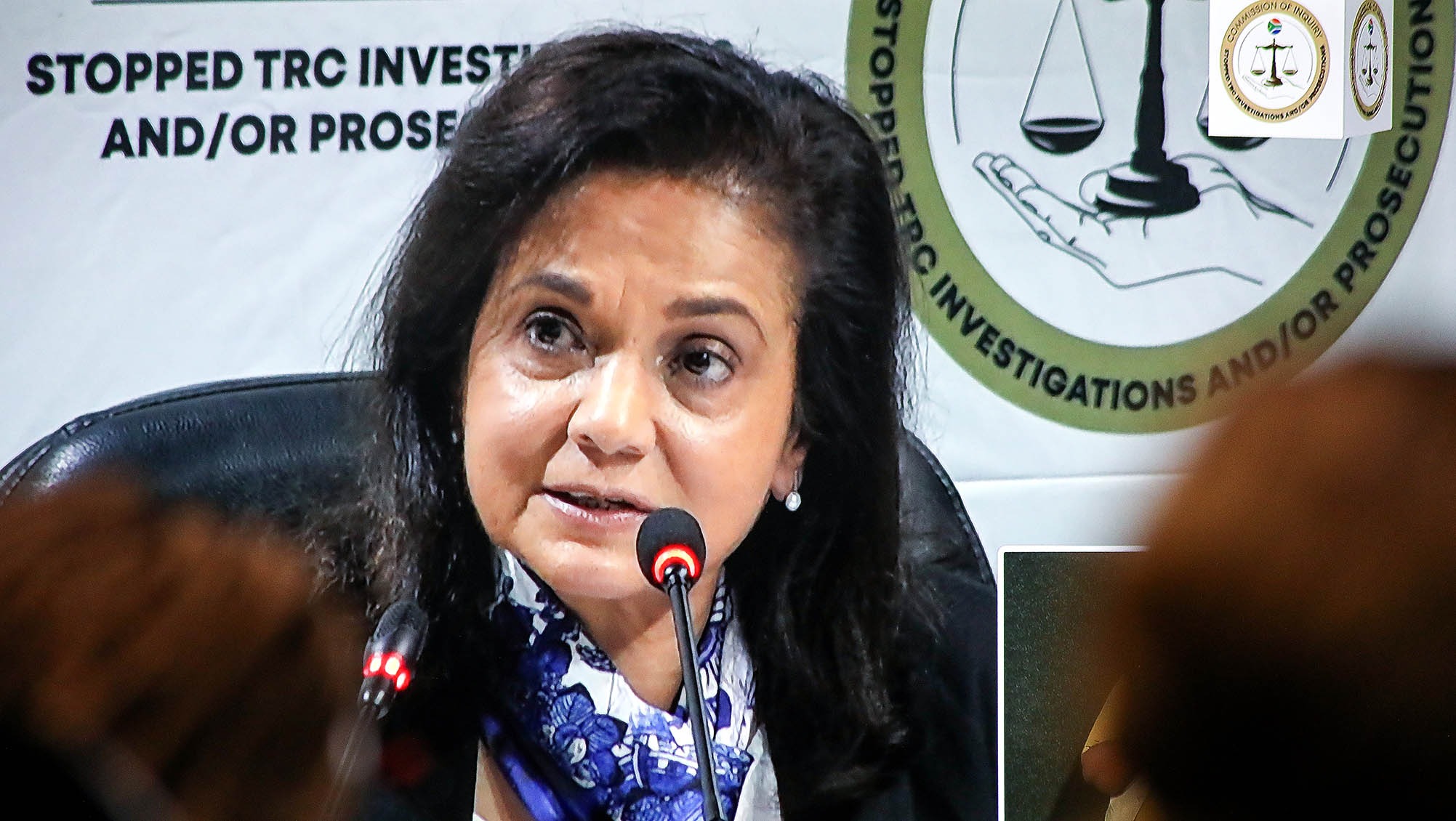
 Shamila Batohi testifies before the Khampepe Commission on 15 April. (Photo: Fani Mahuntsi / Gallo Images)
 By the time Shamila Batohi slipped into the hot seat as head of the National Prosecuting Authority (NPA) – eroded through decades of political overreach – families of victims of apartheid-era human rights atrocities were pounding at her door after fighting for years for the exhumation of buried dockets on perpetrators who had not applied for amnesty.
She told the Khampepe Commission this week that she had gathered piles of documents, memos, minutes and communications which she believed could assist the inquiry in its efforts to pinpoint where pressure may have been applied.
Landmark ruling
Bathoi noted she took office the same year the Gauteng High Court was deliberating on the matter of João Rodrigues – the Security Branch officer who was the last man to see Ahmed Timol alive in 1971 before the activist was thrown from the 10th floor of John Vorster Square (renamed Johannesburg Central). Despite decades of effort to hold him accountable, Rodrigues successfully evaded justice for nearly 50 years, dying in 2021 without ever being convicted.
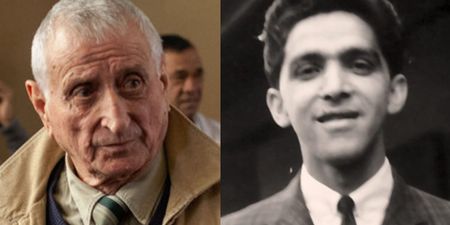
The Supreme Court of Appeal (SCA) dismissed Rodrigues’ attempt at a stay of prosecution, with Judge Aubrey Ledwaba reiterating a call by the full bench of the Gauteng High Court for an independent inquiry into political interference in the prosecution of cases stemming from the findings of the Truth and Reconciliation Commission (TRC).
/file/dailymaverick/wp-content/uploads/Greg-rodriguezTimol.jpg "The late João Rodrigues. (Photo: Felix Dlangamandla / Gallo Images / Netwerk24)")
Hence, the enormous significance of the Khampepe Commission, which will hopefully put a full stop to several decades of disputed history, lay many ghosts to rest and bring relief and justice to the families of victims of apartheid-era atrocities.
SCA Judge Azhar Cachalia, in a separate judgment on the matter, noted that justice would not have been possible without the “heroic struggle” waged by the Timol family with “dogged determination”.
It was during this landmark court matter that allegations of political interference in TRC-related prosecutions first surfaced, Batohi told the inquiry. “I was cognisant that the NPA had to devote attention to dealing with TRC cases,” she said.
Opening the files
The reopened Timol inquest in 2017, presided over by Judge Billy Mothle, found that the 29-year-old Timol, a teacher and an underground SA Communist Party and ANC member, had not committed suicide as the original inquest in 1972 had found, but was beaten by security police before being pushed to his death from the police headquarters.
Batohi said this opened the door to the prosecution of Rodrigues and attempts by the NPA to fast-track inquiries into delayed TRC-related prosecutions.
In previous testimony, Timol’s nephew Imtiaz Cajee told the commission he had dedicated his life to finding justice for his uncle and his grandmother, Howa.
In a surprise move, Cajee retracted his oft-repeated statement that there had been political interference in TRC prosecutions, instead blaming the “deliberate ineptitude” of the NPA.
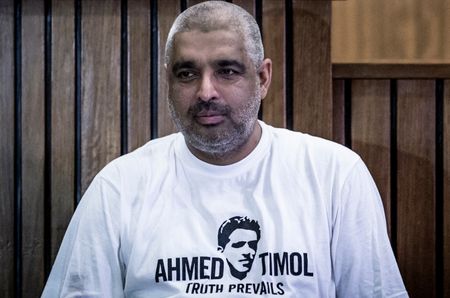
Cajee accused former Senior Deputy Director of Public Prosecutions advocate Torie Pretorius, Priority Crimes Litigation Unit (PCLU) head Anton Ackermann and his PCLU colleague Chris Macadam of deliberately sabotaging TRC cases.
“It was deliberate ineptitude,” Cajee told the panel.
Structural reorganisation
Batohi told the inquiry that several strategies had been designed to move away from “previous failures” and create a “hands-on, standardised approach”. To accomplish this, the NPA had migrated all TRC matters from the PCLU in Pretoria to regional directors of public prosecutions (DPPs).
“This move was intended to bring cases closer to local evidence, witnesses and victims’ families while utilising the greater human resource capacity of regional offices,” she said.
Other measures included the establishment in September 2021 of a dedicated TRC component within the office of the Deputy Director of Public Prosecutions.
The NPA also appointed dedicated prosecutors and partnered with the Directorate for Priority Crimes Investigation (DPCI) to work exclusively on TRC matters. Nineteen of these contract positions were converted into permanent posts in 2024 “to ensure institutional continuity”, she said.
Sharpened approach
The NPA also adopted a “sharpened” approach, ensuring prosecutors worked with investigators from the early stages of a matter.
The TRC component had conducted a comprehensive audit of all matters to develop coordinated action plans, which were prioritised for “fast-tracking” based on criteria such as the age of the matter, the seriousness of the evidence and the age of the accused or witnesses.
Since June 2022, the NPA and Directorate for Priority Crime Investigation (DPCI) have held regular joint monitoring and accountability sessions. In these sessions, progress on individual cases was “critically analysed” in the presence of senior management “to resolve systemic blockages like access to declassified documents”.
State of play
Batohi said that when she took office, there were only 59 TRC matters under investigation by the now-defunct PCLU.
Following a comprehensive audit and a formal referral process, the caseload had increased to 129 matters by November 2022, and by March 2025, 157 matters were under active investigation across all divisions, she told the inquiry.
During this period, the NPA brought several high-profile matters to a close or reached a final judicial decision, she said. These included the reopened inquests of Neil Aggett, Ernest Dipale, Hoosen Haffejee, Imam Abdullah Haron, Zama Sokhulu and Mthunzi Velemseni Njakazi.
/file/dailymaverick/wp-content/uploads/2022/03/MC-Aggett3.jpg "Trade union leader and labour activist Neil Aggett, who died in detention on 5 February 1982 after being arrested by the Security Police. (Photo: Gallo Images / Sunday Times)")
There had been one finalised criminal prosecution, S v Wesley Madonsela, which resulted in a murder conviction and a 10-year prison sentence in November 2023. There was also one conviction pending sentencing, S v Johan Marais, where the accused was found guilty in November 2024 of the murder of Caiphus Nyoka, with sentencing still to take place.
In the system
Batohi said that seven criminal cases, including high-profile trials such as the Nokuthula Simelane matter, were making their way through the justice system.
Seven inquests have been reopened with dates either already finalised or currently being scheduled. Among these is the case of the Cradock Four — Matthew Goniwe, Fort Calata, Sparrow Mkhonto, and Sicelo Mhlauli — who were kidnapped and murdered on 27 June 1985 by Security Branch officers Hermanus Barend du Plessis and Eric Taylor.
In October 2025, the KwaZulu-Natal Division of the High Court in Pietermaritzburg found that former ANC president and Nobel Peace Prize laureate Chief Albert Luthuli had been murdered by apartheid forces.
/file/dailymaverick/wp-content/uploads/2022/03/Chief-Albert-Luthuli2.jpeg "Chief Albert Luthuli. (Photo: Ranjith Kelly / sahistory.org.za)")
The reopened Griffiths Mxenge inquest ran alongside that of Luthuli. The justice minister at the time, Ronald Lamola, announced the NPA’s reopening of the inquests of Luthuli, Mxenge and Booi Mantyi.
“With these inquests, we open very real wounds which are more difficult to open 30 years into our democracy, but nonetheless, the interest of justice can never be bound by time; the truth must prevail,” Lamola said.
Batohi said there were 10 more formal inquests, including into the death of Dr Rick Turner, an academic and anti-apartheid activist who was assassinated in 1978, and the 1993 “Norcrest Five” matter, relating to the murder of five children by the South African Defence Force during an attack on the home of Pan Africanist Congress member Sigqibo Mpendulo.
Batohi said the Missing Persons Task Team had also dealt with “a high volume of cases during this term, recovering the remains of 179 missing persons and identifying and returning the remains of 167 individuals to their families for burial”. DM