



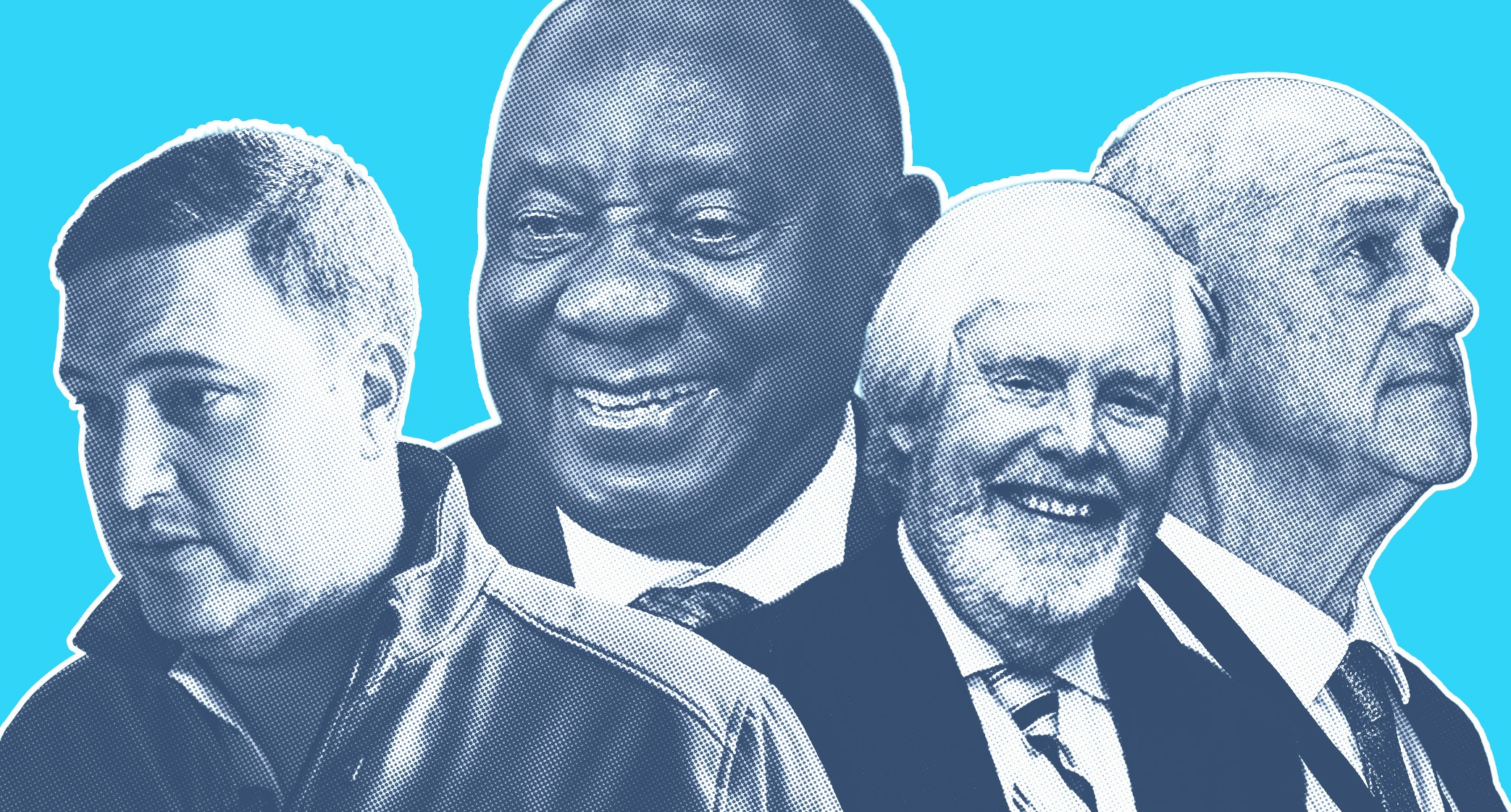
 Illustrative Image: Geordin Hill-Lewis (Photo: Gallo Images / Fani Mahuntsi) | President Cyril Ramaphosa (Photo: Gallo Images / Volksblad / Mlungisi Louw) | US Ambassador to South Africa Leo Brent Bozell III (Photo: Dirco) | Newly appointed South African Ambassador to the US, Roelf Meyer. (Photo: Gallo Images / Frennie Shivambu)
People who know me sometimes – maybe too often – sense a thread of cynical pessimism that runs through my thinking about international relations and the people who are supposed to carry out those tasks without bringing down the temple, a la the biblical character of Samson.
After all, it only takes a couple seconds to conjure up the horrible events taking place in Ukraine, the multilayered conflicts and devastation in the Middle East, the extraordinary violence, famine and death in Sudan, and elsewhere, to become despondent. It makes it pretty easy to see the global situation as a glass half full, but a glass with a hole at the bottom, and with little hope for it ever being refilled, let alone having the hole fixed.
There are incompetents, self-dealers, malicious connivers and much worse in so many positions of power around the world that it can easily seem as if humanity is dangling over the lip of an active volcano. And that is why, from events over the past week in South Africa, I find myself uncharacteristically prepared to utter a note of cautious optimism.
Here in SA, I am suddenly surprised by the possibilities of actual progress in both domestic and international spheres. At the end of the previous week, President Cyril Ramaphosa addressed a meeting of a major business grouping and treated his audience as like-minded people committed to improving the nation’s economic circumstances, eager to encourage additional foreign direct investment and policies supporting employment growth.
There was actual enthusiasm about the possibilities of SA’s heretofore languid economy finally being reignited.
All travellers together
He spoke to his audience not as if they were enemies needing to be proselytised. Rather, they were all travellers together, along the same path. Granted, this was not a gathering of ageing, grey-bearded armed Struggle veterans, rallying for one last hurrah and the singing of their favourite old songs, or a congress of old-line Marxists – or even “neo” ones.
Instead, it was a demonstration of where the president sees the country’s economic growth coming from – and thus the employment crucial for millions of young people eager, even desperate, for remunerative opportunities and a share of the country’s future.
Let’s be clear, though, this was not a “capitulation” to unbridled, free-market, laissez-faire capitalism, as some critics will inevitably want to phrase it. From the president’s perspective, the government will remain in the lead, setting national goals and equitable pro-growth policies, including more effective support for Broad-Based Black Economic Empowerment (BBBEE). The South African landscape is wide open for foreign investment – especially if it means jobs, rather than still more automation in the workplace.
Then, a few days later, I heard newly elected leader of the Democratic Alliance, Geordin Hill-Lewis, at a media roundtable. He made it clear his party, as a partner in the country’s Government of National Unity, was fully in support of the pro-growth, equitable economic goals espoused by the president. He did note that policies such as the current version of BBBEE need to be reshaped so as to make it truly broad-based, rather than largely benefiting a small cohort of the well-connected.
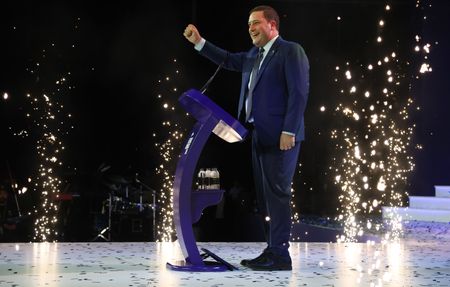
Similarly, when pressed, he added that the country’s foreign policy orientation must support building stronger, better, deeper trade and investment links with its major trading partners, rather than a reliance on those older, more symbolic, ideological values.
Clearly there is some space between the two parties and their leaders; but there is also a real convergence on a primary goal for the nation and its government. After the meeting, we also spoke a bit about Singapore and how it has propelled itself upwards over the past several generations to become a global economic leader (although it simultaneously demonstrates a rather limited conception of the practice of democratic values).
SA’s man in Washington
Then, in something of a surprise announcement to many, Ramaphosa’s government announced the appointment of political veteran Roelf Meyer to become SA’s ambassador to the US. Some are lamenting that this job did not go to someone in the ANC’s activist tradition, but rather someone who has served in the old apartheid government, the transitional government-post 1992, as well as in the new, non-racial government, among other roles.
But, lest anyone forget, Meyer forged a partnership with Ramaphosa in negotiating the beginning of the transition away from apartheid. And this bond clearly was made stronger from that famous fish hook that became embedded in Meyer’s hand and removed by Ramaphosa and a handy pair of pliers during a negotiations/fishing camp visit.
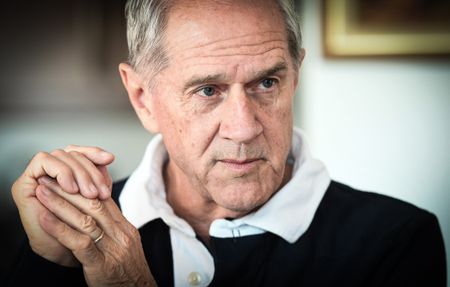
From where I sit, if he is to be effective in his new role, Meyer must move beyond those old rhetorical styles and old friends of the anti-apartheid Struggle in the US. He will need to engage with the crucial staffers of America’s Congress, with the people in the many think tanks in Washington and beyond, as well as business circles. Meyer might be the best choice for the job, but he still faces an uphill battle working with the seriously transactional, mercurial leadership in Washington.
Maybe he can even work out some common approaches with Donald Trump’s own envoy to SA – Leo Brent Bozell III – a man whose most recent words seem to have become somewhat more conciliatory towards this country than the kinds of things that have been uttered in Washington by senior officials.
Take a deep breath, but here I sense grounds for some cautious optimism for an economic policy turnaround, despite my more usual feelings of dread about making good choices despite ideological wants. But now the really hard, grinding work is needed, both domestically and internationally, for SA to grow and prosper. DM
Comments
Scroll down to load comments...