




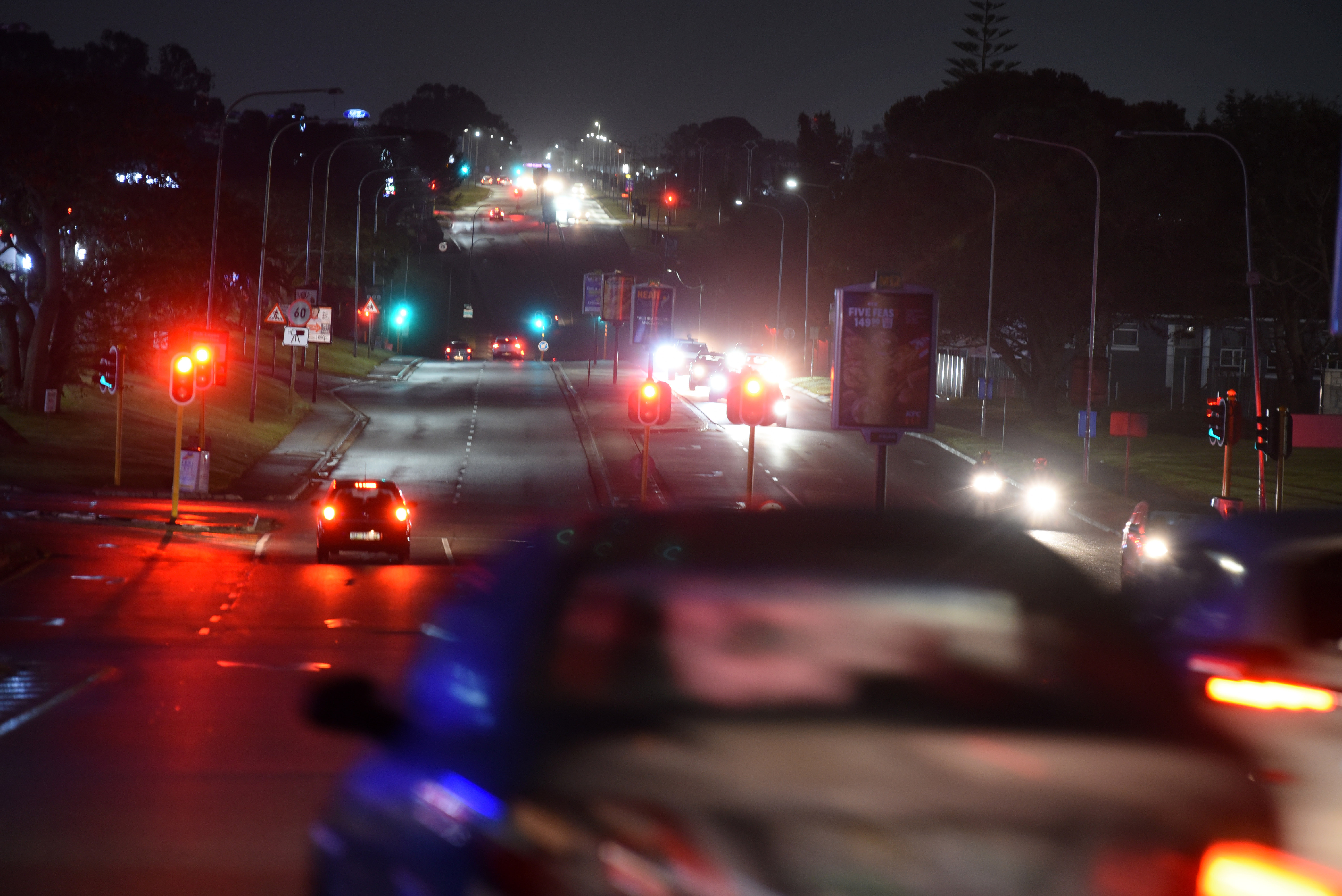
 Motorists in the dark on the William Moffat Expressway in Gqeberha on 2 October 2025. (Photo: Deon Ferreira)
A special Nelson Mandela Bay council meeting on Friday to consider the Special Investigating Unit’s (SIU’s) findings into controversial streetlight contracts will be held behind closed doors, with all councillors required to attend in person and no virtual participation allowed, according to sources familiar with the arrangements.
Daily Maverick requested reasons for the decision, and the metro’s legal department indicated that it would respond on Friday.
What is known, however, is that 21 officials are implicated in the investigation, which has found evidence of fraud and possible contraventions of the Prevention and Combating of Corrupt Activities Act and the Prevention of Organised Crime Act. It is also understood that the SIU seeks to recover R35-million that the contracts cost the city.
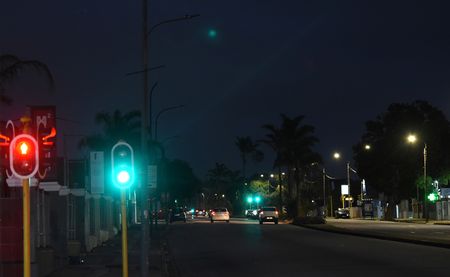
The unlawful contracts saw large parts of the city plunged into darkness for years when more than 10,000 streetlights were not replaced or fixed.
‘Operational reasons’ for secrecy
Cooperative Governance Minister Velenkosini Hlabisa recently cited “legal and operational” constraints for withholding the identities of the implicated officials. Responding to a parliamentary question, he said the SIU had confirmed:
- Irregular procurement;
- Unlawful deviations from supply chain management regulations and finance policies;
- The awarding of irregular contracts; and
- Referrals to the National Prosecuting Authority and the SIU Tribunal.
/file/attachments/orphans/Hlabisa-and-Lobishe_166402.jpg "Cogta Minister Velenkosini Hlabisa and Nelson Mandela Bay Mayor Babalwa Lobishe engage with members of the Coalition of Civil Society regarding matters affecting the city on 6 December 2025. (Photo: Andisa Bonani)")
Accountability promises
Hlabisa said his department would work with provincial local government departments to monitor whether municipalities were applying precautionary suspensions where warranted and acting promptly on SIU referrals.
He said the department would “ensure that councils use the legal mechanisms available to prevent officials from resigning to evade disciplinary consequences (for example, by continuing disciplinary processes in absentia and recording findings against the official as permitted by labour legislation).
“The minister does not condone the continued employment of officials implicated in serious financial misconduct. However, municipalities must ensure that any action taken is lawful, procedurally fair and supported by evidence to meet the constitutional requirement of accountability.”
While these decisions might take place at the special council meeting behind closed doors on Friday, 17 April, Hlabisa clearly set out what he expects the municipality to do in response to the SIU findings.
“Municipalities are expected to:
- Apply precautionary suspensions where risks exist;
- Protect evidence and ensure no interference with investigations;
- Initiate disciplinary processes promptly; and
- Comply with SIU referrals, including implementing consequence management recommendations.
“Failure to implement disciplinary action may constitute non‑compliance with the MSA [Municipal Systems Act] and MFMA [Municipal Finance Management Act] and may trigger provincial oversight or intervention.”
Dealing with the contractors
The SIU investigation began in July 2024 after President Cyril Ramaphosa signed a proclamation permitting the SIU to investigate maladministration in the metro and to recover any financial losses suffered by the state or the metro, with a specific focus on the supply, delivery and offloading of streetlighting and floodlighting luminaires and payments made for this.
In a presentation to the Parliamentary Portfolio Committee on Cooperative Governance and Traditional Affairs in March, advocate Zolile Kwayimani from the SIU said they would approach the Special Tribunal to set aside three streetlight contracts and recover approximately R35-million.
Kwayimani said they recommended that nine service providers and their directors be barred from doing business with the municipality. DM
Comments
Scroll down to load comments...