




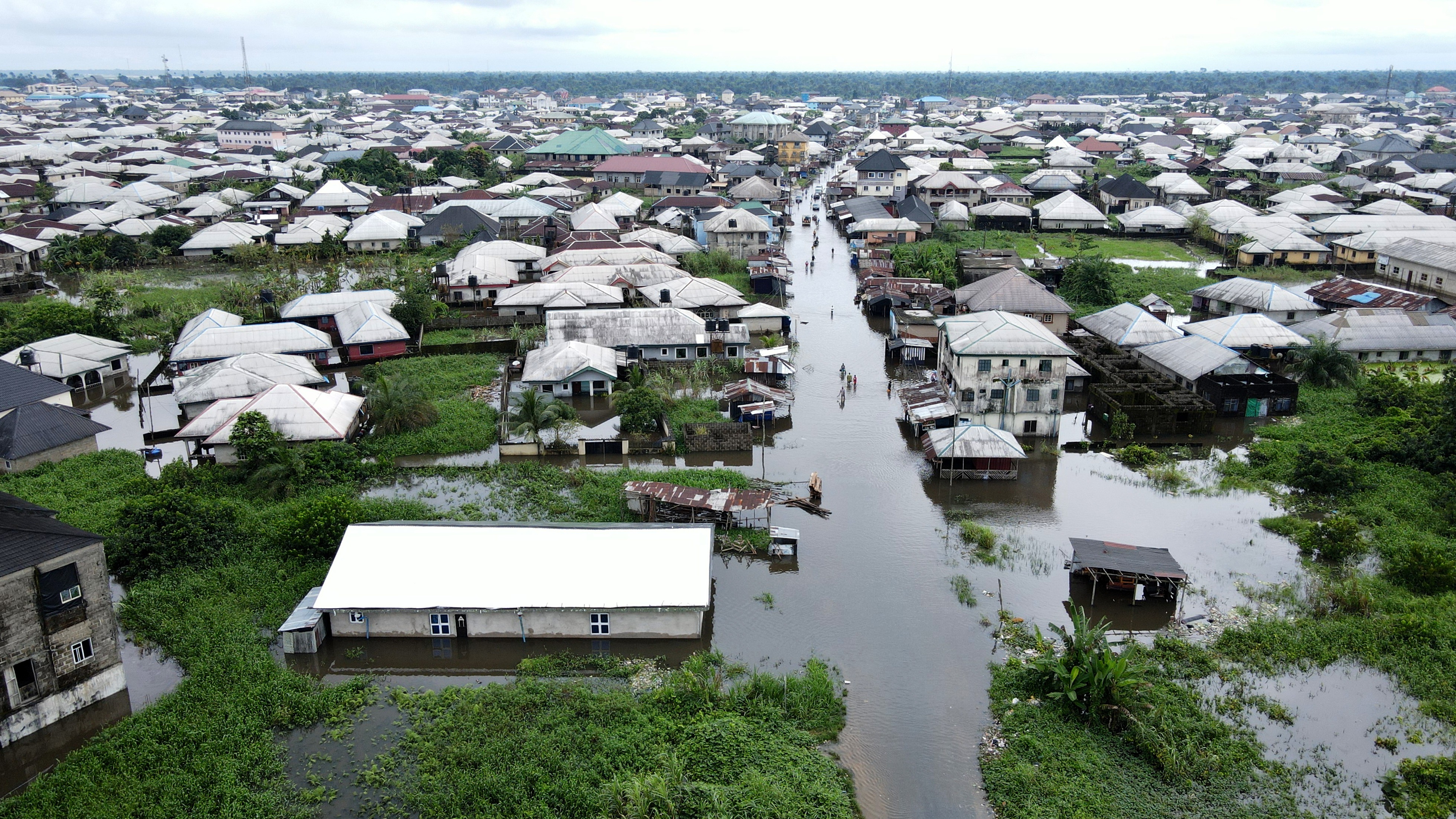
 epa10256861 An aerial view shows the aftermath of the flooded landscape of Yenagoa, the capital town of Bayelsa, Nigeria, 21 October 2022. The flood situation is worsening in Nigeria, particularly in southern areas where many people have been displaced from their homes, according to Bayelsa Governor Douye Diri. EPA/STRINGER
By Camillus Eboh
Unveiling its annual flood outlook, the Nigeria Hydrological Services Agency (NiHSA) said in a statement that flooding was expected to peak between July and September at the height of the rainy season, threatening cities, farmland and critical infrastructure.
NiHSA said 14,118 communities were classified as high risk, with another 15,597 facing moderate risk. The figures were broadly in line with those of recent years.
Major cities including Abuja, Lagos and Port Harcourt could see severe urban flooding, while coastal states such as Bayelsa, Delta, Rivers, and Lagos are vulnerable to river and tidal floods.
Nigeria is prone to flooding during the rainy season, which typically begins in April and ends in October.
In 2022, its worst floods in more than a decade killed over 600 people, displaced 1.4 million and destroyed 440,000 hectares (1.09 million acres) of farmland. Last year, more than 200 people died in one flooding incident alone.
(Reporting by Camillus Eboh; Writing by Elisha Bala-GbogboEditing by Gareth Jones)
Comments
Scroll down to load comments...