




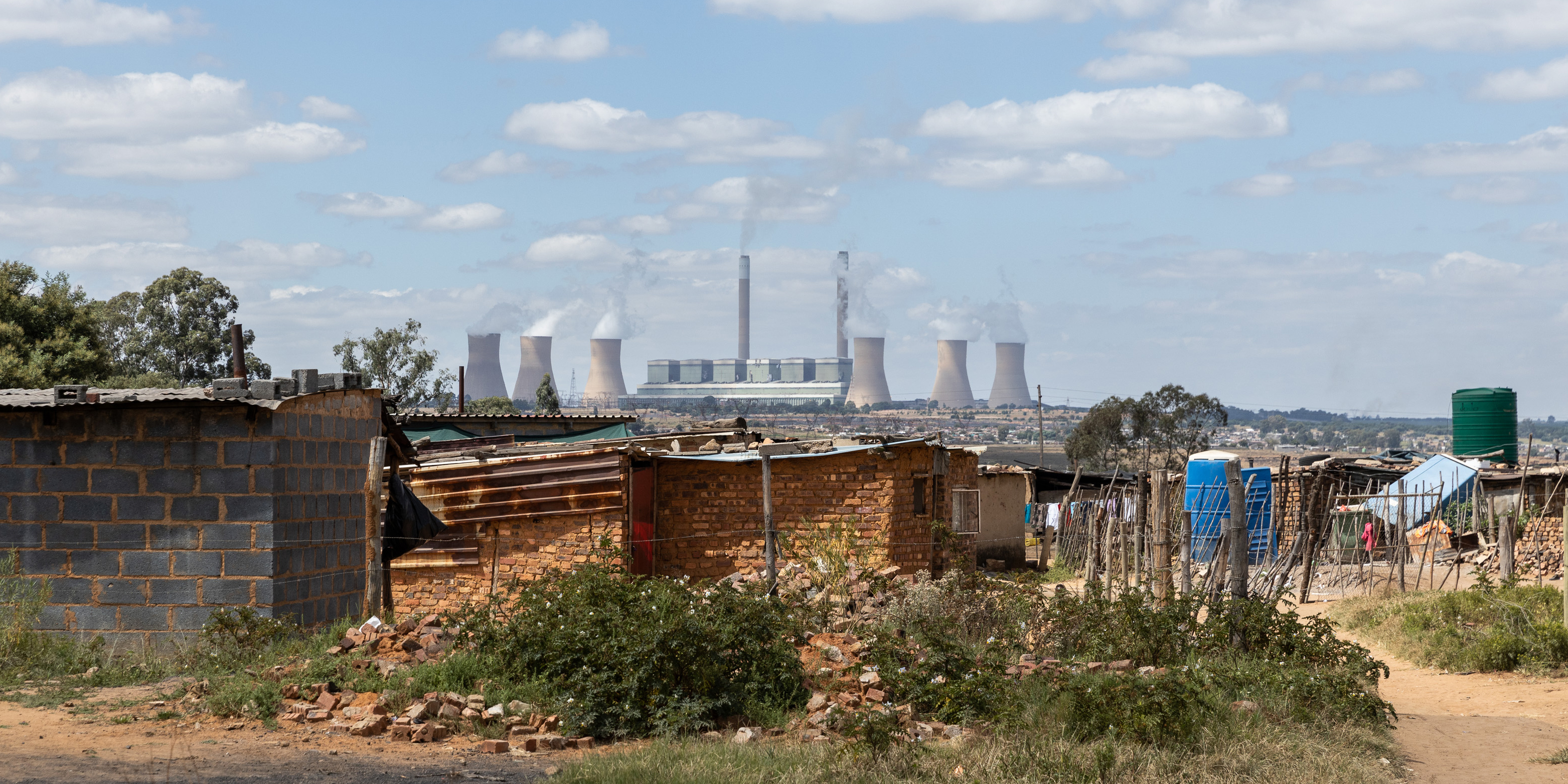
 The coal-fired Duvha power station in Mpumalanga is part of a cluster of power plants contributing to high sulphur emissions in the region. (Photo: Ashraf Hendricks)
The headlines and complaints about the “rotten egg” smell that engulfed parts of Gauteng in January and March may have faded, but air quality in South Africa remains a hot-button issue.
While the odour — traced to hydrogen sulphide from Sasol’s Secunda plant — has dissipated, anxieties regarding the long-term health consequences of such exposure persist.
Driven by these public health concerns, the Department of Forestry, Fisheries and the Environment (DFFE) is now moving to tighten the legal thresholds for atmospheric discharge of the toxic gas.
In August 2025, the Minister of Forestry, Fisheries and the Environment issued a notice for public comment proposing stricter limits on hydrogen sulphide emissions from coal gasification processes under Section 21 of the National Environmental Management: Air Quality Act (2004). The draft amendment aims to lower the allowable emission threshold from 3,500mg per cubic metre to 600mg per cubic metre, a move expected to significantly curb pollution.
Health concerns
Exposure to hydrogen sulphide can irritate the eyes and respiratory tract, and may trigger dizziness, headaches, nausea, stomach discomfort, weakness, irritability and difficulty breathing.
At higher concentrations, the gas can lead to more serious health effects, including convulsions, loss of consciousness and severe respiratory complications. Children are especially at risk, as their faster breathing rates relative to body size can result in greater exposure than adults in the same environment.
/file/dailymaverick/wp-content/uploads/2025/07/IMG_1241-2.jpg "Children play in the streets of Thubelihle, Mpumalanga, as the nearby Kriel Power Station belches out pollutant-filled smoke. (Photo: Ethan van Diemen)")
Lauri Myllyvirta, an analyst at the Centre for Research on Energy and Clean Air (Crea), said that the most critical health impact of hydrogen sulphide emissions is that the gas first transforms into sulphur dioxide (SO2) and then into sulphates, a major component of fine particle pollutants (PM2.5), in the atmosphere.
PM2.5 refers to airborne particles smaller than 2.5 micrometres, mainly formed by burning coal and fuel. They are small enough to pass through the lungs and into the bloodstream.
“So, most of the time, when Sasol’s emissions reach Joburg and other big cities, it’s more these secondary pollutants created out of hydrogen sulphide that people are exposed to,” he said.
Myllyvirta added that PM2.5 is considered the most dangerous environmental pollutant globally and in South Africa, causing the majority of health issues linked to pollutants.
Last year, Daily Maverick reported on a study by Crea and Greenpeace Africa, which found that in 2023 alone, 42,000 people died from exposure to PM2.5 in South Africa.
No air quality standards for hydrogen sulphide, yet
There are currently no National Ambient Air Quality Standards (NAAQS) for hydrogen sulphide in South Africa. However, in a statement released in March, the DFFE revealed that pollution levels exceeded the World Health Organization’s recommended threshold for ambient nuisance odour of 5.02 parts per billion.
/file/dailymaverick/wp-content/uploads/2023/12/405498339.jpg "Sasol's Secunda plant is frequently identified as the primary source of hydrogen sulfphide in the region (Photo: Waldo Swiegers / Bloomberg via Getty Images)")
Ambient nuisance odour refers to unpleasant-smelling substances in outdoor air that cause discomfort, distress or annoyance.
Myllyvirta said Sasol is among the world’s highest emitters of hydrogen sulphide. He added that the only other place in the world with large-scale coal gasification is China, but the country has very strict requirements for plants to remove H2S emissions from their releases.
Myllyvirta said some coal-gasification plant operators globally remove hydrogen sulphide from their emissions because it can be converted into sulphuric acid, which is highly marketable; however, the same cannot be said for Sasol.
“In [Sasol’s] case, it’s just the inertia enabled by lack of regulatory oversight that is keeping them from doing it,” said Myllyvirta.
In an attempt to tighten regulation, the government is in the process of overhauling emission standards for coal gasification, which produces hydrogen sulphide.
The move follows a 2022 investigation, which revealed a critical gap in the law: industrial giants can stay within legal limits while still posing a significant risk to the public.
The probe centred on Sasol’s Secunda operation, which has long been a focal point for environmental scrutiny. While investigators confirmed that the facility was technically compliant with existing laws, the findings delivered a clear message: the current laws fall short of what is required.
“The existing limits were not sufficient to properly protect public health, particularly for the vulnerable communities living in the shadow of the Secunda plant,” the investigation found.
NAAQS are legally binding, allowable concentrations for air pollutants set by the DFFE to protect public health and the environment. The fact that there are no NAAQS for hydrogen sulphide is a cause for concern, given the serious health risk they pose.
In a decisive move to clear the air, the DFFE is in the process of classifying hydrogen sulphide as a primary “criteria pollutant” under the National Environmental Management: Air Quality Act. This legislative pivot marks a significant shift in South Africa’s environmental strategy, moving toward a framework that mirrors international health benchmarks.
The DFFE is locked in high-level consultations with provincial and municipal leaders to hammer out the specifics of the new National Ambient Air Quality Standards. By bringing hydrogen sulphide under the umbrella of regulated pollutants, the government aims to establish enforceable limits that have, until now, remained elusive.
The department expects the legislative amendments to be finalised this year — a timeline that underscores a sense of urgency in the government’s approach to public health.
“These policy interventions are intended to provide long-term strategic solutions to reduce emissions and limit public exposure,” said the department.
Rather than temporary fixes, this overhaul is designed to provide a permanent safeguard for local communities. By codifying these standards into law, the state is building a legal foundation to:
- Mandate stricter emission controls for industrial players;
- Establish transparent monitoring across municipalities; and
- Ensure accountability in alignment with global health protection guidelines. DM


Comments
Scroll down to load comments...