



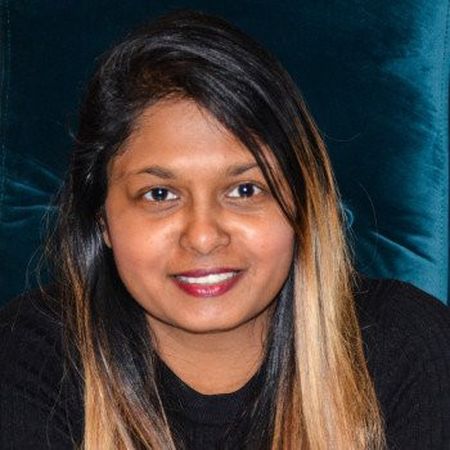
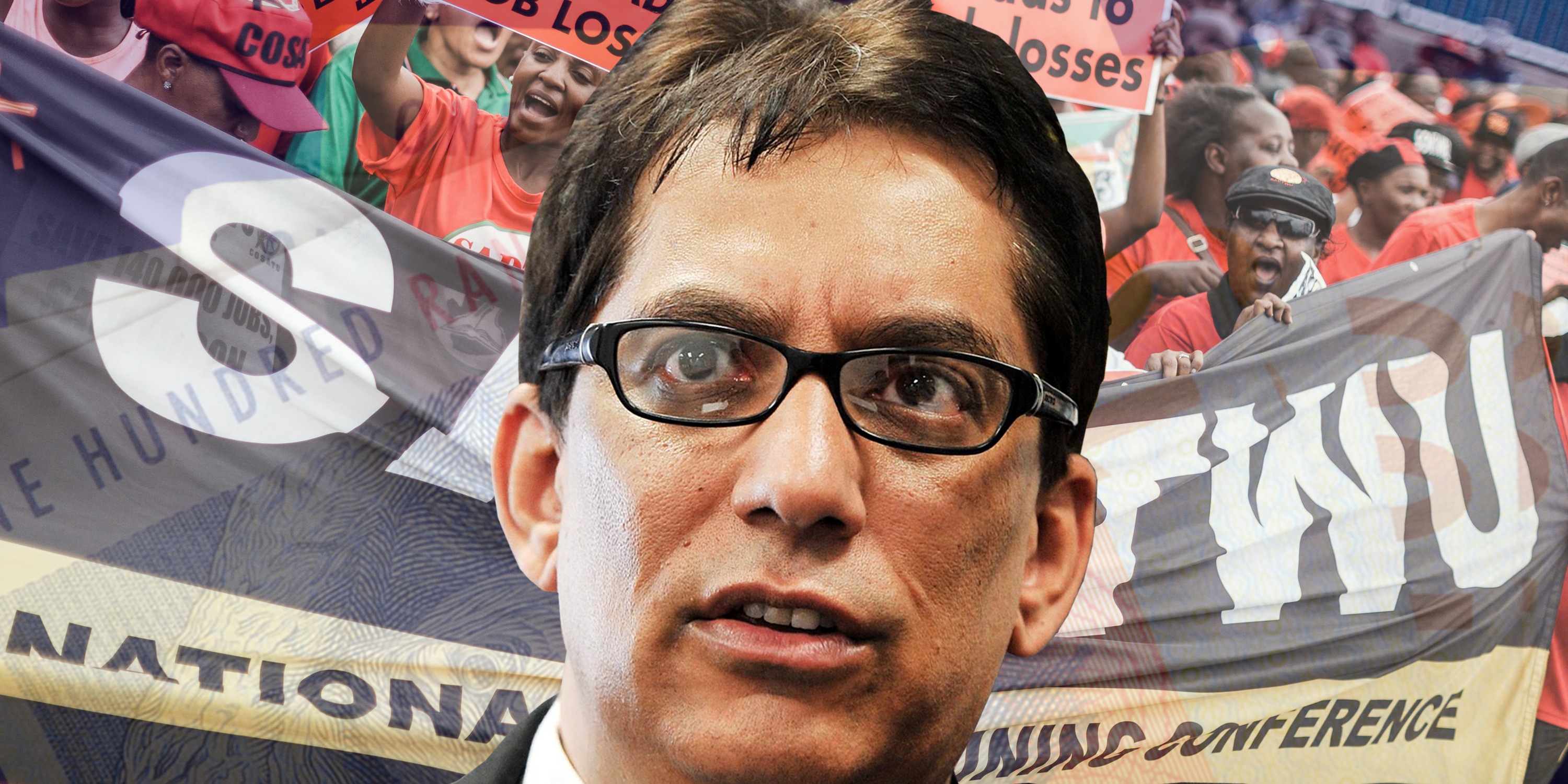
 Illustrative image | Sources: Iqbal Survé, Sekunjalo group CEO. (Photo: Gallo Images / Foto24 / Lerato Maduna) | South African Clothing And Textile Workers Union members hold placards and shout slogans during a demonstration in Durban. (Photo: Rajesh Jantilal / AFP)
 At the centre of the dispute are two competing narratives: a Supreme Court of Appeal (SCA) ruling ordering repayment of a R150-million loan to the Sactwu Investments Group (SIG), and a fresh lawsuit by Sekunjalo seeking up to R628-million from Sactwu over an allegedly unfulfilled funding commitment.
The SCA judgment, handed down in March 2026, found that Sekunjalo Independent Media must repay SIG at least R458.6-million, including accumulated interest, arising from a R150-million loan extended in 2013. The court also dismissed a key element of the company’s defence, ruling that a subordination agreement relied upon by Sekunjalo was not validly authorised.
The judgment reaffirmed the application of the in duplum rule, which caps interest at the level of the original debt, even where unpaid interest is capitalised. However, the parties had already agreed to a higher settlement figure, which the court recognised as governing the repayment obligation.
Sactwu and SIG maintain that the transaction was always a loan and not an equity investment, and that it was implemented according to agreed terms. They say the loan, together with interest and legal costs, remains unpaid.
What Sekunjalo says
Sekunjalo disputes this characterisation. In a statement issued on Monday, 13 April 2026, the company rejected what it described as a “misleading narrative” about the nature of its financial relationship with the union and sought to “place the factual record on the table”.
According to Sekunjalo, Sactwu initially proposed contributing R250-million to the Independent Media transaction, linked to a plan to establish a labour-focused publication titled World of Work. The company says this proposal was supported by senior figures in government and organised labour at the time.
Sekunjalo further claims that while Sactwu later sought an equity stake in the consortium, concerns linked to the Trilinear matter led to the restructuring of its participation into a loan arrangement by legal advisers. That restructuring, it says, is now the subject of a complaint lodged with the Legal Practice Council.
A key pillar of Sekunjalo’s counterclaim relates to the World of Work project. The company alleges that Sactwu committed to funding the publication with R250-million but failed to honour that obligation. It says it subsequently carried the full financial burden of establishing and running the publication, including editorial, printing, distribution and marketing costs.
Sekunjalo states that it has now instituted legal action against Sactwu, claiming the original R250-million commitment, along with interest and damages, bringing the total claim to R628-million.
The company also disputes the framing of the R150-million SIG transaction as a loan to Sekunjalo itself, asserting that the funds were paid directly to the Public Investment Corporation (PIC) via attorneys, rather than to Sekunjalo entities.
What Sactwu says
Sactwu and SIG, however, reject these claims and are defending a separate action instituted by Sekunjalo Investment Holdings in February 2026 for R250-million plus interest, linked to what Sekunjalo describes as an oral agreement to fund World of Work. They deny that such an enforceable agreement exists and say there is no valid claim for damages.
The legal complexity is compounded by overlapping entities and transactions within the broader Independent Media acquisition structure. The SCA ruling clarified that the dispute over the R150-million loan relates specifically to Sekunjalo Independent Media and associated investment vehicles, rather than the operating media business itself.
This distinction may prove significant as the litigation unfolds, particularly in determining liability across different entities within the Sekunjalo group.
The dispute also raises broader questions about governance, deal structuring and accountability in one of South Africa’s most politically sensitive media transactions. The original acquisition of Independent Media was framed as a broad-based empowerment deal, with funding drawn from both private and public sources, including the PIC.
Over time, however, the transaction has become entangled in legal challenges, regulatory scrutiny and financial strain.
The SCA judgment highlighted the unusual features of the loan agreement, including provisions allowing interest to accrue without immediate payment, effectively granting the borrower significant latitude over repayment timing.
For SIG, the ruling represents a legal affirmation of its right to recover the debt, albeit within the constraints of interest limitations. For Sekunjalo, the counterclaims signal an attempt to reframe the dispute as one of reciprocal obligations, rather than a straightforward creditor-debtor relationship.
At this stage, both matters remain before the courts, with no final resolution in sight. The outcome is likely to hinge on the interpretation of agreements concluded more than a decade ago, including whether alleged oral undertakings can be substantiated and how they interact with written contracts.
What is clear is that the financial stakes continue to escalate. Between the SCA-confirmed liability of more than R450-million and Sekunjalo’s R628-million claim, the combined exposure runs into hundreds of millions of rands.
As the legal battle deepens, the case is shaping into a high-stakes test of contractual clarity, institutional governance and the long tail of one of South Africa’s most contentious empowerment-era deals. DM